
Introduction
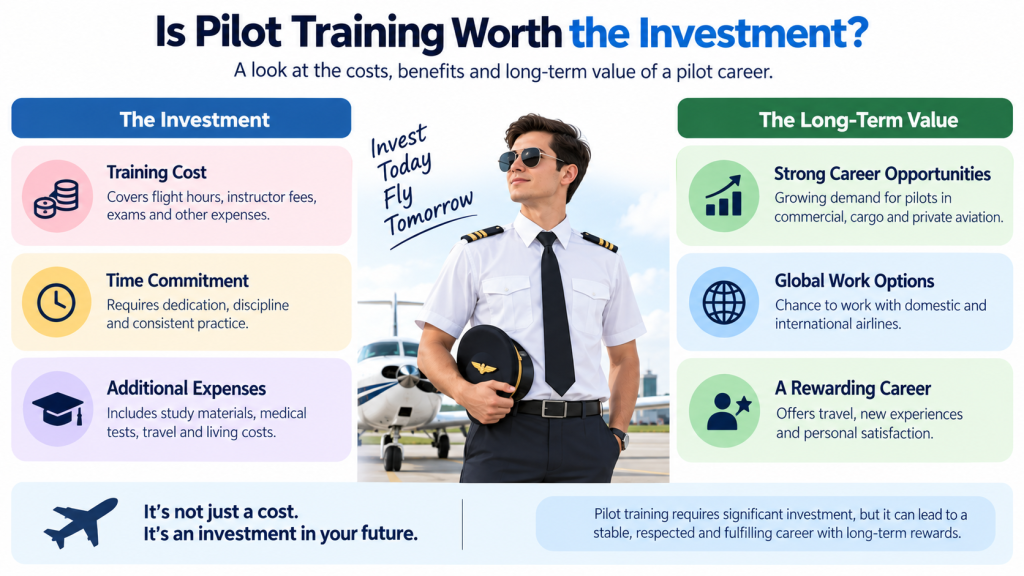
Pilot training requires a serious commitment of money, time, and personal effort. Before enrolling, students need to understand not only the training fees but also the additional costs, licensing requirements, career path, and possible delays. A pilot career can provide opportunities in several areas of aviation, but the outcome depends on individual qualifications, experience, financial planning, and employment conditions. Understanding the complete picture can help students make a more informed decision.
What Makes Pilot Training a Major Investment?
Pilot training involves much more than paying for flying lessons. Students usually need to budget for several parts of their education and licensing journey.
Flight training often represents one of the largest expenses. Students pay for aircraft usage and instructor time, while the total flying cost can increase if they need additional hours to meet training or skill requirements.
Ground classes also form an important part of pilot education. Students study subjects such as aviation regulations, navigation, meteorology, aircraft systems, and flight performance. Examination and licensing fees add another part of the overall budget.
Other expenses may include:
- Medical examinations
- Study materials
- Examination fees
- Simulator sessions
- Travel expenses
- Accommodation
- Food and daily living costs
- Uniforms or required equipment
- Additional flying hours
- Administrative charges
The actual cost varies according to the training location, flight school, aircraft type, training schedule, and individual progress. This makes it important to look beyond the headline course fee.
How Long Does Pilot Training Take?
Training duration can vary significantly between students. A planned training schedule does not always mean that every student will finish within exactly the same period.
Weather can affect flying operations, particularly at locations where poor weather regularly limits flight activity. Aircraft availability and maintenance can also influence scheduling.
Students may also progress at different rates. Some may need additional practice before completing particular training requirements or skill tests.
Examinations and administrative procedures can create further delays. Because of these factors, students should maintain some financial flexibility instead of planning their entire budget around an extremely tight timeline.
What Can Affect the Total Cost?
The final cost of pilot training depends on several variables. Understanding them before enrollment can prevent unexpected financial pressure later.
Flying Hours
The number of flying hours required can have a major effect on total expenditure. Students who need additional practice may spend more than the initial estimate.
Aircraft and Instructor Charges
Aircraft operating costs and instructor fees can vary between training organizations. The aircraft type used during training can also influence hourly rates.
Simulator Training
Some training programs use simulators to develop procedures and prepare students for more advanced stages of training. Simulator charges may be separate from regular flight costs.
Examinations and Licensing
Students should account for examination, application, licensing, and related administrative expenses where applicable.
Living Expenses
Students who move to another city or country for training need to consider accommodation, food, transportation, and other daily expenses.
Training Delays
A delay can increase overall living and accommodation costs even when the basic training fee remains unchanged. This is why a realistic financial buffer can be useful.
What Career Opportunities Can Pilot Training Lead To?
Pilot training can provide a foundation for several aviation careers. However, obtaining a license does not automatically guarantee employment with an airline or other operator.
Some possible career directions include:
Commercial Airline Pilot
Airlines employ pilots to operate passenger aircraft. Candidates generally need the appropriate licenses, ratings, flight experience, medical certification, and other qualifications required by the operator and aviation authority.
Charter and Regional Aviation
Charter and regional operators provide other potential career paths. The requirements can vary depending on the aircraft, operation, and jurisdiction.
Flight Instructor
Pilots who meet the relevant instructor requirements may pursue flight instruction. This can also provide an opportunity to build additional flight experience.
Corporate Aviation
Corporate aviation includes flying for businesses and private organizations. Entry requirements vary depending on the operator and aircraft.
Cargo Aviation
Cargo operators transport goods rather than passengers. These organizations can provide another route for pilots who meet their specific experience and qualification requirements.
The aviation industry includes different career paths, and students should research the requirements of their preferred path before deciding on a training program.
Understanding the Potential Financial Return
One of the most important questions students ask is whether the money spent on pilot training can eventually be recovered through a professional career.
The answer depends on many factors, so students should avoid treating pilot training as a guaranteed financial return.
Career earnings can vary according to the employer, position, aircraft type, experience, location, and market conditions. A newly qualified pilot may also spend time building experience before reaching more advanced positions.
Students who finance training through loans should consider the complete repayment burden. A realistic financial plan should account for loan payments, living expenses, additional training, and the possibility of a period between completing training and securing suitable employment.
Instead of calculating return only from an expected future salary, aspiring pilots should consider their entire financial journey.
When Pilot Training May Be Worth Considering
Pilot training may be worth considering when a student has a genuine interest in aviation and understands the responsibilities involved in becoming a professional pilot.
A student should ideally have:
- A clear understanding of the training pathway
- A realistic financial plan
- Awareness of medical requirements
- Patience for a demanding learning process
- Willingness to continue developing skills
- Realistic expectations about employment
- A backup financial plan
- A clear understanding of licensing requirements
The decision should come from a combination of career interest, financial preparedness, and realistic expectations rather than salary expectations alone.
When Students Should Think More Carefully Before Enrolling
There are situations where additional research can help before making a large financial commitment.
For example, students should reconsider their plans if they have not checked their medical eligibility, do not understand the licensing pathway, or have based their decision entirely on advertised salary figures.
Another warning sign is choosing a training organization only because it offers the lowest initial price. A lower quoted fee may not necessarily represent the complete cost of training.
Students should also be cautious about taking on significant debt without understanding how repayment would work if training takes longer than expected or employment takes time to secure.
How to Compare Flight Schools Before Spending Money
Choosing a flight school is an important part of the investment decision. Students should compare more than the published course price.
Look at the school’s training structure, aircraft availability, instructor support, maintenance arrangements, and overall training environment.
It is also useful to ask how the school calculates flying-hour costs and what happens when a student requires additional hours.
Before paying a large amount, students can ask about:
- Training approval and licensing requirements
- Aircraft fleet and availability
- Aircraft maintenance arrangements
- Instructor availability
- Average training timeline
- Flying-hour estimates
- Simulator facilities
- Examination support
- Additional charges
- Accommodation options
- Refund and payment policies
A transparent fee structure can make financial planning easier.
Questions to Ask Before Paying for Pilot Training
Students should ask detailed questions before making a financial commitment. A clear conversation with the training organization can reveal expenses that may not appear in the initial quotation.
Useful questions include:
- What exactly does the quoted training fee include?
- How many flying hours are included?
- What is the hourly rate for additional flying?
- Are instructor charges included?
- Are simulator sessions charged separately?
- Which examination and licensing fees are separate?
- What is the typical training duration?
- How are weather-related delays handled?
- How often are aircraft available for students?
- What additional expenses should students expect?
These questions can help students build a more realistic budget.
Common Mistakes Aspiring Pilots Should Avoid
Looking Only at the Advertised Course Price
The initial course fee may not represent every expense. Students should request a detailed breakdown before comparing training organizations.
Assuming a License Guarantees an Airline Job
A pilot license is an important qualification, but employment depends on additional factors such as experience, qualifications, operator requirements, and hiring conditions.
Ignoring Medical Requirements
Medical eligibility is an important part of a professional flying career. Students should understand the applicable medical requirements before committing substantial funds to training.
Taking a Large Loan Without a Repayment Plan
Borrowing can make training possible for some students, but the repayment obligation needs careful consideration. Students should understand how they would manage repayments during periods of training or job searching.
Underestimating Living Expenses
Moving to another location can introduce significant costs for accommodation, food, transportation, and daily needs.
Choosing a School Only Because It Is Cheap
Price is one factor, but students should also examine aircraft availability, instructor support, training quality, maintenance practices, and fee transparency.
Expecting Every Student to Follow the Same Timeline
Training progress differs between individuals. Students should maintain enough flexibility to handle additional training or unexpected delays.
Important Considerations Before Investing in Pilot Training
The decision to pursue pilot training should involve more than calculating the initial course cost.
Build a Complete Budget
Include training fees, examinations, licensing, accommodation, transportation, food, equipment, and potential additional flying hours.
Check Medical Eligibility
Understand the medical standards applicable to the license and career path you intend to pursue.
Research the Licensing Pathway
Different countries and aviation authorities have different licensing structures and requirements. Students should understand the pathway relevant to their intended career.
Consider a Financial Backup
Training can take longer than expected. A financial reserve can help manage unexpected expenses and delays.
Research Employment Conditions
Before enrolling, learn about the qualifications, experience, and hiring requirements associated with the aviation roles you are targeting.
Think Beyond the First Job
Aviation careers develop over time. Students should understand how experience, additional ratings, and career progression may affect future opportunities.
Understand Your Personal Commitment
Professional flying requires continued learning, preparation, discipline, and responsibility. Students should consider whether they are comfortable with the demands of the profession.
Frequently Asked Questions
1. Is pilot training a good investment for everyone?
No single career investment works equally well for everyone. Students should consider their interests, financial situation, medical eligibility, career expectations, and willingness to complete demanding training.
2. How expensive is pilot training?
The cost varies depending on the country, training organization, aircraft, required flying hours, licensing requirements, and living expenses. Students should obtain a detailed cost estimate before enrollment.
3. Why can pilot training costs increase?
Additional flying hours, training delays, examinations, simulator sessions, accommodation, and other unexpected expenses can increase the overall cost.
4. Does completing pilot training guarantee an airline job?
No. Completing training provides qualifications, but airline employment depends on factors such as licensing, experience, operator requirements, recruitment conditions, and other selection criteria.
5. How long does pilot training usually take?
The duration varies between students and training organizations. Weather, aircraft availability, examination schedules, individual progress, and additional training requirements can all affect the timeline.
6. What should students include in a pilot training budget?
A complete budget should consider flight training, ground school, examinations, licensing, medical requirements, accommodation, food, transportation, equipment, and possible additional flying hours.
7. Can additional flying hours increase the total cost?
Yes. If a student needs more flying hours than initially estimated, the total training expense can increase.
8. What should I check before choosing a flight school?
Review the school’s approval status, aircraft availability, maintenance practices, instructors, training structure, fee breakdown, average training timeline, facilities, and additional charges.
9. Is taking a loan for pilot training a good idea?
A loan is a major financial commitment. Students should carefully evaluate repayment obligations, total borrowing costs, possible training delays, living expenses, and employment timelines before borrowing.
10. What factors should I consider before starting pilot training?
Consider your career goals, financial resources, medical eligibility, training pathway, expected timeline, employment expectations, and willingness to continue developing aviation skills.
Conclusion
Pilot training represents a substantial investment in education, skills, and career preparation. The real cost goes beyond flight fees and can include examinations, licensing, living expenses, additional flying hours, and unexpected delays.
Whether the investment makes sense depends on the individual student’s goals, financial position, career expectations, and commitment to aviation. Careful research before enrollment can help reduce financial surprises and provide a clearer understanding of the journey ahead.
For aspiring pilots, the most useful approach is to evaluate the complete training and career pathway rather than focusing on a single cost or expected salary figure. A well-researched decision gives students a stronger foundation for planning their aviation future.

