Introduction
Do you have ideas that you want to share with the world? Perhaps you enjoy writing stories, teaching others, or sharing your knowledge. A blog can give those ideas a home online.
Starting a blog may sound difficult at first. You might think you need money, technical skills, or a website expert. That is not always true.
Many platforms let you create and publish content without paying for basic hosting. You can start with a simple idea and improve your blog over time.
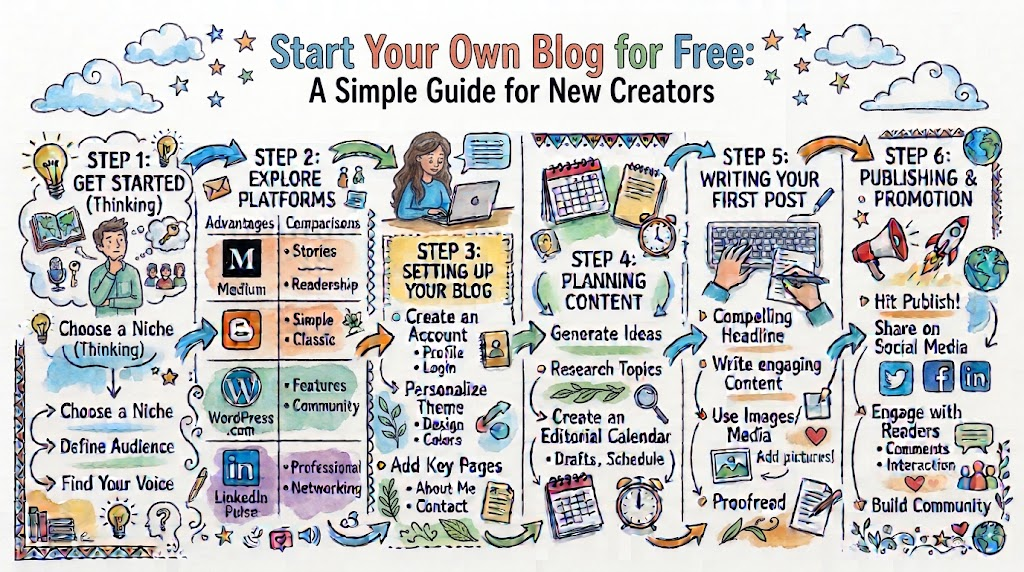
This guide explains how to choose a platform, prepare content, and publish your first post.
What Should You Check Before Choosing a Free Blogging Platform?
A Free Blogging Platform gives you tools to create and publish articles online. Some platforms also provide hosting and a ready-made blog address.
The right choice depends on what you want to publish. A personal writer may have different needs than a business owner or content team.
Check these points before you make your choice:
- Easy writing: Look for an editor that feels simple to use.
- Hosting: Check whether the service includes free blog hosting.
- Blog address: Understand how your blog URL will appear.
- Publishing options: Check how you create and manage articles.
- Content needs: Make sure the platform suits your chosen topics.
- Contributor support: Check whether other writers can contribute.
- Service limits: Read the rules for free accounts.
- Future plans: Consider what you may need as your blog grows.
Do not choose a platform only because it offers many features. Choose one that makes your work easier.
Why Is Starting a Blog for Free a Smart First Step?
New writers often want to test their ideas before spending money. A free service can help them begin with fewer costs.
You can learn the basics of blogging through regular practice. You can also discover which subjects you enjoy writing about.
Here are some reasons to start with a free option:
- Try your ideas: Explore topics before making a larger investment.
- Improve your writing: Practice creating useful articles.
- Share knowledge: Explain subjects that other people want to understand.
- Build a portfolio: Keep your published work in one place.
- Learn publishing: Understand titles, headings, and article layouts.
- Create an online presence: Give readers a place to find your work.
- Develop confidence: Improve with every article you publish.
A free blog is a starting point, not a promise of instant success. Readers and results take time to develop.
Select a Platform That Matches Your Main Goal
Every blog has a purpose. Some people write for personal interest. Others share professional knowledge or business information.
Think about your main goal before selecting a platform.
| Your blogging goal | What may matter most |
|---|---|
| Personal stories | Simple writing and publishing |
| Educational articles | Clear content organization |
| Professional portfolio | A clean place to show your work |
| Business publishing | Space for company information |
| Team contributions | Support for multiple writers |
Make a short list of your needs. Compare platforms against that list instead of choosing in a hurry.
How Can You Set Up a Blog Without Paying for Hosting?
Creating a blog can be simple when you follow the right order. Many services guide new users through the setup process.
1. Choose a Subject
Start with a topic that interests you. Select something you can explain or discuss with confidence.
You could write about:
- Technology and software
- Education and study tips
- Travel and local experiences
- Business and professional skills
- Food and daily life
- Art and creative projects
- Books and personal learning
A clear subject helps readers understand your blog. You can add related topics as your writing develops.
2. Compare Blogging Services
Look at the free options offered by different platforms. Check their editors, hosting, address choices, and publishing rules.
A Blogging Platform for Writers should make it easy to prepare and publish articles. Avoid services that add unnecessary steps to your basic writing process.
3. Pick a Suitable Blog Name
Your blog name should be clear and easy to remember. It can reflect your subject, interests, or personal brand.
Avoid names that are difficult to spell. Check the available address before you make your final choice.
4. Create Your Account
Register on the platform you selected. Follow its instructions to set up your blog.
Add your blog name and choose an available address. Some services offer a subdomain under their main website.
5. Prepare Your First Post
Choose one topic for your first article. Write a title that tells readers what they will learn.
Create a short outline before writing. Use headings to arrange your main points.
6. Review and Publish
Read your article from beginning to end. Correct spelling and grammar mistakes.
Remove repeated ideas and unclear sentences. Check that the title matches the content. Publish the article when it is ready.
Understand the Basics of Free Blog Hosting
Hosting helps make your blog available on the internet. It stores the content and files that visitors access through your blog address.
Free Blog Hosting can help beginners avoid buying separate hosting. The platform provides the basic hosting service as part of its free option.
However, free hosting may come with limits. A provider may restrict storage, design choices, or certain features.
Before using a service, check:
- What the free plan includes.
- Whether it provides a subdomain.
- Which features have usage limits.
- Whether you can change the blog design.
- What options exist if your needs increase.
- Which content rules you must follow.
Read the current service terms. This helps you understand what the provider offers.
Pick a Blog Address That Fits Your Content
Your blog address helps readers find your articles. A clear address can also make your blog easier to share.
Many free platforms offer a subdomain. Some services may also support a separate custom domain.
| Address type | Description |
|---|---|
| Platform subdomain | Your blog uses part of the platform’s main domain |
| Custom domain | Your blog uses a separate domain name that you own |
A subdomain may be enough when you are just starting. A custom domain may suit a project with wider branding needs.
Check the available options and costs before deciding. Do not assume every free plan includes a custom domain.
Use an Online Publishing Platform to Share Your Knowledge
An Online Publishing Platform gives writers a place to publish content on the internet. You can use it for articles, guides, stories, and tutorials.
Different people can use publishing platforms in different ways.
For example:
- Teachers can share lessons and study material.
- Students can publish notes and learning experiences.
- Developers can explain tools and technical topics.
- Travelers can write about places and journeys.
- Professionals can share knowledge from their work.
- Businesses can publish helpful information for customers.
Focus on the needs of your readers. Explain ideas clearly and use examples where they help.
A useful article should give readers something they can understand or apply.
Plan Your Content Before You Publish Articles Online
A little planning can make writing much easier. It helps you stay focused and avoid adding unrelated points.
Use these steps when preparing a new article:
- Choose one topic: Decide what the article will explain.
- Know your audience: Think about who may read it.
- Find the main question: Understand what readers want to know.
- Write an outline: Arrange your points in a clear order.
- Create a useful title: Tell readers what the post covers.
- Use short sections: Give each heading one clear purpose.
- Add examples: Make difficult ideas easier to understand.
- Check your information: Review facts and important details.
- Edit your writing: Remove errors and repeated points.
- Review the final page: Check the layout before publishing.
Keep a list of future article ideas. It can help you plan your next posts without starting from zero.
Build a Personal Blog Around Your Interests
A Personal Blogging Platform can help you share experiences, thoughts, and hobbies. It gives your writing a central place online.
You can use a personal blog to:
- Share stories from everyday life.
- Write about travel experiences.
- Discuss books and learning.
- Record your creative projects.
- Explain skills you have developed.
- Share useful lessons from personal experiences.
Choose subjects that you enjoy discussing. Write in a natural voice and keep your message clear.
You can also use your blog as a digital portfolio. It can show readers the work and ideas you have published.
Share Company Knowledge Through a Business Blog
Businesses can use blogs to explain their work and answer customer questions. Articles can also help readers understand products, services, and industry topics.
A Business Blogging Platform can support different types of company content.
For example, a business can publish:
- Guides about its services.
- Answers to common customer questions.
- Tutorials related to its products.
- Articles about industry changes.
- Useful tips for its target audience.
- Information about its work and experience.
Try to educate readers instead of promoting your business in every post. Clear information gives people a better reason to read.
Blogging does not guarantee more sales or visitors. Results depend on many factors, including content quality and audience needs.
Let Multiple Writers Contribute to One Blog
Some publishing projects need several contributors. A team may include employees, teachers, experts, or guest writers.
A Multi-Author Blogging Platform can support contributions from different people. This approach helps teams share knowledge across subjects.
Before inviting contributors, agree on a few basic rules:
- Assign clear topics to each writer.
- Set simple article guidelines.
- Agree on a common writing style.
- Review content before publication.
- Check facts and references.
- Avoid duplicate articles.
- Keep headings and formatting consistent.
A shared process can make publishing easier. It can also help readers enjoy a consistent experience.
Discover New Ideas Through a Blogging Community for Writers
Writing does not have to be a lonely activity. A Blogging Community for Writers can connect creators and readers through shared interests.
Readers can explore articles from different publishers. Writers can also discover new subjects and learn from other people’s work.
You can make your content easier to explore by following these habits:
- Write clear and useful titles.
- Choose topics that answer real questions.
- Organize articles with meaningful headings.
- Share knowledge through practical examples.
- Publish at a pace you can maintain.
- Learn from different writing styles.
- Keep your content original and helpful.
Do not focus only on views or numbers. Build your writing skills and make each article useful.
Explore BlogOrbix for Your Blogging Journey
Finding a suitable publishing space is an important first step. BlogOrbix offers a free blogging platform for writers, creators, professionals, and businesses.
The platform provides free hosting. Users can start without buying separate web hosting. It also offers personal BlogOrbix subdomains.
BlogOrbix supports several content areas. These include technology, business, education, travel, lifestyle, and creativity.
The platform also supports multi-author contributions. This gives different writers a place to share knowledge through one publishing space.
You can use BlogOrbix for personal publishing, digital portfolios, and business content. Its shared content discovery approach connects independent publishers with readers.
Visit blogorbix.com to explore the platform and its publishing options.
Before getting started, review the current terms and available features. Make sure they match your content needs.
Common Problems New Bloggers Should Avoid
New bloggers often make small mistakes while learning. You can avoid many of them with simple habits.
- Choosing too many subjects: Start with a few related topics.
- Writing unclear titles: Explain the article topic in the heading.
- Skipping editing: Review your writing before publication.
- Using long paragraphs: Divide content into smaller sections.
- Copying other articles: Share original ideas in your own words.
- Ignoring readers: Answer questions that matter to your audience.
- Publishing without planning: Prepare a list of future topics.
- Expecting instant results: Give your blog time to develop.
- Ignoring platform rules: Read the terms of your free service.
Every post can teach you something. Notice what needs improvement and use that lesson in your next article.
Check Your Article Before Publishing
A final review can help you catch simple mistakes. Use this checklist before publishing a post.
- I selected one clear topic.
- I understand my target readers.
- My title explains the article.
- My headings follow a clear order.
- My sentences are easy to understand.
- I added examples where needed.
- I checked important facts.
- I removed repeated information.
- I corrected spelling and grammar.
- I reviewed the article layout.
- I checked the platform’s publishing terms.
You do not need to follow a complicated process. A short review can make your article clearer and easier to read.
Frequently Asked Questions
1. What Is a Free Blogging Platform?
A Free Blogging Platform lets people create and publish blog content without an upfront platform fee. Some providers also include hosting and a subdomain. The available tools depend on the service. Check its writing editor, publishing options, and usage limits before creating an account.
2. Can I Create a Blog for Free?
Yes, many services let you create a blog without paying for basic access. You can register, select a blog name, and follow the setup instructions. Some platforms include hosting and a subdomain. However, free services may have limits. Review the current terms before choosing one.
3. How Do I Choose a Blogging Platform for Writers?
A Blogging Platform for Writers should make writing and publishing easy. Look for a simple editor and clear content management options. Check its hosting, blog address, and service limits. Also consider the subjects you plan to cover. Compare your needs with the platform’s available features.
4. What Is an Online Publishing Platform?
An Online Publishing Platform helps people share written content online. Writers can publish stories, guides, tutorials, and articles. Businesses can also use these services to share information with customers. Different platforms offer different tools. Choose one that supports your preferred content type and publishing goals.
5. How Can I Publish Articles Online?
Start with a topic that answers a useful question. Write a clear title and organize your ideas under headings. Use simple sentences and check your facts. Review spelling and formatting before publishing. Then use your chosen platform to upload and publish the article.
6. What Does Free Blog Hosting Include?
Free Blog Hosting allows a provider to host your blog without an upfront hosting fee. This can help beginners avoid buying separate hosting. However, free services may limit storage, design choices, or other features. Check the provider’s current terms to understand exactly what the service includes.
7. What Is a Multi-Author Blogging Platform?
A Multi-Author Blogging Platform allows different writers to contribute to a shared blog or publishing space. It can help teams share knowledge across several subjects. Businesses, schools, and writing groups may use this approach. Clear writing guidelines and article reviews help maintain content quality.
8. Who Should Use a Personal Blogging Platform?
A Personal Blogging Platform can suit students, professionals, travelers, and hobby writers. People can share stories, experiences, interests, and learning notes. It can also serve as a digital portfolio. Choose subjects you enjoy and publish useful content at a pace that works for you.
9. How Can a Business Blogging Platform Support a Company?
A Business Blogging Platform gives companies a place to share useful information. They can explain services, answer customer questions, and publish industry guides. Articles can help readers understand a company’s work. However, blogging does not guarantee sales or traffic. Content should match audience needs and offer real value.
10. What Is a Blogging Community for Writers?
A Blogging Community for Writers connects creators and readers through shared content. It can help readers discover articles from different publishers. Writers can explore new subjects and learn from other people’s work. Community features vary between services. Focus on sharing original and useful content.
11. Does BlogOrbix Offer Free Blog Hosting?
BlogOrbix provides free hosting for people who want to publish blog content. It also offers personal BlogOrbix subdomains. This helps users start without buying separate web hosting. Check the platform’s current terms and available features before creating your blog.
12. Can I Use BlogOrbix for Personal and Business Publishing?
BlogOrbix supports personal publishing, digital portfolios, and business content. Users can publish across subjects such as technology, education, travel, lifestyle, and business. The platform also supports multi-author contributions. Choose a clear purpose for your blog and prepare content that matches your readers’ interests.
Final Thoughts
You do not need a large budget to begin sharing your ideas online. A free blogging service can give you a simple place to start. First, choose a topic and compare platforms. Check their hosting, publishing tools, and service limits. Then create your blog and prepare your first article. Keep your writing clear and useful. Review every post before publishing it. Do not worry if your early articles need improvement. Writing gets better with practice. Start with one good idea, learn from the process, and keep creating content that helps your readers.