
Introduction
Becoming a pilot is one of the most exciting career goals in aviation. It offers a mix of responsibility, technical skill, global travel opportunities, and personal achievement. However, one of the biggest concerns for aviation students is the pilot training cost, which can be quite high depending on the country, flight school, and license type.
This is where pilot training deals become important. Many flight schools, academies, and aviation programs offer financial support, bundled packages, scholarships, and discounts to help students manage training expenses more effectively.
In this guide, you will understand:
- How pilot training costs are structured
- What aviation student deals actually mean
- Types of discounts and scholarships available
- How to choose the right flight training offer
- Smart ways to reduce training expenses
If you are planning to become a pilot, this blog will help you make a more affordable and informed decision.
Understanding Pilot Training Costs
Before exploring deals, it is important to understand where your money goes during flight training.
Ground School Costs
Ground school includes classroom learning or online training for aviation theory. It covers:
- Navigation
- Meteorology
- Air regulations
- Aircraft systems
Flight Training Costs
This is the biggest part of the pilot training cost. It includes:
- Aircraft rental
- Instructor fees
- Fuel charges
- Landing and airport fees
Medical and Licensing Fees
Students must complete aviation medical exams and pay licensing charges to aviation authorities.
Simulator Training
Some schools use flight simulators for practice, which can reduce real flight hours and cost.
What Are Pilot Training Deals?
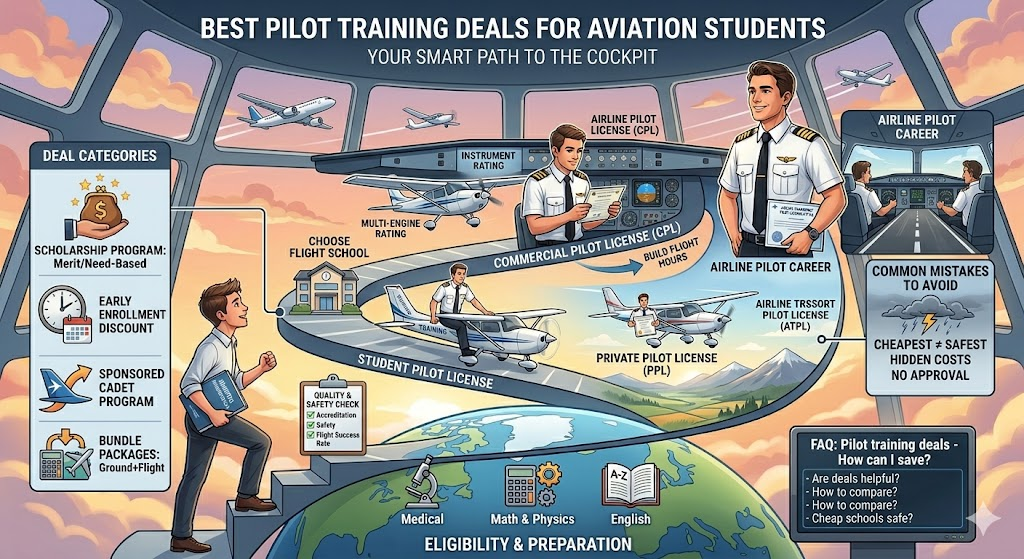
Pilot training deals refer to cost-saving offers provided by aviation schools or training academies. These may include:
- Discounts on course fees
- Bundled training packages
- Scholarships for talented students
- Sponsored cadet programs
- Seasonal promotional offers
These deals help students reduce financial pressure while completing aviation training efficiently.
Types of Pilot Training Deals Available
There are several types of aviation student deals available depending on the institution.
| Type of Deal | Description | Best For |
|---|---|---|
| Early Enrollment Discount | Reduced fees for early registration | Planned students |
| Scholarship Programs | Financial support based on merit or need | High-performing students |
| Cadet Programs | Airline-sponsored training pathways | Future airline pilots |
| Bundle Packages | Combined ground + flight training | Complete beginners |
| Seasonal Offers | Time-based discounts or promotions | Flexible students |
Key Insight:
Not all deals are the same. Some reduce cost, while others provide structured career pathways.
How to Find the Best Pilot Training Deals
Finding the right deal requires research and comparison.
- Compare multiple flight schools
- Ask for full cost breakdowns
- Check if the school is officially approved
- Understand what is included in the package
- Look for scholarship opportunities
- Verify hidden costs like exams or simulator fees
A good deal is not always the cheapest one—it is the one that offers value, safety, and proper training structure.
Factors to Consider Before Choosing a Deal
Before selecting any aviation training offer, consider the following:
- Total flight hours included
- Instructor experience and quality
- Aircraft availability and condition
- Weather conditions at training location
- Training success rate of students
- Transparency of pricing
A low-cost program without proper structure can delay your career progression.
Benefits of Choosing the Right Training Deal
Choosing the right deal can make a big difference in your aviation journey.
- Reduces overall pilot training cost
- Helps complete training faster
- Improves learning quality
- Provides better career opportunities
- Reduces financial stress during training
A well-planned deal can make aviation training more manageable and efficient.
Common Mistakes Students Make
Many students make avoidable mistakes when selecting training offers.
| Mistake | Impact |
|---|---|
| Choosing cheapest school | Poor training quality |
| Ignoring hidden costs | Budget overruns |
| Not checking approval | Risk of invalid certification |
| Delaying medical check | Training delays |
| Not comparing schools | Missed better opportunities |
Always focus on quality and safety first, not just price.
Tips to Save Money in Pilot Training
You can reduce aviation training expenses with smart planning.
- Apply for scholarships early
- Choose efficient flight schools
- Use simulator training effectively
- Maintain regular flying schedule
- Avoid long breaks in training
- Plan budget before starting
Consistency in training can significantly reduce overall cost.
Frequently Asked Questions (FAQs)
1. What is included in pilot training cost?
Pilot training cost usually includes ground school, flight hours, instructor fees, medical exams, and licensing charges. Each school may structure fees differently.
2. Are pilot training deals really helpful?
Yes, training deals can reduce financial burden and make aviation education more affordable if chosen carefully.
3. What is the cheapest way to become a pilot?
The most affordable way is to compare schools, apply for scholarships, and choose bundled training programs.
4. Do all flight schools offer discounts?
Not all schools offer discounts. Availability depends on the academy, location, and training programs.
5. What is a cadet pilot program?
It is an airline-sponsored training program where airlines support or structure pilot training for future employment.
6. Can I get a scholarship for pilot training?
Yes, some aviation academies and organizations offer scholarships based on merit or financial need.
7. Are cheap flight schools safe?
Not always. Safety and approval should be verified before choosing any low-cost option.
8. What is included in bundle training packages?
They usually include ground school, flight hours, simulator sessions, and exam preparation in one package.
9. How can I compare pilot training offers?
Compare total cost, flight hours, instructor quality, aircraft availability, and hidden charges.
10. When should I apply for training deals?
It is best to apply early before enrollment deadlines or seasonal promotions expire.
11. Do training deals affect quality?
Not necessarily. Some deals are designed to improve accessibility without affecting training quality.
12. Is aviation training expensive everywhere?
Yes, but cost varies depending on country, school, aircraft type, and training structure.
Conclusion
Pilot training is a significant investment, but it becomes much more manageable when students understand how to identify the right deals and financial options. From scholarships and cadet programs to bundled training packages, there are several ways to reduce the pilot training cost without compromising on quality.
The key is to focus on value, safety, and proper training structure rather than just low pricing. A well-chosen aviation training deal can accelerate your learning, reduce financial stress, and help you move closer to your dream of becoming a professional pilot.
With careful planning, research, and the right guidance, every aviation student can find a smart and affordable path into the world of flying.

