
Introduction
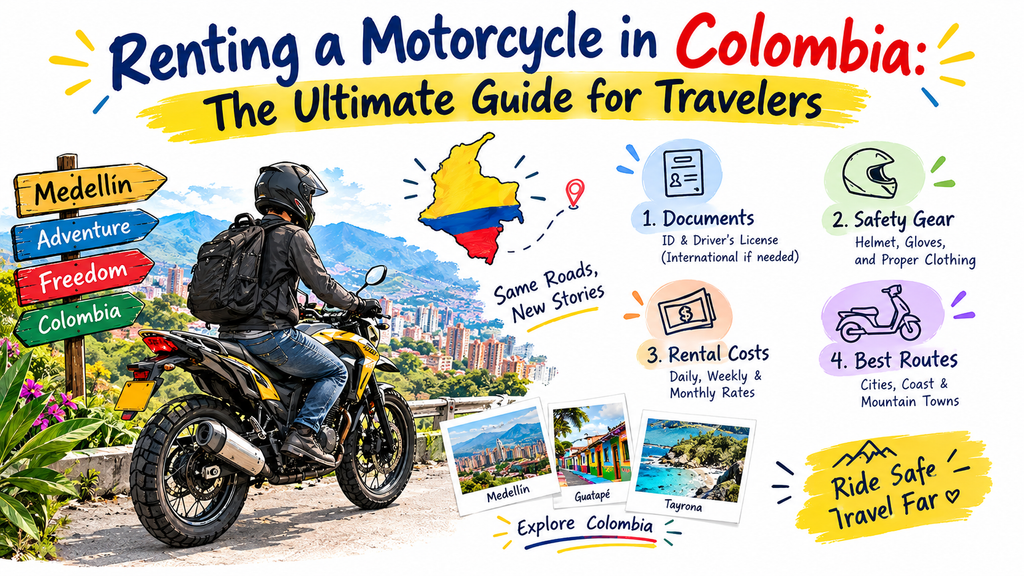
Colombia offers some of the most diverse and breathtaking landscapes in South America. From winding mountain passes in the Andes to lush coffee valleys and coastal highways, the country is a dream destination for riders. Renting a motorcycle gives you the freedom to explore at your own pace, venture off the beaten path, and experience the culture up close. However, navigating vehicle rentals in a foreign country requires careful preparation. This guide covers everything you need to know about renting a motorcycle, understanding local requirements, selecting the right machine, and staying safe on Colombian roads. Whether you plan a short city ride or an epic cross-country adventure, this article provides the practical information needed to make informed decisions.
Why Rent a Motorcycle in Colombia?
Traveling on two wheels offers unique advantages over traditional cars or buses. Colombia’s rugged topography means that many scenic viewpoints and rural villages are best accessed via smaller roads where cars experience heavy traffic or limited parking.
A motorcycle lets you bypass urban congestion in cities like Medellín and Bogotá. It also allows you to stop whenever you wish to capture a photo or sample local cuisine. For many travelers, the journey itself becomes the highlight of the trip. Connecting with local riders and experiencing the open road creates unforgettable memories.
Platforms like Motoshare.co make it easy for travelers to explore available vehicle-rental options across different regions. Comparing choices in advance helps ensure you find a reliable machine suited to your exact travel plans.
Choosing the Right Motorcycle for Your Journey
Selecting the correct motorcycle depends heavily on your route, riding experience, and luggage requirements. Not every bike performs well on unpaved rural tracks or steep mountain climbs.
Vehicle Comparison Guide
| Vehicle Type | Ideal Terrain & Use | Rider Experience Level | Key Features & Advantages |
|---|---|---|---|
| Scooters (100cc–150cc) | City streets, urban sightseeing, flat paved coastal roads | Beginner to Intermediate | Low fuel consumption, lightweight, easy automatic transmission |
| Commuter Bikes (125cc–250cc) | Urban riding, short intercity paved highway trips | Beginner to Intermediate | Economical, nimble in traffic, easy to maneuver and park |
| Adventure / Dual-Sport (250cc–750cc+) | Mountain passes, dirt tracks, rural departments, long-distance touring | Intermediate to Advanced | Long-travel suspension, upright riding position, excellent luggage capacity |
| Touring & Premium Bikes (650cc+) | Long highway routes, paved mountain switchbacks, two-up riding | Advanced | High comfort, powerful engines, built-in panniers for gear storage |
City Scooters and Small Commuters
Small-displacement scooters and street bikes work well for short urban trips and daily commuting within cities like Cartagena or Medellín. They offer excellent fuel economy and easy handling in dense traffic. However, they lack the power needed for steep mountain highways and long-distance touring.
Adventure and Touring Motorcycles
If your itinerary includes crossing the Andes or riding through rural departments, an adventure motorcycle is usually the best choice. These bikes feature higher ground clearance, suspension designed for rough surfaces, and comfortable riding positions for long hours in the saddle. Ensure you choose an engine size that matches your skill level and confidence.
Licence, Documentation, and Legal Requirements
Riding legally in Colombia requires meeting specific regulatory standards. Police checkpoints are common, and lacking proper paperwork can lead to fines or vehicle impoundment.
Foreign visitors must hold a valid driver’s licence from their home country endorsed for motorcycle operation. Many rental providers and authorities also recommend or require an International Driving Permit alongside your domestic licence.
Rental motorcycles in Colombia must carry mandatory documents. These include the SOAT, which is a mandatory traffic accident insurance policy, and the Tecnicomecanica certificate verifying vehicle roadworthiness. Always confirm that these documents are active and stored securely in the vehicle compartment before leaving the rental location.
Insurance, Deposits, and Financial Protection
Understanding insurance coverage prevents unexpected expenses if an incident occurs. Standard rental rates usually include basic third-party liability insurance, but this rarely covers damage to the rental motorcycle itself.
Ask your rental provider about collision damage waivers and personal accident coverage. Read the fine print to understand your financial liability or deductible in case of an accident or theft.
Most providers also require a security deposit held via credit card. This deposit covers potential traffic fines, minor damages, or missing accessories. Ensure you understand how and when the deposit will be released after you return the vehicle in good condition.
Essential Gear and Safety Preparation
Proper safety equipment is non-negotiable when riding in Colombia. Mountain weather can change rapidly from bright sunshine to heavy rain, affecting visibility and traction.
Always wear a certified helmet, sturdy riding jacket, gloves, long pants, and ankle-high boots. Many rental providers supply basic helmets, but bringing your own well-fitting gear ensures better safety and comfort.
Before setting off, inspect the motorcycle thoroughly. Check the brake pads, tire tread depth, chain tension, lights, and horn. Take clear photographs of any existing scratches or dents to avoid disputes upon return.
Common Mistakes to Avoid
Travelers often make avoidable errors when renting and riding motorcycles in unfamiliar regions. Keeping these common pitfalls in mind will save you time, money, and stress.
- Underestimating Mountain Distances: Map distances in the Andes can be deceiving. Winding roads mean travel times are much longer than expected.
- Skipping the Vehicle Inspection: Failing to document existing damage before departure can lead to unfair charges upon return.
- Ignoring Insurance Exclusions: Assuming all damages are covered without checking policy deductibles and limitations.
- Riding at Night: Unlit roads, livestock, and unmarked hazards make nighttime riding in rural areas dangerous.
- Overloading the Bike: Packing more weight than the motorcycle or luggage racks are designed to handle, affecting stability.
- Forgetting Document Verification: Riding without checking that the mandatory insurance and registration papers are up to date.
Important Considerations
Renting a vehicle involves several practical factors that can shape your entire trip. Take time to evaluate these core elements before finalizing any booking.
Weather conditions play a major role in Colombian road safety. Heavy tropical rains can cause slippery surfaces and occasional landslides in mountain zones. Always check local weather forecasts and road status reports before heading out on long journeys.
Fuel availability is generally good along major highways, but rural areas may have fewer stations. Plan your fuel stops carefully when exploring remote regions. Finally, ensure your physical stamina matches your itinerary. Long days on mountain switchbacks require intense concentration and can cause rapid fatigue.
Frequently Asked Questions (FAQs)
1. Do I need an International Driving Permit to rent a motorcycle in Colombia?
While some rental providers accept a valid foreign motorcycle licence on its own, police and rental agencies strongly recommend carrying an International Driving Permit alongside your home licence to avoid language barriers or compliance issues.
2. What is SOAT and why is it important for rental motorcycles?
SOAT is Colombia’s compulsory traffic accident insurance. It covers medical expenses for anyone injured in an accident involving the vehicle. Law requires every operating motorcycle on public roads to have an active SOAT policy.
3. How much does it typically cost to rent a motorcycle in Colombia?
Rental prices vary depending on the city, season, and vehicle category. Smaller commuter bikes cost significantly less per day, while high-end adventure touring motorcycles command higher rates due to their capability and maintenance costs.
4. Can I pick up a motorcycle in Medellín and drop it off in Bogotá?
Many rental providers offer one-way rentals between major Colombian cities, though this often incurs an additional drop-off fee. Always confirm availability and extra charges with your provider in advance.
5. What type of motorcycle is best for riding through the Andes?
Medium-to-large adventure motorcycles or dual-sport bikes are ideal for the Andes. They offer the power needed for steep inclines and the suspension required for uneven road patches.
6. Are helmet and safety gear rentals included with the motorcycle?
Basic helmets are frequently included with standard rentals. However, specialized riding jackets, gloves, and armor are often rented separately or must be brought by the rider.
7. What should I do if I get a flat tire or mechanical breakdown on a remote road?
Contact your rental provider immediately. Most professional agencies offer roadside assistance guidance or partner networks to help you manage repairs or towing in populated regions.
8. Do rental companies require a security deposit?
Yes, nearly all vehicle rental providers block a security deposit on a credit card to cover potential tolls, fines, or minor damages incurred during the rental period.
9. Is it safe to ride a motorcycle at night in Colombia?
Riding at night outside major city centers is strongly discouraged. Reduced visibility, unlit vehicles, potholes, and stray animals present significant hazards after dark.
10. What fuel policies do Colombian rental providers usually use?
Most providers follow a like-for-like fuel policy, meaning you receive the motorcycle with a specific fuel level and must return it with the same amount.
11. How can Motoshare.co help me find and compare vehicle rentals?
Motoshare.co functions as a marketplace connecting customers with various vehicle-rental options across Colombia, making it easier to review choices, vehicle types, and locations in one place.
12. What documents do I need to carry with me while riding?
You must carry your original passport, your valid driver’s licence, your International Driving Permit if applicable, and copies of the motorcycle’s insurance and registration documents.
Conclusion
Renting a motorcycle unlocks an incredible way to experience Colombia’s stunning landscapes, vibrant culture, and winding mountain roads. By understanding licensing rules, selecting the right machine for your itinerary, and prioritizing safety gear, you set the stage for an unforgettable journey. Careful preparation ensures that minor challenges never overshadow your adventure. Explore available vehicle-rental options through platforms like Motoshare.co to compare choices and plan your trip with confidence before hitting the open road.

