
INTRODUCTION
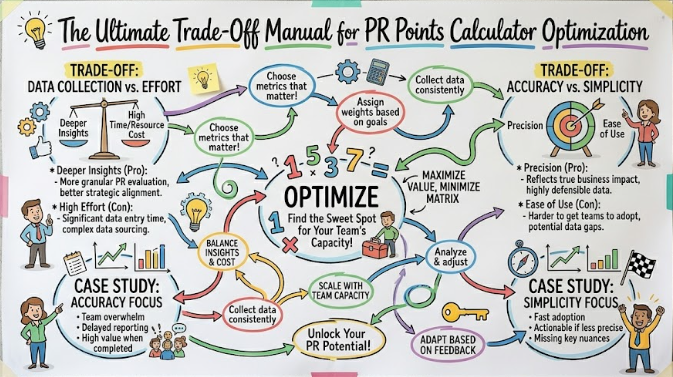
Every aspiring permanent resident eventually faces the same cruel arithmetic: your dreams reduced to a number on a screen. That number emerges from a PR Points Calculator, and for many, it feels like a verdict delivered without appeal. Yet the candidates who ultimately celebrate landing invitations rarely possess perfect profiles. They understand something you must also learn: point systems reward strategic trade-offs, not universal excellence.
You can compensate for weak education with exceptional language scores. You can offset advancing age with regional nominations. You can balance limited experience with advanced credentials. This guide reveals the hidden multipliers that transform mediocre profiles into competitive applications. You will discover which attributes to sacrifice, which to amplify, and which to document with obsessive precision. Stop chasing perfection across every category. Start mastering the art of strategic substitution. Your pathway to permanent residence runs through calculated compromise, not impossible ideals.
What Is a PR Points System?
A PR points system is a quantitative sorting engine that converts your biographical data into a competitive ranking score. Unlike discretionary systems where visa officers apply subjective judgment, points-based models rely on transparent formulas that treat every applicant identically. Your age adds or subtracts points according to published tables. Your education level generates credit based on verified equivalencies. Your language scores convert to points through official conversion charts.
This transparency empowers you to calculate your exact standing before paying any government fees. However, the system’s apparent simplicity masks a critical reality: points are substitutable. Low scores in one category can be offset by high scores in another, up to program-specific limits. Understanding which substitutions immigration authorities accept—and which they reject—separates successful strategists from frustrated applicants. The system does not demand that you excel everywhere. It demands that your total exceeds a moving threshold that you can predict and target.
The Core Purpose of PR Points System
- Scalable Application Processing: Points systems enable immigration departments to process hundreds of thousands of applications annually without proportional staff increases. Automated ranking replaces manual review for initial filtering.
- Political Defensibility Mechanism: When governments face criticism about immigration levels, they point to the objective points system as evidence of merit-based selection rather than political favoritism.
How the PR Points System Works
- Threshold Crossing vs. Ranking: Candidates must first cross minimum thresholds in each category (eligibility). Only after clearing every threshold does ranking begin (selection). Failing any single eligibility requirement eliminates you regardless of other strengths.
- Invitation Round Dynamics: Each invitation round has a fixed quota. Authorities invite candidates starting from the highest points total downward until filling the quota. Your competitor is not the system but other candidates in your round.
Eligibility Standards vs. Selection Criteria
- Absolute Bars to Entry: Eligibility standards operate as pass/fail gates. One missed point in a mandatory category cannot be compensated by excellence elsewhere. You either have the minimum funds or you do not.
- Compensatory Selection Factors: Selection criteria allow trade-offs. Weak education points can be balanced by strong language points. Limited experience can be balanced by youth. The total matters, not individual category perfection.
PR Points System Components: The Building Blocks
Each component of a points grid carries a different strategic value depending on your starting profile. Age functions as a fixed, non-negotiable variable—you cannot reverse it, but you can plan around it. Education offers flexibility through multiple pathways: new credentials, credential combinations, or alternative assessments. Language proficiency presents the most controllable variable, responding reliably to targeted study within weeks or months. Work experience accumulates passively over time but cannot be accelerated beyond actual calendar progression.
Adaptability factors—previous study, previous work, family connections—represent binary windfalls: you either possess them or you do not, but they add substantial points with zero additional effort when present. Spousal attributes create another layer of strategic choice. Including a strong spouse adds points; including a weak spouse subtracts relative to applying alone. Understanding each component’s strategic character allows you to allocate your improvement efforts where they generate the highest marginal returns.
Age Factors in PR Points System
- Irreversible Attribute Planning: Since age proceeds inexorably, candidates near age cutoff cliffs should prioritize rapid submission over further profile improvements. Delaying for education upgrades risks age point losses that outweigh education gains.
- Age Appeal Mechanisms: Some systems permit humanitarian appeals for candidates slightly above age cutoffs with exceptional other attributes. These appeals succeed rarely but remain available for close cases with compelling narratives.
Educational Evaluation for PR Points System
- Equivalent Qualification Discovery: Many candidates hold credentials that assess as higher than their nominal level. A post-graduate diploma might assess as a master’s degree equivalent depending on the assessing body’s framework.
- Partial Completion Credit: Some systems award reduced points for partially completed advanced degrees. Completing one year of a two-year master’s program may generate more points than your existing bachelor’s alone.
Language Proficiency Standards
- Test Selection Arbitrage: Different test providers have different difficulty distributions. IELTS Listening may be harder than CELPIP Listening for the same candidate. Testing with multiple providers and submitting the best results optimizes points.
- Skill Domain Prioritization: Writing and speaking typically improve slower than reading and listening. Focus intensive tutoring on your fastest-improving domains to maximize point gains within fixed study hours.
Professional Experience Verification
- Experience Backdating Prohibition: Your experience clock starts after degree completion, not after entering the workforce. Work performed before obtaining your qualifying degree generally receives no credit unless the role was co-op or apprenticeship.
- Experience Rounding Rules: Systems using full-year counting treat eleven months and twenty-nine days as zero years. Systems using cumulative weeks treat fifty-one weeks as one year. Understanding rounding protects you from miscalculation.
International Pathways for PR Points System
Different nations arrange their points-based pathways according to distinct immigration philosophies. Canada’s Express Entry funnels all economic candidates through a single points pool, then distributes them to specific streams based on attributes. Australia’s SkillSelect maintains separate points tests for different visa subclasses, requiring candidates to meet subclass-specific thresholds. New Zealand’s Skilled Migrant Category uses a single points test but applies occupation-specific registration requirements that effectively create subclass distinctions.
Singapore’s points system for employment passes remains confidential, but industry sources suggest heavy weighting for age under forty-five and degrees from preferred universities. Germany’s points system for job seekers awards additional points for previous German residence, German university degrees, and German language ability below professional fluency. Each system’s unique design creates arbitrage opportunities. A profile weak for Canadian Express Entry may excel in Australia’s subclass 190. Systematic cross-system comparison maximizes your invitation probability.
Key Categories and Classes
- Temporary to Permanent Transition Streams: Some points systems operate exclusively for temporary residents already inside the country. These streams use reduced points thresholds, recognizing that local adaptation has already occurred.
- Start-Up Visa Points Grids: Entrepreneurial pathways use modified points grids that substitute business ownership, investment capital, and job creation for traditional experience and education categories.
Comparative Results Summary
- Points to Invitation Ratio: Canadian systems convert points to invitations with high predictability. Australian systems show wider variance due to occupation-specific caps. New Zealand systems offer the least predictability due to smaller pool sizes.
- Processing Queue Discipline: Systems using expression of interest pools (Canada, Australia) process invitations in ranking order. Systems using application queues (New Zealand, pre-Express Entry Canada) process in submission order, rewarding early filing.
Advanced Regional Requirements for PR Points System
Regional immigration programs fundamentally alter the strategic calculus by adding massive point bonuses that dwarf core category improvements. A provincial nomination in Canada adds six hundred points—more than the combined maximum of age, education, language, and experience. An Australian state nomination adds fifteen points—often the difference between being selected and waiting another year. These bonuses create a clear strategic imperative: candidates below competitive thresholds should exhaust regional options before pursuing expensive core attribute improvements.
However, regional nominations carry conditions that extend beyond point bonuses. You must demonstrate genuine settlement intent through documented job searches, property leases, professional licensing applications, or community association memberships. Some regions conduct post-nomination compliance checks, verifying that you actually reside and work in the nominating area. Violating these conditions can result in nomination withdrawal and permanent residence cancellation. Nevertheless, for candidates with score gaps exceeding thirty points, regional pathways represent the most reliable and fastest route to selection.
Regional Study Bonuses
- Program to Job Pipeline Advantages: Regional study bonuses combine with regional job offers to create stacked point benefits. Completing a two-year diploma in a regional area and securing local employment triggers two separate bonus categories simultaneously.
- Distance Education Exclusions: Fully online programs completed while living in a regional area often fail study bonus requirements due to lacking physical attendance records. Hybrid programs with minimum in-person components prove safer.
Sponsorship Weights
- Sponsor Designation Status Verification: Not all regional employers can sponsor. Check official sponsor lists before accepting job offers contingent on nomination. Undesignated employers cannot provide nomination benefits regardless of their willingness.
- Occupation-Specific Regional Agreements: Certain regional programs target construction, healthcare, agriculture, or hospitality specifically. These sectoral streams face lower competition than general regional nomination programs.
The Global Landscape of PR Points System
Comparing points systems across countries reveals that the same numerical score carries vastly different meaning depending on jurisdiction. A score of 450 in Canada’s Express Entry qualifies for selection in most rounds. A score of 450 in Australia’s SkillSelect would be impossible since the maximum is 130. New Zealand’s maximum of 100 means a score of 90 indicates exceptional competitiveness. These differences arise from different point scales, not different candidate quality. More importantly, countries weight attributes differently. Canada heavily weights adaptability and bilingualism. Australia heavily weights youth and occupation scarcity.
New Zealand heavily weights employment duration and local qualifications. Germany heavily weights integration commitments and language learning. Understanding these weighting differences enables strategic self-selection. Candidates in their twenties with perfect English should target Australia. Candidates with Canadian education should target Express Entry. Candidates with trade certifications should target regional Australian programs. Matching your profile to sympathetic systems outperforms trying to force-fit into any single destination.
Major Global Frameworks
- Hong Kong Quality Migrant Admission Scheme: This points system operates with two grid variants: general points test for most occupations and achievement-based points test for exceptional athletes, artists, or researchers.
- South Korea Points-Based Visa: Korea’s F-2 visa points system includes unique categories for Korean language test scores, Korean university attendance, and previous Korean residence, creating advantages for existing Korea residents.
Key International Differences
- Dependent Work Authorization: Canadian dependent spouses receive open work permits upon principal applicant’s approval. Australian dependent spouses must qualify separately or wait for permanent residence. This difference affects two-income household planning.
- Healthcare Access During Processing: Some systems provide interim healthcare coverage to applicants with approved points profiles. Others provide no coverage until permanent residence finalizes, requiring private insurance during processing.
Benefits of Utilizing a PR Points Calculator
Regular calculator use produces three distinct advantages over sporadic or one-time calculation. First, calculators reveal the marginal point value of every potential improvement, enabling cost-benefit analysis. You might assume that improving your language score by one band adds ten points. The calculator confirms the exact increase, which might be fifteen points or only five depending on your starting benchmark. Second, calculators identify hidden eligibility requirements that your research missed.
Many candidates discover through calculators that they lack sufficient settlement funds, that their occupation is capped, or that their educational assessment expired months ago. Third, calculators enable scenario modeling without real-world consequences. What happens to your points if you delay application by six months and gain more experience but also age one year? The calculator shows the net effect. What if your spouse takes a language test and achieves a modest score rather than no score? The calculator quantifies the impact. These scenarios inform decisions about timing, investment, and strategy.
Planning Accuracy
- Buffer Calculation Methodology: Rather than targeting the exact historical cutoff, calculate the difference between your score and recent cutoffs. Aim for a buffer of ten percent above the highest cutoff in the past year. This buffer protects against score inflation.
- Expiration Cascade Modeling: Input all document expiration dates into the calculator. If multiple critical documents expire within the same three-month window, you face a cascade risk requiring accelerated submission or renewal planning.
Strategic Resource Allocation
- Opportunity Cost Comparison: Two different improvement strategies may generate identical point gains but require different time and money investments. The calculator enables side-by-side comparison, revealing which strategy offers better point return per unit of resource.
- Parallel Application Feasibility: Input your profile into calculators for three different destinations. If you qualify for two simultaneously, you can submit parallel expressions of interest and accept the first invitation received.
Educational Credential Assessment (ECA) Standards
Educational Credential Assessment serves as the official translation layer between your academic history and the points system’s recognition framework. Without an ECA, your foreign credentials receive zero points—they are legally invisible to immigration authorities. Designated assessment organizations evaluate your credentials against the local qualification framework, producing equivalency determinations that directly feed into your points calculation. Critical to understand: different assessment bodies sometimes reach different equivalency conclusions for identical credentials.
A three-year bachelor’s degree from one country might assess as a two-year diploma through Organization A but as a three-year bachelor’s through Organization B. This variation creates an assessment arbitrage opportunity. Candidates can request assessments from multiple designated bodies, then submit the most favorable equivalency report. However, not all systems permit this flexibility. Some require assessment from a specific body, eliminating arbitrage. Research your destination’s assessment designation rules before ordering multiple reports.
| Credential Origin & Type | Typical Equivalency Outcome | Strategic Note |
|---|---|---|
| Indian three-year bachelor’s (regular) | Canadian three-year bachelor’s | Often loses one year compared to four-year programs |
| UK three-year honors bachelor’s | Canadian four-year bachelor’s | Honors designation triggers upgrade |
| Philippine four-year bachelor’s | Canadian four-year bachelor’s | Full equivalency due to US-influenced system |
| Nigerian higher national diploma | Canadian advanced diploma | Falls below degree level despite duration |
| Pakistani two-year MA after BA | Two master’s degrees (Canadian) | Combination generates “two credentials” bonus |
| Iranian bachelor’s (four-year) | Canadian three-year bachelor’s | Common downgrade due to pre-university year |
| European three-year bachelor’s (Bologna) | Canadian three-year bachelor’s | Standard equivalency across EEA countries |
| Chinese benke (four-year) | Canadian bachelor’s (four-year) | Maintains duration when from recognized institution |
| Brazilian master’s (strictu sensu) | Canadian master’s degree | Research component drives full equivalency |
| Mexican título de licenciatura | Canadian bachelor’s degree | Professional licensure often required separately |
Verification Protocols
- Institutional Recognition Database Cross-Reference: Assessment bodies maintain internal databases of recognized institutions. Degrees from unrecognized institutions trigger automatic downgrades regardless of individual academic records.
- Document Fraud Detection Technology: Modern assessments use digital verification tags, QR codes, and blockchain-verified credentials. Physical documents without these features face enhanced scrutiny and longer processing.
Step-by-Step Guide to Mastering PR Points Calculation
Mastering your points calculation requires a disciplined approach that many candidates skip due to impatience. Begin by creating a master document listing every claimable attribute with its supporting evidence location. Then verify each piece of evidence against program requirements. Employment letters must include specific elements: company letterhead, supervisor signature, start and end dates, weekly hours, and detailed duty descriptions matching occupation codes. Educational documents must include conferral dates, program durations, and institutional seals. Language test reports must be within validity period and from approved providers.
After verification, calculate points using the official grid, not an online calculator that might use outdated rules. Then have a second person—preferably someone unfamiliar with your profile—recalculate using your evidence. Discrepancies between your calculation and theirs indicate ambiguous evidence requiring clarification. Finally, compare your score against the last twelve invitation rounds. If your score exceeds the highest cutoff in those rounds, proceed with confidence. If not, identify the smallest achievable improvement that would push you above that cutoff.
Gathering Necessary Documents
- Digital Document Naming Convention: Create a standardized naming system: “DocumentType_Issuer_IssueDate_LastName.” This system prevents confusion when submitting multiple similar documents from different sources.
- Physical Document Backup Protocol: Scan all original documents at minimum 300 DPI resolution. Store digital copies in three locations: local drive, cloud storage, and physical USB drive kept off-site.
Practicing Core Assessments
- Occupation Classification Manual Drill: Download the complete occupation classification manual. For each job you have held, write down the three most likely occupation codes. Compare duty descriptions across codes to select the optimal match.
- Language Test Simulation Regimen: Take one full practice examination weekly for eight weeks before your official test. Track subscores to identify improvement trends. Delay booking official test until practice scores consistently exceed target thresholds.
Checking Market Demand Lists
- Ceiling Refresh Monitoring Setup: Create calendar reminders for the first business day of each month to check occupation ceiling updates. Early awareness of ceiling closures allows immediate strategy adjustment.
- Regional List Harvesting Automation: Use web monitoring tools to track changes on regional nomination occupation lists. Automated alerts notify you when your occupation appears on a new regional list.
Calculating the Final Result
- Sensitivity Analysis Performance: Recalculate your points after adjusting each attribute by its plausible margin of error. If small adjustments produce large score swings, your profile has high uncertainty requiring documentation strengthening.
- Cutoff Trajectory Extrapolation: Plot the last twenty cutoffs on a chart. Fit a linear trendline. Extrapolate the trendline six months forward. Your current score must exceed the extrapolated value, not just historical values.
Strategies to Optimize Your PR Points Score
Optimization strategies succeed when they exploit the system’s substitutability features. Core human capital attributes—age, education, language, experience—operate within fixed maximums. No candidate receives every possible point in every category. Successful optimization identifies which categories offer the highest substitutability for your specific deficiencies. If you lack a master’s degree, substitute with superior language scores. If your age reduces points, substitute with a provincial nomination. If your occupation has limited points, substitute with a sibling sponsorship.
The art lies in selecting substitutions that are achievable within your constraints. A candidate with no foreign language ability cannot substitute perfect English for missing French points in a bilingual-weighted system. A candidate unable to relocate cannot substitute regional nomination for missing education points. Honest assessment of your constraints determines which substitution strategies remain viable. Once you identify viable substitutions, allocate your resources exclusively to them. Do not waste effort improving attributes already at maximum or substitution targets already achieved.
The Performance Enhancement Strategy
- Linguistic Specialization Focus: Instead of improving all four language domains equally, specialize in the domain your destination emphasizes. Canadian systems weight speaking and listening equally with reading and writing. Australian systems weight speaking and listening slightly higher.
- Credential Repackaging Approach: Rather than earning new degrees, reassemble existing credentials. A bachelor’s degree plus a professional certification may qualify as “two or more credentials” if the certification assesses at post-secondary level.
Bonus Qualification Advantages
- Family Tree Documentation Expansion: Beyond parents and siblings, document grandparents, aunts, and uncles. Some adaptability categories include extended family when the principal applicant has no immediate family in the destination country.
- Temporary Residence Recapture: Any previous work or study permit, including permits issued under expired programs, may qualify for adaptability points. Retrieve immigration files from archives to identify forgotten permits.
Regional Nomination Opportunities
- Sequential Regional Application Strategy: Apply to regions with longer processing times first, then to regions with shorter processing times. This sequencing maximizes your chance of holding multiple active nominations simultaneously.
- Occupation Bridging Strategy: If your precise occupation lacks regional demand, identify a closely related occupation with regional demand. Obtain additional certifications or short courses to qualify for the related occupation while maintaining your primary career.
Common Mistakes in the PR Points Process
Mistakes in points calculation rarely result from dishonesty. They typically stem from misinterpretation of ambiguous program rules. The most frequent misinterpretation involves work experience counting rules. Candidates assume that any paid full-time work qualifies. In reality, work must be in a skilled occupation, continuous (no gaps exceeding program limits), and post-qualification (after completing relevant education). The second most frequent mistake involves language test score interpretation. Candidates see their overall band score and assume that corresponds to points.
However, points calculate using the lowest of the four skill domains, not the average. Scoring CLB 9 in reading, writing, and speaking but CLB 7 in listening caps your entire language score at the CLB 7 level. The third common mistake involves educational assessment timing. Candidates order assessments before degree conferral, receive conditional reports, then later submit expired or ineligible reports. Each mistake shares a common root: assuming program rules match your intuition rather than reading the official guidance.
Overestimating Attributes
- Zero-Hour Contract Misclassification: Workers on zero-hour or casual contracts often assume continuous employment. Immigration systems may treat each shift as a separate employment period, resetting experience accumulation between shifts.
- Study Period Self-Employment Exclusion: Self-employment conducted while holding a full-time study permit violates permit conditions in many jurisdictions. Claiming this experience risks revealing permit violations that affect admissibility.
Expired Documentation Risks
- Police Certificate Jurisdiction Errors: Candidates request police certificates from their current country of residence but overlook previous countries where they lived for extended periods. Missing certificates cause application rejection regardless of other documentation quality.
- Medical Examination Panel Clinic Selection: Using a non-designated clinic for medical examinations invalidates results. The panel clinic list changes periodically; always verify current status before booking appointments.
Real-Life Case Scenarios Using PR Points Calculator
Examining real applications reveals that successful candidates rarely resemble the idealized profile in program brochures. The first scenario follows Carlos, a thirty-eight-year-old electrician with thirteen years of experience but only a high school diploma. His education points are nearly zero. Rather than pursuing a degree, he obtains a provincial nomination from a region actively recruiting electricians. The nomination adds six hundred points, making his education deficiency irrelevant.
The second scenario follows Priya, a forty-two-year-old software tester with sixteen years of experience but language scores stuck at intermediate levels. She cannot reach advanced benchmarks despite tutoring. Instead, she convinces her spouse to take language tests, achieving advanced scores. The spousal contribution adds enough points to cross the cutoff. The third scenario follows Omar, a twenty-nine-year-old civil engineer with perfect French and English scores but only two years of experience. His youth and bilingualism generate maximum points in Canada’s French-language bonus system, earning an invitation despite limited experience.
The Early Career Scenario
- Profile Details: Twenty-six years old, single, bachelor’s degree, eighteen months of experience, advanced English, beginner French. Total points fall thirty-two below recent cutoffs.
- Optimization Path: Completing six more months of experience moves from zero to three-year bracket in systems with two-year minimums. Simultaneously, achieving CLB 5 in French adds second language bonus points. Combined gains exceed the cutoff.
The Experienced Professional Scenario
- Profile Details: Forty-seven years old, married, diploma-level education, twenty-two years of experience, intermediate English only, spouse with no language test. Age and education severely limit points.
- Optimization Path: Spouse achieves CLB 4 in English, adding eight points. Candidate retakes English to achieve CLB 7, adding twenty-two points. The thirty-point gain reaches competitive thresholds despite age penalties.
The Specialized Hero Scenario
- Profile Details: Thirty-three years old, single, trade certification as welder, nine years of experience including three years on temporary work permits, advanced English, but holds a sibling sponsorship letter.
- Optimization Path: The sibling sponsorship adds fifteen adaptability points. The Canadian work experience adds thirty points through the Canadian Experience Class stream. This candidate should apply immediately without further improvements.
Frequently Asked Questions (FAQs)
- Can I change my occupation code after submitting my expression of interest?
Yes, but changing codes may reset your profile submission date for tie-breaking purposes. Only change codes if the new code clearly matches your duties better than the original. - What happens if my educational assessment downgrades my degree below my claimed level?
Your points recalculate based on the downgraded equivalency. If your total falls below the cutoff, you will not receive invitations. You may appeal the assessment or obtain a second assessment from a different body. - Does volunteer experience ever substitute for paid work experience?
Only in narrowly defined circumstances where the volunteer role was formally structured as an internship with supervision, skill development plans, and performance evaluations. General volunteering receives no credit. - How do I claim points for work experience in a country that does not issue employment letters?
Submit tax records, social security contribution statements, bank deposit records, and affidavits from coworkers or clients. Include a statutory declaration explaining local employment documentation customs. - Can I submit a language test result from a provider not on the approved list?
No. Only tests from designated providers receive recognition. Results from non-designated providers are worthless for points claims regardless of their accuracy or the candidate’s actual proficiency. - What documentation proves genuine settlement intent for regional nomination?
Property lease agreements, utility bills, driver’s license, health card registration, professional licensing applications, job applications, and correspondence with local community organizations. - Do I lose points for having a dependent child with a medical condition?
Points are not reduced for dependent medical conditions. However, excessive healthcare demand may render you medically inadmissible regardless of points score. Excessive demand thresholds vary by destination. - How do provincial nominations interact with federal language requirements?
Provincial nominations do not waive federal minimum language requirements. You must still meet federal language thresholds even with a provincial nomination. Check both sets of requirements. - Can I claim points for a job offer from a company where I will work remotely from outside the country?
No. Job offer points require that you work physically inside the destination country. Remote work for a foreign entity from outside the country does not qualify under any major points system. - What happens if my points calculation shows I qualify but I receive no invitation for six months?
The cutoff score may have risen above your total due to increased competition. Recalculate periodically and consider pursuing regional nomination or spouse improvements to increase your score. - Does military conscription count toward adaptability points in any system?
Some systems award nominal points for military service of any kind under “adaptability” or “other factors.” Others explicitly exclude military service. Check your destination’s specific policy. - How do I verify that my educational assessment remains valid for application submission?
Contact the assessment body directly with your report number. Validity periods vary by body and by the credential assessed. Never assume validity without confirmation.
FINAL THOUGHT
You now possess the strategic framework that transforms the PR points calculator from a source of anxiety into an instrument of empowerment. The candidates who succeed are not those with perfect profiles—such candidates barely exist. Rather, successful applicants master the art of strategic substitution. They trade advanced degrees for provincial nominations. They exchange youthful age for spousal language scores. They substitute regional relocation for expensive education upgrades.
Your unique profile contains strengths you have not yet recognized and weaknesses you can offset through creative substitutions. Stop comparing yourself to imaginary ideal candidates who do not exist. Start working with the actual candidate you are today. Calculate your honest score. Identify your largest point gap. Select the substitution strategy that closes that gap fastest. Execute that strategy. Recalculate. Repeat. The system rewards strategic thinking more than perfect credentials. Begin your strategic journey with one honest calculation. Then act. Your invitation awaits those who trade wisely, not those who wait perfectly. Go trade. Go win.

