
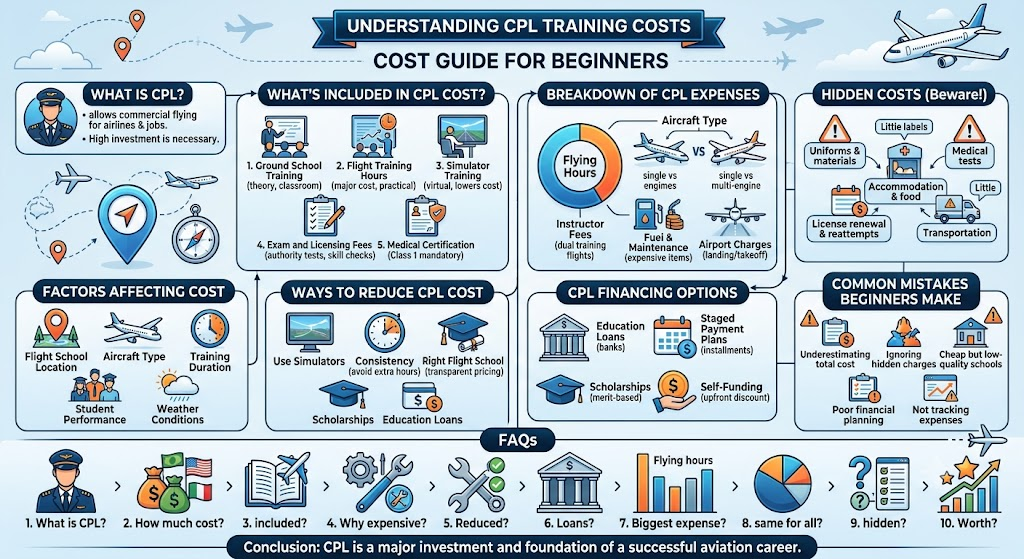
Introduction
A Commercial Pilot License (CPL) is the first major step toward becoming a professional pilot and building a career in aviation. It allows you to fly aircraft commercially and apply for airline and charter flying jobs. However, before starting this journey, it is very important to understand one key factor: the cost of CPL training.
CPL training is expensive because it involves flying hours, aircraft usage, instructor fees, simulator training, exams, and licensing processes. Many students begin training without fully understanding the total cost, which later creates financial pressure.
This guide explains the Commercial Pilot License cost for beginners in a simple and clear way so you can plan your aviation career without confusion.
What Is Included in CPL Training Cost?
The total CPL training cost is made up of several important components.
- Ground School Training
Aviation theory classes
Subjects like navigation, meteorology, air regulations
Classroom or online learning - Flight Training Hours
Practical flying experience in aircraft
Major part of CPL cost
Required for license completion - Simulator Training
Virtual flight practice sessions
Used for emergencies and instrument training
Lower cost compared to real flying - Exam and Licensing Fees
Aviation authority exams
Skill tests and check rides
License processing charges - Medical Certification
Class 1 medical test
Mandatory fitness requirement for pilots
Average Cost of Commercial Pilot License
The cost of a CPL varies depending on multiple factors such as location, flight school, and aircraft type.
General Overview:
CPL is considered a high-investment training program
Costs differ widely between countries and academies
Why Costs Differ:
Aircraft type used in training
Fuel prices and operational expenses
Flight school infrastructure
Training duration and efficiency
Breakdown of CPL Training Expenses
Understanding cost breakdown helps students plan better.
- Flying Hours Cost
Charged per hour of flight
Largest portion of CPL expenses - Aircraft Type Impact
Single-engine aircraft: lower cost
Multi-engine aircraft: higher cost - Instructor Fees
Paid during dual training flights
Higher for advanced instruction - Fuel and Maintenance
Aviation fuel is expensive
Regular maintenance increases cost - Airport Charges
Landing and takeoff fees
Vary based on airport location
Hidden Costs Students Should Know
Many beginners overlook additional expenses beyond tuition fees.
Common Hidden Costs:
Uniforms and study materials
Medical examinations
Accommodation and food
License renewal and exam reattempt fees
Transportation and travel costs
These hidden costs can significantly increase the total CPL budget if not planned in advance.
Factors That Affect CPL Cost
- Flight School Location
Training in different regions leads to cost variations.
- Aircraft Type
Advanced aircraft increase hourly training cost.
- Training Duration
Longer training requires more flying hours.
- Student Performance
Poor performance leads to extra flying hours.
- Weather Conditions
Bad weather can delay training and increase overall cost.
Ways to Reduce CPL Training Cost
✔ Choose the Right Flight School
Select schools with transparent pricing and structured training programs.
✔ Use Simulator Training
Simulators help reduce real aircraft flying hours.
✔ Apply for Scholarships
Some institutions offer financial assistance to eligible students.
✔ Maintain Regular Training Schedule
Consistency helps avoid repetition of flying hours.
✔ Consider Education Loans
Loans can help manage high upfront costs.
CPL Financing Options
- Education Loans
Offered by banks and financial institutions
Covers partial or full training cost - Installment Plans
Fees paid in monthly or staged payments
Reduces financial burden - Scholarships
Merit-based or need-based support
Limited availability - Self-Funding
Full payment at the start of training
Sometimes includes discounts
Common Mistakes Beginners Make - Underestimating Total Cost
Students often calculate only tuition fees and ignore extra expenses.
- Ignoring Hidden Charges
Additional costs like exams and accommodation are often missed.
- Choosing Low-Quality Cheap Schools
Lower fees may compromise training quality.
- Poor Financial Planning
Lack of budgeting leads to financial stress.
- Not Tracking Expenses
Without tracking, students may exceed their planned budget.
FAQs
- What is a Commercial Pilot License?
A CPL is a professional aviation license that allows a pilot to fly aircraft commercially and work in aviation careers.
- How much does CPL training cost?
CPL cost varies depending on location, flight school, and aircraft type, making it different for every student.
- What is included in CPL training cost?
It includes ground school, flight training, simulator sessions, exams, and medical certification.
- Why is CPL training expensive?
Because it involves aircraft operation, fuel, maintenance, instructors, and aviation regulations.
- Can CPL cost be reduced?
Yes, through simulators, scholarships, loans, and efficient training planning.
- Are education loans available for CPL?
Yes, many banks offer loans specifically for aviation training.
- What is the biggest expense in CPL training?
Flying hours are the most expensive part of CPL training.
- Do all students pay the same CPL cost?
No, costs vary depending on performance, location, and training structure.
- Are there hidden costs in CPL training?
Yes, including accommodation, medical tests, uniforms, and exam fees.
- Is CPL worth the investment?
Yes, it provides strong long-term career opportunities in aviation.
Conclusion
A Commercial Pilot License is a major investment, but it is also the foundation of a professional aviation career. Understanding the CPL training cost structure helps beginners prepare financially and avoid unexpected expenses during training.
From flight hours and aircraft type to hidden costs and financing options, every factor contributes to the total budget. With proper planning, smart financial decisions, and the right flight school, students can manage CPL training more effectively.
A well-planned approach not only reduces financial stress but also helps students focus on building a successful career in aviation.

