
Introduction
A Private Pilot License (PPL) is the first official certification that allows an individual to fly an aircraft for non-commercial purposes. It is the foundation of aviation training and is typically the starting point for students who want to become commercial pilots or pursue flying as a personal passion.
For new students, one of the most important concerns is understanding the total cost involved in obtaining a PPL. Pilot training is not a single fixed expense; it includes multiple stages, operational charges, and additional costs that can significantly affect the overall budget.
This guide explains the complete cost structure of a Private Pilot License in a clear and practical way so that aspiring pilots can plan their journey effectively.
What is Included in PPL Training Cost?
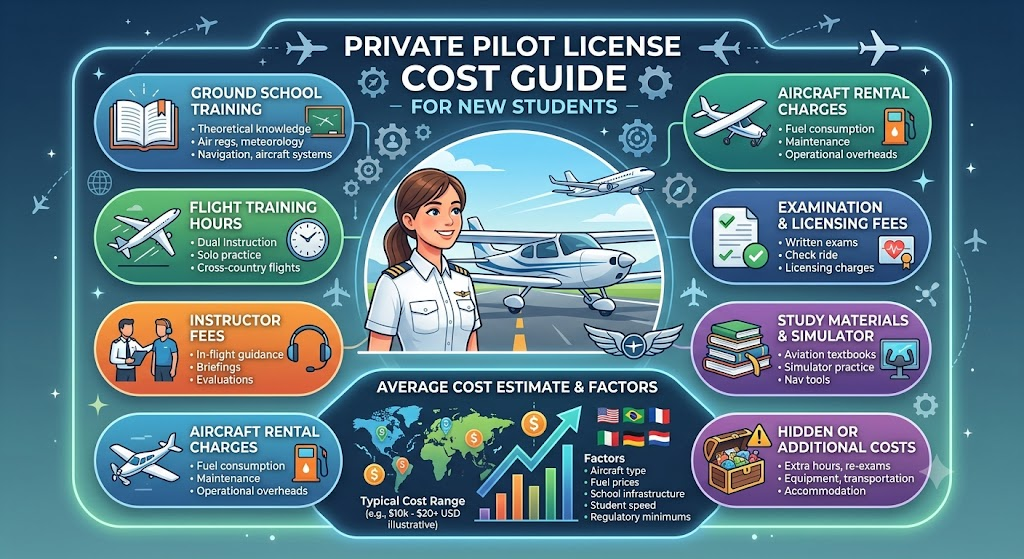
The total cost of a Private Pilot License consists of several components. Each part contributes to the overall training experience.
Ground School Training
Ground training covers theoretical aviation knowledge, including:
- Air regulations and aviation law
- Meteorology and weather interpretation
- Navigation techniques
- Aircraft systems and performance
Flight Training Hours
Flight training is the most significant cost factor and includes:
- Dual flight training with instructor
- Solo flying practice sessions
- Cross-country navigation flights
Instructor Fees
Certified flight instructors charge for:
- In-flight guidance and supervision
- Ground briefing before and after flights
- Performance evaluation
Aircraft Rental Charges
Aircraft usage is billed per hour and includes:
- Fuel consumption
- Maintenance and servicing
- Operational overheads
Examination and Licensing Fees
These include:
- Written theoretical exams
- Practical flight test or check ride
- Licensing authority processing charges
Medical Certification Costs
Medical fitness is mandatory for pilots:
- Initial aviation medical examination
- Periodic medical renewals as required
Study Materials and Simulator Training
- Aviation textbooks and manuals
- Flight simulator practice sessions
- Navigation tools and charts
Average Cost of PPL
The cost of a Private Pilot License varies depending on the country, flight school, and operational conditions.
Typical Cost Range
- India: Moderate range depending on flying school and aircraft availability
- USA: Higher due to operational and regulatory costs
- Europe: Varies by country and training structure
- Other regions: Depends on aviation infrastructure and fuel pricing
Key Reasons for Cost Differences
- Type of aircraft used for training
- Fuel price fluctuations
- Flight school infrastructure
- Minimum required flight hours
- Airport and airspace usage charges
Hidden or Additional Costs
Many students underestimate additional expenses beyond basic training fees.
- Extra flying hours beyond minimum requirement
- Re-examination fees for theory or practical tests
- Medical re-assessment costs
- Uniforms, headsets, and pilot equipment
- Transportation to flight training location
- Accommodation and daily living expenses
These costs can significantly increase the total budget if not planned properly.
Factors That Affect PPL Cost
Several important factors influence the total cost of obtaining a Private Pilot License.
Flight School Quality
Established schools may charge higher fees but offer better training efficiency and aircraft availability.
Aircraft Availability
Limited aircraft availability can extend training duration and increase total cost.
Weather Conditions
Poor weather can delay flying sessions, increasing total training time.
Student Learning Speed
Faster learning reduces extra flying hours and overall cost.
Regulatory Requirements
Different aviation authorities set different minimum flight hour requirements.
How to Reduce PPL Training Cost
Although pilot training is expensive, careful planning can help reduce costs.
- Choose a reputable and efficient flying school
- Maintain a consistent flying schedule
- Use simulators to practice procedures
- Prepare thoroughly for written examinations
- Avoid long gaps between training sessions
Is PPL Worth the Investment?
A Private Pilot License is not just a certification; it is the foundation of aviation skills and opportunities.
Key Benefits
- Entry point to commercial pilot training
- Personal flying privileges
- Strong technical aviation knowledge
- Career opportunities in aviation industry
Career Path Opportunities
- Commercial Pilot License progression
- Flight instructor roles
- Charter and private aviation jobs
- Aviation operations and management careers
Even as a hobby, PPL offers a highly valuable and unique skill set.
FAQs
1. How long does it take to complete a Private Pilot License?
The duration typically ranges from 6 months to 1 year depending on training frequency, weather conditions, and student progress.
2. What is the minimum flight hour requirement for PPL?
Most aviation authorities require approximately 40 to 60 flight hours, depending on regulations.
3. Can students pursue PPL while studying?
Yes, many students complete PPL training part-time along with their academic studies.
4. Is medical fitness required for PPL training?
Yes, a valid aviation medical certificate is mandatory before starting flight training and must be maintained.
5. What is the minimum age requirement for PPL?
The minimum age is generally 17 to 18 years depending on the aviation authority.
6. What subjects are covered in ground school?
Subjects include navigation, meteorology, air regulations, aircraft systems, and flight planning.
7. Is simulator training compulsory?
It may not always be mandatory but is highly recommended for skill development and cost reduction.
8. What happens if I fail a flight test?
You can retake the test after additional training, but extra fees will apply.
9. Can international students apply for PPL training?
Yes, many flying schools accept international students with proper documentation and visa requirements.
10. Can PPL be converted into a Commercial Pilot License?
Yes, PPL is the first step toward CPL, and additional training hours are required for conversion.
Conclusion
A Private Pilot License is one of the most important milestones for anyone aspiring to enter the aviation field. While the cost may appear significant, it is important to understand that it is a structured investment covering theoretical knowledge, practical flight experience, and professional skill development.
By understanding all cost components, hidden expenses, and influencing factors, students can plan their training more effectively and avoid financial surprises. Choosing the right flight school, maintaining consistent training, and preparing well for exams can significantly reduce both time and overall cost.
Ultimately, a PPL is more than just a license—it is the beginning of a disciplined and rewarding aviation journey. With proper planning and commitment, it becomes a strong foundation for future pilot careers or personal flying goals.

