
Introduction
Choosing a pilot training offer is one of the most important decisions in your aviation journey. For many students, it is not just an admission decision; it is a major investment of money, time, effort, and future career planning. A good pilot training program can build your confidence, discipline, flying skills, and professional foundation. A poor decision, however, can lead to delays, unexpected costs, confusion, and frustration.
Before accepting any pilot training offer, you should ask clear and practical questions. Do not decide only because the brochure looks attractive, the price seems low, or the school promises fast completion. Pilot training requires proper planning, transparent communication, strong instructors, safe aircraft, and reliable student support.
This guide from PilotsDeal.com will help you understand the most important questions to ask before joining a flight school or aviation training institute.
Why Evaluating a Pilot Training Offer Is Important
Pilot training is a serious career step. It involves ground classes, flight training, simulator sessions, medical checks, licensing exams, and continuous practice. Every training institute may look similar from the outside, but the quality of training can be very different.
A proper evaluation helps you understand what you are actually paying for. It also helps you avoid hidden charges, unrealistic promises, poor training schedules, and weak career support. Asking the right pilot training questions before accepting an offer gives you better control over your aviation career.
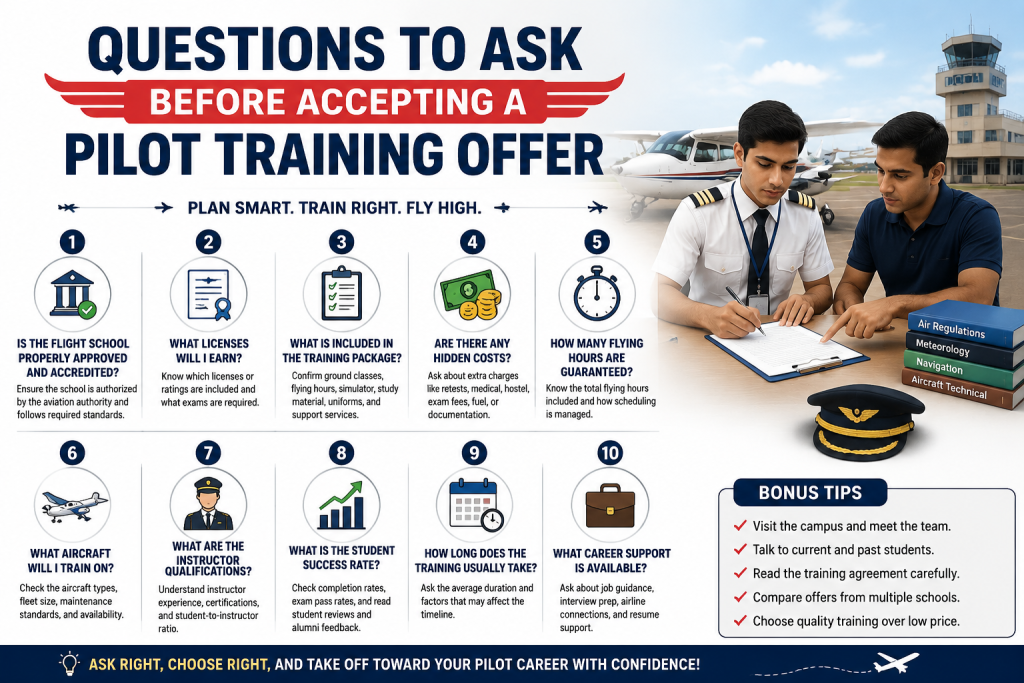
Is the Flight School Properly Approved and Accredited?
The first question you should ask is whether the flight school is properly approved by the required aviation authority. A genuine aviation training institute should be able to clearly explain its approvals, training permissions, and licensing process.
Do not accept vague answers. Ask for details about the school’s authorization, training standards, and compliance process. If you are planning DGCA pilot training or CPL training, make sure the school follows the required rules and documentation process.
What Licenses Will I Earn?
Before accepting the offer, ask what license or rating you will receive after completing the training. Some students assume that every course leads directly to a commercial pilot career, but that is not always true.
Ask whether the program includes SPL, PPL, CPL, instrument rating, multi-engine rating, or any other additional training. Also ask what exams you need to pass and what steps are required after completing the course.
What Is Included in the Training Package?
A pilot training offer should clearly explain what is included in the total package. Ask whether the fee includes ground school, flying hours, simulator sessions, study material, uniforms, examination support, and documentation assistance.
Some offers look affordable at first but include only basic training. Later, students may discover that they need to pay extra for important items. A transparent flight school admission offer should give a complete cost breakdown.
Are There Any Hidden Costs?
Hidden costs are one of the biggest problems students face in pilot training. Before signing anything, ask about additional expenses such as extra flying hours, retests, medical exams, hostel fees, transport, fuel surcharges, exam fees, license processing fees, and documentation charges.
You should also ask what happens if you need more flying hours than expected. A clear answer will help you plan your budget properly.
How Many Flying Hours Are Guaranteed?
Flying hours are a major part of commercial pilot training. Ask how many flying hours are included in your offer and whether they are guaranteed. Also ask how the school manages flight scheduling.
Sometimes delays happen because of weather, aircraft maintenance, instructor availability, or student load. A good flight school should have a practical system for scheduling students fairly.
What Aircraft Will I Train On?
Ask about the aircraft used for training. You should know the fleet size, aircraft type, maintenance standards, and availability. Modern avionics, safe aircraft condition, and regular maintenance are important for good training quality.
Also ask how many aircraft are actively available for students. A school may list many aircraft, but only a few may be operational.
What Are the Instructor Qualifications?
Your flight instructor plays a major role in your learning experience. Ask about instructor experience, certifications, availability, and student-to-instructor ratio.
A good instructor does more than teach flying. They help students build confidence, discipline, decision-making skills, and professional habits. Strong mentorship can make a big difference in your pilot career guidance.
What Is the Student Success Rate?
Ask about student completion rates, exam pass rates, license success rates, and placement support. While no school can honestly guarantee airline jobs, a good institute should be able to share general student outcomes.
Also check student reviews, alumni feedback, and real experiences. Speaking with past students can help you understand the actual training environment.
How Long Does the Training Usually Take?
Pilot training may take longer than expected due to weather, aircraft availability, instructor schedules, exam timelines, or administrative delays. Ask the school about the average completion time, not just the minimum possible duration.
A realistic timeline is better than an unrealistic promise. Fast training is useful only when quality and safety are not compromised.
What Career Support Is Available?
A strong pilot academy selection should include career support. Ask whether the school provides resume guidance, interview preparation, airline exam support, networking opportunities, or placement assistance.
Remember, placement assistance is not the same as guaranteed employment. Be careful if a school promises a sure airline job without clear conditions.
What Is the Refund or Cancellation Policy?
Before accepting the offer, read the refund and cancellation policy carefully. Ask what happens if you withdraw, delay admission, fail medical checks, or cannot continue training.
A professional training institute should provide clear written policies. Never depend only on verbal promises.
What Financing Options Are Available?
Pilot training fees can be high, so ask about payment flexibility. Check whether the school offers installment plans, loan assistance, scholarship options, or staged payments.
Also compare the total cost with other institutes. The cheapest offer is not always the best, and the most expensive offer is not always the highest quality.
Can I Speak With Current Students or Alumni?
Yes, you should definitely ask this. Current students and alumni can give you honest feedback about flying schedules, instructors, aircraft availability, hostel conditions, support staff, and hidden costs.
If the school avoids connecting you with students, take it as a warning sign.
Warning Signs You Should Never Ignore
Be careful if the pilot training offer includes unrealistic promises, guaranteed airline jobs, very low fees without explanation, unclear documents, poor communication, old aircraft, lack of approvals, or pressure to pay immediately.
Other warning signs include bad student reviews, no written fee structure, weak infrastructure, and unclear refund policies. A good aviation education provider should be transparent and professional.
Tips for Comparing Multiple Pilot Training Offers
Do not accept the first offer without comparison. Compare flight schools based on total cost, approvals, instructor quality, aircraft condition, flying hours, location, accommodation, student reviews, completion timeline, and career support.
Create a simple comparison table for yourself before making the final decision. This will help you choose logically instead of emotionally.
Mistakes Students Make Before Joining Flight School
Many students choose a school only because of low fees. Some ignore hidden charges, avoid visiting the campus, skip student feedback, or sign agreements without reading them fully.
Another common mistake is believing every placement promise. A strong aviation career requires training quality, discipline, exam preparation, communication skills, and continuous learning.
Final Checklist Before Accepting a Pilot Training Offer
Before accepting the offer, confirm the school approval, total fee, included flying hours, hidden costs, instructor quality, aircraft availability, refund policy, training timeline, accommodation details, and career support.
Also review all documents carefully. Keep written proof of all commitments made by the school.
FAQs
1. How do I know if a pilot training offer is genuine?
A genuine pilot training offer should include clear details about approvals, fees, flying hours, licenses, refund policies, and training structure. The school should provide written documents and answer your questions clearly. Avoid offers that depend only on verbal promises.
2. Should I compare multiple flight schools?
Yes, comparing multiple flight schools is important. It helps you understand pricing, training quality, aircraft availability, and career support. A comparison also protects you from choosing a school only because of attractive marketing.
3. What hidden costs should I expect?
Hidden costs may include extra flying hours, exam fees, retests, medical checks, accommodation, transport, uniforms, fuel surcharges, and license processing charges. Always ask for a complete cost breakdown before accepting the offer.
4. Can I negotiate a pilot training offer?
In some cases, you may be able to discuss payment plans, installment options, or included services. However, do not compromise on training quality, safety, or instructor support just to reduce the fee.
5. How important are instructor qualifications?
Instructor qualifications are very important because your instructor directly affects your flying skills and confidence. Experienced instructors can guide you through technical lessons, safety practices, and real cockpit decision-making.
6. What flying hours should be included?
The offer should clearly mention the number of flying hours included in the program. You should also ask what happens if you need extra hours and how those additional hours will be charged.
7. Is airline placement guaranteed?
No flight school should make unrealistic airline job guarantees. Some schools may offer placement support, interview preparation, or airline connections, but final selection depends on your skills, exams, performance, and airline requirements.
8. Should I visit the campus before accepting?
Yes, visiting the campus is highly recommended. It allows you to inspect aircraft, classrooms, simulators, hostel facilities, and student support systems. You can also meet instructors and speak with current students.
9. What documents should I review before signing?
Review the admission letter, fee structure, refund policy, training agreement, flying hour details, course outline, and licensing process. Make sure every important commitment is provided in writing.
10. What is the biggest mistake students make?
The biggest mistake is accepting an offer without proper research. Many students focus only on low fees or quick completion promises. A better approach is to compare quality, transparency, safety, and long-term career support.
Conclusion
Accepting a pilot training offer should never be a rushed decision. It is a major step toward your aviation career, and the quality of your training can shape your future confidence, skills, and opportunities. By asking the right questions, you can avoid confusion and choose a flight school that matches your goals.
PilotsDeal.com encourages aspiring pilots to compare training offers carefully, understand the full cost, verify approvals, speak with students, and make a confident decision. A smart beginning can lead to a stronger and more successful pilot journey

