
1. Introduction
Becoming a pilot is one of the most rewarding career paths in aviation, but it also requires one of the highest financial investments. From ground school education to flight training hours, simulator sessions, licensing fees, and medical examinations, the overall cost of pilot training can be overwhelming for many students and their families.
This is why strong financial planning is essential for every student pilot. Without proper budgeting and financial awareness, many aspiring aviators face stress, delays in training, or even discontinuation of their dream.
In this guide, we will explore the best financial planning tips for student pilots, helping you understand how to manage expenses, reduce costs, and build a sustainable financial roadmap for your aviation journey.
2. Understanding the Cost of Pilot Training
Before planning finances, it is important to understand where your money goes during pilot training.
Major Cost Components:
- Ground School Training: Theory classes, aviation knowledge, and exam preparation
- Flying Hours: Aircraft rental, fuel, and instructor charges
- Simulator Training: Practice sessions for real-flight scenarios
- Medical Examinations: Class 1 medical certification
- Licensing Fees: DGCA exams, skill tests, and documentation
- Miscellaneous Expenses: Study materials, uniforms, travel, accommodation
Pilot training is a long-term investment, and costs can vary based on location, flying school, and training structure.
3. Why Financial Planning Matters for Student Pilots
Financial planning is not just about saving money—it is about ensuring a smooth and stress-free training journey.
Key Benefits:
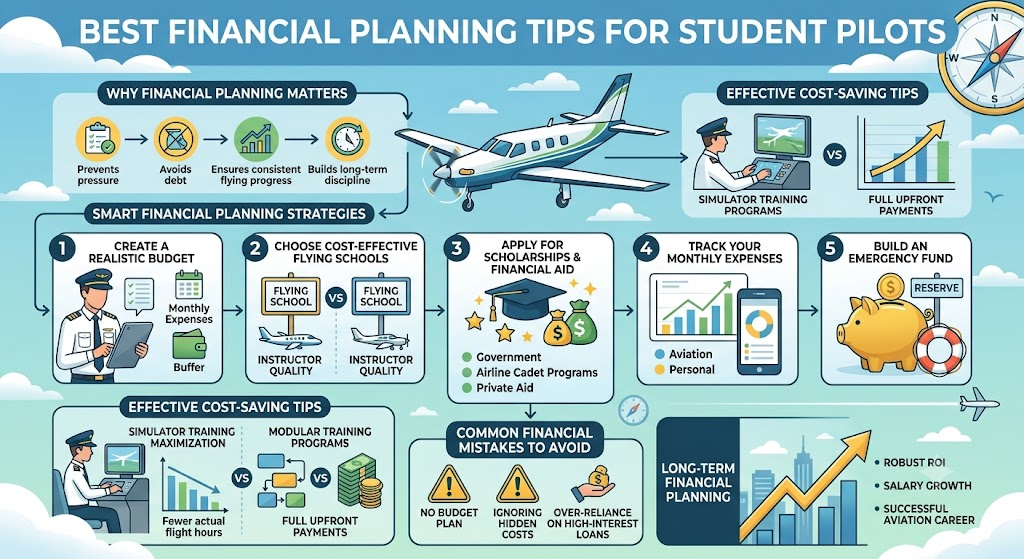
- Prevents financial pressure during training
- Helps avoid unnecessary debt burden
- Ensures consistent progress in flying hours
- Improves decision-making while selecting flying schools
- Builds long-term financial discipline for aviation careers
Without planning, even the most talented students may struggle to complete their training on time.
4. Best Financial Planning Tips for Student Pilots
Here are practical and effective strategies every student pilot should follow:
4.1 Create a Realistic Budget
Plan your total training cost and divide it into monthly or phase-wise expenses. Always include a buffer for unexpected costs.
4.2 Separate Education and Personal Expenses
Maintain separate accounts for training fees and daily living expenses to avoid confusion and overspending.
4.3 Choose Cost-Effective Flying Schools
Compare multiple flying schools based on:
- Total training package
- Aircraft availability
- Instructor quality
- Location costs
4.4 Apply for Scholarships and Financial Aid
Explore:
- Government aviation scholarships
- Airline cadet programs
- Private aviation institute discounts
4.5 Track Your Monthly Expenses
Maintain a simple expense tracker to monitor spending on training, accommodation, and daily needs.
4.6 Avoid Unnecessary Spending
During training, prioritize essentials over luxury spending. Focus your resources on flight hours and study materials.
4.7 Build an Emergency Fund
Keep a small financial reserve for unexpected delays, exam reattempts, or medical requirements.
5. Smart Ways to Reduce Pilot Training Costs
Reducing costs without compromising quality is crucial for student pilots.
Effective Cost-Saving Strategies:
- Choose modular training programs instead of full upfront payments
- Train in regions where flying costs are lower
- Maximize simulator training before real flight hours
- Start scholarship applications early
- Compare fee structures across multiple academies
- Avoid unnecessary license upgrades during early training stages
Small savings during training can significantly reduce total financial burden.
6. Loan and Scholarship Options for Student Pilots
If personal funding is not enough, several financial support options are available.
6.1 Aviation Education Loans
Banks and financial institutions offer education loans specifically for pilot training.
6.2 Government Scholarships
Some aviation authorities provide merit-based or need-based financial support.
6.3 Airline Cadet Programs
Selected airlines sponsor training costs in exchange for future employment commitments.
6.4 Private Financial Aid
Aviation foundations and institutions may offer partial funding or fee discounts.
Understanding these options helps students plan better and reduce dependency on personal savings.
7. Common Financial Mistakes to Avoid
Many student pilots face financial challenges due to avoidable mistakes:
- Not calculating total training cost in advance
- Ignoring hidden expenses like medical renewals and exams
- Over-reliance on high-interest loans
- Lack of proper budgeting system
- Choosing flying schools based only on low fees instead of quality
- Poor tracking of monthly spending
Avoiding these mistakes can significantly improve financial stability during training.
8. Long-Term Financial Planning for Aviation Careers
Financial planning should not stop at training—it should continue into your career.
Key Considerations:
- Return on Investment (ROI): Pilot training is expensive but offers high long-term earning potential
- Salary Growth: Entry-level pilots start lower but experience rapid salary growth
- Loan Repayment Strategy: Plan repayment after securing airline placement
- Career Stability: Aviation offers global opportunities with long-term demand
Proper planning ensures a smooth transition from student pilot to professional airline career.
9. FAQs
1. How much does pilot training usually cost?
Pilot training costs vary by country and school, but it generally includes ground school, flying hours, and licensing expenses, making it a significant financial investment.
2. Can student pilots get education loans easily?
Yes, many banks and financial institutions offer education loans for aviation training, depending on eligibility and documentation.
3. Are scholarships available for pilot training students?
Yes, government programs, airlines, and aviation institutes offer scholarships based on merit and financial need.
4. What is the best way to reduce pilot training costs?
Choosing modular training, applying for scholarships, and using simulators effectively can help reduce overall costs.
5. Is financial planning necessary for all student pilots?
Yes, financial planning is essential to ensure smooth training without interruptions or financial stress.
6. Can I work while doing pilot training?
Some students take part-time work, but training schedules are intensive, so it depends on individual capacity and program structure.
7. What is the biggest financial mistake student pilots make?
The most common mistake is underestimating total training costs and not planning a proper budget in advance.
10. Conclusion
Financial planning is a critical part of every student pilot’s journey. While pilot training is expensive, proper budgeting, smart decision-making, and awareness of scholarships and loan options can make the path much more manageable.
By understanding costs, tracking expenses, and avoiding financial mistakes, aspiring pilots can focus more on their training and less on financial stress. With discipline and planning, the dream of becoming a professional pilot becomes not only achievable but also financially sustainable.
A well-planned financial strategy today can secure a successful aviation career tomorrow.

