
Introduction
Pilot training is an exciting journey, but it also needs careful financial planning. Student pilots must pay for flying hours, instructor fees, simulator sessions, ground school, exams, study materials, travel, and sometimes accommodation.
Because pilot training can involve many different expenses, beginners should learn how to plan their budget from the start. One useful way to manage training cost better is through simulator training.
This article explains the Benefits of Simulator Training for Budget Planning in simple language for student pilots, aviation beginners, and parents.
What Is Simulator Training?
Simulator training means practicing flying skills in a flight simulator instead of an actual aircraft. A simulator may be a computer-based system, cockpit trainer, procedure trainer, or advanced flight training device.
It helps student pilots practice:
- Cockpit procedures
- Basic aircraft controls
- Navigation
- Instrument flying
- Emergency procedures
- Radio communication practice
- Checklist use
- Repeated lesson practice
Simulator training gives students a safe space to learn before applying those skills in a real aircraft.
Why Budget Planning Matters in Pilot Training
Pilot training includes many costs. Some are clear from the beginning, while others may appear during training.
Common pilot training expenses include:
- Aircraft rental charges
- Instructor fees
- Simulator training fees
- Ground school cost
- Exam fees
- Medical certificate cost
- Study materials
- Headset and accessories
- Travel and accommodation
- Extra repeat lessons
Without a proper budget, students may underestimate the total cost. This can create stress later. Budget planning helps students and parents understand expected costs, actual spending, and extra practice needs.
How Simulator Training Supports Better Budget Planning
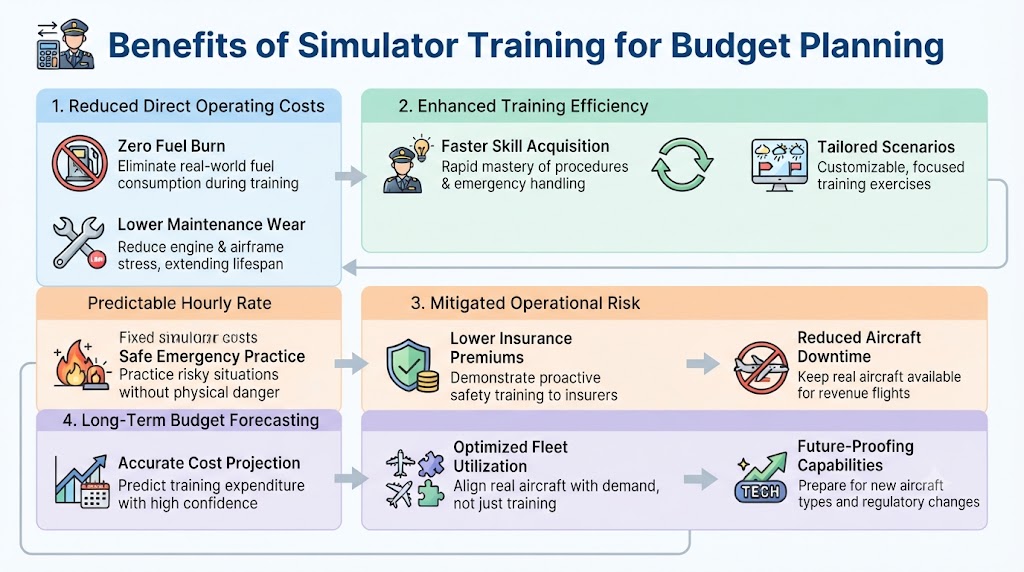
Simulator training supports budget planning because it allows students to practice important skills before using more expensive real aircraft time.
A student can use simulator sessions to understand procedures, correct weak areas, and build confidence. This may help reduce unnecessary repeat lessons in the aircraft.
Simulator training also makes it easier to plan learning progress. Students can separate simulator hours from aircraft hours and track how much money is spent on each part of training.
Key Benefits of Simulator Training for Budget Planning
1. Lower Practice Cost Compared to Aircraft Flying
Simulator practice is often less expensive than real aircraft flying. This makes it useful for repeating lessons such as instrument scanning, checklist practice, navigation, and emergency procedures.
2. Safe Emergency Procedure Practice
Some emergency situations cannot be practiced fully in a real aircraft. In a simulator, students can safely practice engine failure procedures, instrument problems, weather situations, and decision-making.
3. Weather-Independent Training
Real flying may be delayed due to bad weather. Simulator sessions can continue even when aircraft flying is not possible. This helps students keep learning and avoid long training gaps.
4. Better Preparation Before Real Flying
When students understand a lesson in the simulator first, they can use real aircraft time more effectively. This improves both learning and budget control.
5. Easier Repetition of Weak Lessons
If a student struggles with navigation, radio calls, or instrument flying, the simulator allows repeated practice without using costly aircraft hours every time.
6. Improved Confidence Before Check Rides
Simulator sessions can help students review procedures before skill tests or check rides. This can reduce stress and improve preparation.
7. Better Tracking of Training Hours
Students can track simulator hours and aircraft hours separately. This gives a clearer picture of total training progress and expenses.
Simulator Training Cost vs Real Aircraft Practice
| Point | Simulator Training | Real Aircraft Practice |
|---|---|---|
| Cost level | Usually lower | Usually higher |
| Weather dependency | Not affected by weather | Can be delayed by weather |
| Emergency practice | Safer and easier | Limited in real aircraft |
| Lesson repetition | Easier to repeat | More costly to repeat |
| Real flying experience | Simulated | Actual flying |
| License requirement | May support training | Essential for licensing |
| Best use | Practice and preparation | Real aircraft skill building |
Simulator training is useful for cost control, but it cannot replace all real flying requirements. Student pilots still need actual aircraft hours for license training.
How Beginners Can Use Simulator Sessions Wisely
To get better value from simulator training, students should prepare before every session.
Useful tips include:
- Read the lesson topic before the session
- Know what skill you want to practice
- Ask your instructor for clear goals
- Focus on weak areas
- Take notes after each session
- Record simulator hours
- Track cost per session
- Review progress weekly
Simulator time should be treated seriously. It is not just practice; it is part of professional learning.
Common Budget Mistakes Student Pilots Should Avoid
Many beginners make mistakes while planning simulator and aircraft training costs.
Avoid these mistakes:
- Ignoring simulator fees in the total budget
- Not asking what is included in the package
- Choosing only the cheapest option
- Skipping simulator practice completely
- Not tracking repeat lesson costs
- Forgetting instructor charges
- Not recording simulator hours
- Not comparing simulator and aircraft cost
- Underestimating extra practice needs
A clear budget helps students avoid surprises during training.
Simple Budget Tracking Table
Student pilots can use a table like this to track simulator and aircraft training costs:
| Date | Training Type | Simulator Hours | Aircraft Hours | Instructor Fee | Session Cost | Notes |
|---|---|---|---|---|---|---|
| 05 Jan | Simulator | 1.0 | 0 | ₹2,000 | ₹6,000 | Instrument practice |
| 08 Jan | Aircraft Flying | 0 | 1.2 | ₹3,000 | ₹22,000 | Circuit training |
| 12 Jan | Simulator | 1.5 | 0 | ₹2,500 | ₹8,000 | Emergency procedures |
| 15 Jan | Aircraft Flying | 0 | 1.0 | ₹3,000 | ₹20,000 | Landing practice |
This type of tracking helps students and parents compare planned cost with actual cost.
How Parents Can Use Simulator Training for Cost Planning
Many student pilots receive financial support from parents. Simulator training records can help parents understand how training money is being used.
Parents can review:
- Number of simulator hours completed
- Number of aircraft flying hours completed
- Total monthly training cost
- Extra practice requirements
- Areas where the student needs improvement
- Whether the training budget needs adjustment
This makes pilot training planning more transparent and organized.
How pilotsdeal.com Can Help Aviation Learners?
pilotsdeal.com can be a helpful platform for aviation learners who want simple information about pilot training budget planning, simulator training cost, flying hours, and student pilot preparation.
For beginners, aviation training expenses can feel confusing. Platforms like pilotsdeal.com can explain practical topics in simple language so students and parents can make better training decisions.
FAQs
1. How does simulator training help with budget planning?
Simulator training helps students practice skills before real flying, track learning progress, and reduce unnecessary repeated aircraft lessons.
2. Is simulator training cheaper than aircraft flying?
In many cases, simulator training costs less than real aircraft flying, but the exact cost depends on the simulator type and training center.
3. Can simulator training replace real aircraft flying?
No, simulator training cannot fully replace real aircraft flying. It supports learning, but actual aircraft hours are required for pilot training.
4. Should student pilots track simulator hours separately?
Yes, simulator hours should be tracked separately from aircraft flying hours. This helps with better training and budget planning.
5. Why is simulator training useful for beginners?
It helps beginners practice cockpit procedures, navigation, emergency handling, and instrument flying in a safe environment.
6. What costs should be tracked during simulator training?
Students should track simulator hourly fees, instructor fees, session charges, study material cost, and repeat practice cost.
7. Can simulator training reduce repeat lesson expenses?
It may help reduce unnecessary repeat aircraft lessons by allowing students to practice weak areas before flying again.
8. What mistakes should beginners avoid?
Beginners should avoid skipping preparation, choosing only by low price, not checking package details, and not tracking simulator expenses.
9. How often should students review training expenses?
Students should review expenses weekly or monthly to understand actual spending and adjust the budget if needed.
10. Is simulator training good for parents to monitor cost?
Yes, simulator records help parents understand training progress, planned hours, actual expenses, and extra practice needs.
Final Thoughts
Simulator training is useful not only for learning but also for budget planning. It helps students practice safely, repeat weak lessons, prepare for real flying, and understand training expenses more clearly.
However, simulator training should be used as a support tool. It cannot fully replace real aircraft flying hours required for pilot training.
A smart student pilot tracks both simulator and aircraft hours, prepares before every session, and reviews training expenses regularly. With proper planning, simulator training can become an important part of both learning progress and financial control.

