
Introduction
Becoming a pilot is a dream career for many students, but it comes with one major challenge: high training costs. From ground school to flight hours, simulator sessions, exams, and licensing fees, the total investment required for pilot training can feel overwhelming for most families.
To make this journey more manageable, many flight schools and aviation academies offer pilot training payment plans. These plans help students spread the cost over time instead of paying a large amount upfront. Understanding these options clearly can help you make smarter financial decisions and focus on your aviation career without unnecessary stress.
In this blog, we will break down pilot training payment plans in a simple and practical way so you can choose the best option for your future.
What Are Pilot Training Payment Plans?
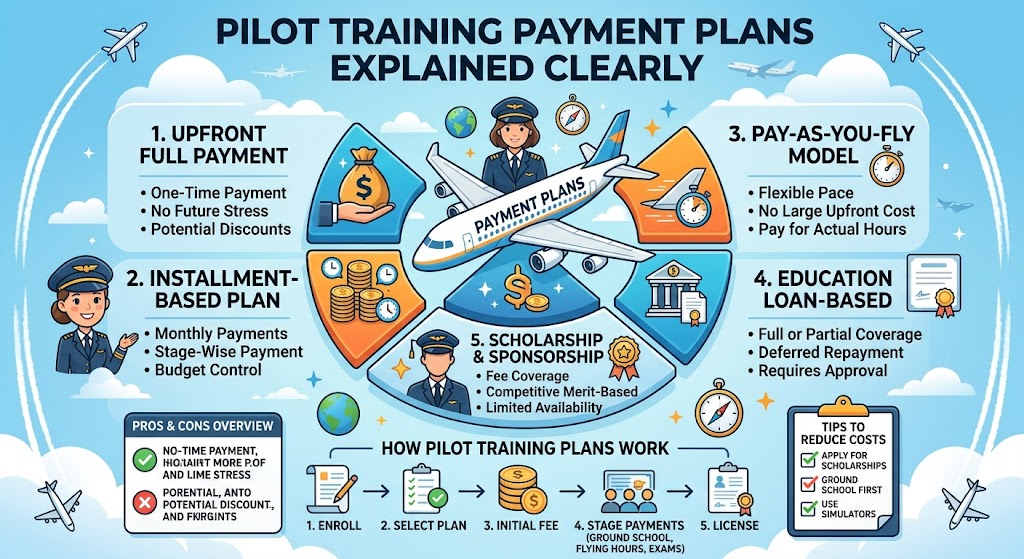
Pilot training payment plans are flexible financial structures offered by flight schools that allow students to pay their course fees in smaller parts instead of one large payment.
These plans help students manage aviation training costs by offering:
- Monthly installment payments
- Stage-wise payment during training
- Pay-per-flight-hour options
- Education loan support
- Scholarship-based assistance
The main purpose is to make pilot training more accessible and financially manageable for students from different backgrounds.
Types of Pilot Training Payment Plans
1. Upfront Full Payment Plan
In this option, students pay the entire course fee at the beginning of training.
Key Points:
- One-time full payment
- Sometimes includes discounts
- No future payment stress
Limitations:
- High initial financial burden
- Not suitable for all students
2. Installment-Based Payment Plan
This is one of the most popular payment options in aviation training.
How it works:
- Fees divided monthly or per training phase
- Payments aligned with training progress
- Easier financial planning
Benefits:
- Affordable monthly structure
- Better budget control
- Widely available
3. Pay-As-You-Fly Model
Students pay based on actual flying hours completed.
Features:
- Charges depend on flight usage
- Flexible training pace
- No large upfront cost
Best for:
- Flexible learners
- Students who prefer gradual training
4. Education Loan-Based Plan
Many students use bank loans or aviation finance options to fund their training.
Highlights:
- Covers full or partial training cost
- Repayment starts after course completion
- Requires eligibility approval
Pros:
- Immediate access to training
- Reduces upfront burden
Cons:
- Interest charges apply
- Approval process required
5. Scholarship or Sponsored Training
Some aviation institutes offer financial support based on merit or need.
Key Points:
- Partial or full fee coverage
- Highly competitive
- Limited availability
How Pilot Training Payment Plans Work
Pilot training costs are usually divided into multiple components, and payment plans are structured around these stages.
Common Cost Breakdown:
- Ground school training
- Flight simulator sessions
- Flying hours
- Exam fees
- Licensing charges
- Medical and documentation costs
Step-by-Step Process:
- Student enrolls in a flight school
- Payment plan is selected
- Initial registration fee is paid
- Training fees are paid in stages
- Final certification and exam fees are paid
This structure ensures financial flexibility throughout the training period.
Pros and Cons of Payment Options
Upfront Payment
Pros:
- Discounts may be available
- No future payments
Cons:
- Very high initial cost
Installment Plan
Pros:
- Easy monthly payments
- Budget-friendly
Cons:
- Slightly higher total cost
Pay-As-You-Fly
Pros:
- Pay only for usage
- Flexible learning speed
Cons:
- Total cost can vary
Education Loan
Pros:
- Covers full cost
- Immediate training access
Cons:
- Interest repayment required
How to Choose the Right Payment Plan
Choosing the right plan depends on your financial situation and career goals.
1. Budget Capacity
If you can manage a large amount, upfront payment may save money. Otherwise, installments are safer.
2. Training Speed
Fast-track students may prefer structured installment plans.
3. Financial Stability
Make sure monthly payments do not affect your daily living expenses.
4. Loan Readiness
Check eligibility, interest rates, and repayment terms before applying.
5. School Transparency
Always choose schools with clear fee breakdowns and no hidden charges.
Common Mistakes Students Make
1. Ignoring Hidden Costs
Extra charges like exams, uniforms, and simulator fees are often overlooked.
2. Choosing Only Cheap Options
Low fees may sometimes mean compromised training quality.
3. Poor Budget Planning
Many students forget living expenses during training.
4. Not Checking Refund Policies
Always understand refund and cancellation rules before enrolling.
5. Over-Borrowing Loans
Taking large loans without repayment planning can create financial stress later.
Tips to Reduce Pilot Training Costs
- Apply for aviation scholarships early
- Complete ground training before flying
- Choose schools with efficient aircraft usage
- Use simulators for practice to reduce flight costs
- Plan full budget including accommodation and travel
Frequently Asked Questions (FAQs)
1. What is a pilot training payment plan?
It is a structured system where students pay training fees in installments or stages instead of one lump sum payment.
2. Why do flight schools offer payment plans?
They help students manage high training costs and make aviation education more accessible.
3. Can I pay pilot training fees monthly?
Yes, many flight schools offer monthly installment options.
4. Is education loan available for pilot training?
Yes, many banks and financial institutions provide aviation education loans.
5. What is pay-as-you-fly training?
It is a system where students pay only for the actual flying hours they complete.
6. Are scholarships available for pilot training?
Yes, but they are limited and usually based on merit or financial need.
7. Is pilot training expensive even with payment plans?
Yes, but payment plans make it more manageable over time.
8. Can I switch payment plans during training?
Some schools allow changes, but it depends on their policy.
9. What hidden costs should I expect?
Medical tests, exam fees, simulator sessions, and licensing charges may be additional.
10. Which payment plan is best for beginners?
Installment-based plans are usually the most suitable for beginners.
Conclusion
Pilot training is a significant investment, but it should not stop you from achieving your dream of becoming a pilot. With the right pilot training payment plans, you can manage your finances more effectively and focus on your training journey without stress.
Whether you choose installment plans, education loans, pay-as-you-fly options, or scholarships, the key is to understand each option clearly and choose what fits your financial situation best. Always plan ahead, read fee structures carefully, and avoid hidden costs.
With proper financial planning and the right guidance, your dream of flying high can become a reality in a structured and stress-free way.

