
Introduction
Pilot training is one of the most exciting career paths in aviation, but it is also one of the most expensive. While many students assume that only flying hours determine the cost, there is another major factor that significantly impacts total expenses: the type of aircraft used for training.
Different aircraft come with different operating costs, fuel consumption levels, maintenance requirements, and technology standards. Because of this, choosing or being assigned a specific training aircraft can greatly change the overall pilot training fees.
In this blog, we will clearly explain how aircraft type affects pilot training costs and what every aspiring pilot should understand before selecting a flight school.
What Does Aircraft Type Mean in Pilot Training?
In pilot training, aircraft type refers to the category and complexity of the airplane used during flight lessons. Not all training aircraft are the same—some are simple and cost-effective, while others are advanced and expensive to operate.
Common examples include:
Basic single-engine trainer aircraft
Multi-engine training aircraft
Light sport aircraft
Glass cockpit modern aircraft
Flight simulators
Each type serves a different purpose in training and comes with a different cost structure.
Types of Aircraft Used in Pilot Training
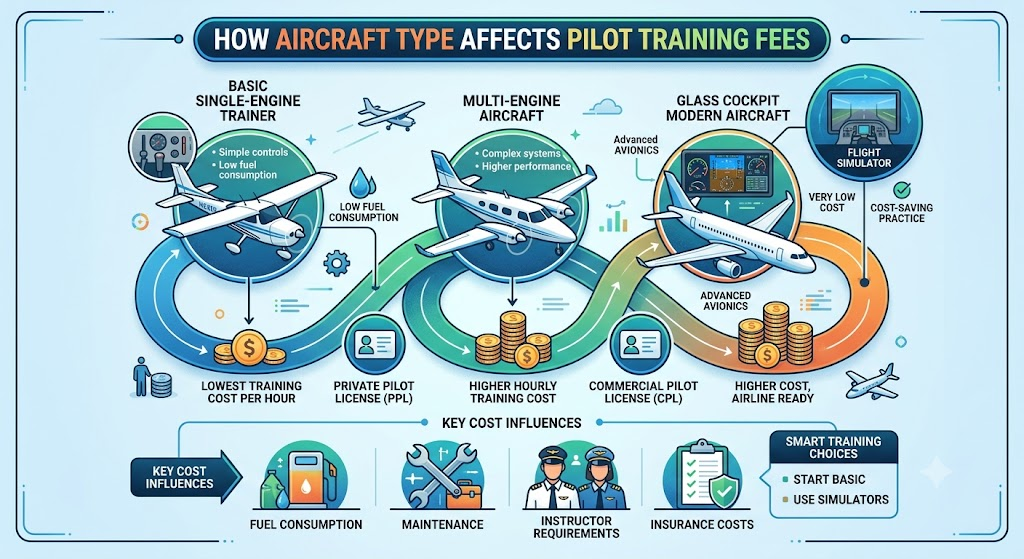
- Single-Engine Trainer Aircraft
These are the most commonly used aircraft for beginner pilots.
Features:
Simple controls
Low fuel consumption
Easy handling
Examples: Cessna 152, Cessna 172
Cost Impact: Lowest training cost per hour
- Multi-Engine Aircraft
Used in advanced stages of pilot training.
Features:
Two engines
More complex systems
Higher performance
Cost Impact: Higher hourly training cost due to fuel and maintenance
- Light Sport Aircraft (LSA)
These are lightweight aircraft used for basic training in some regions.
Features:
Lower weight
Simple structure
Limited range
Cost Impact: Moderate to low cost, depending on availability
- Glass Cockpit Aircraft
Modern aircraft equipped with digital displays and advanced avionics.
Features:
Digital flight instruments
Airline-like cockpit environment
Advanced navigation systems
Cost Impact: Higher cost but better airline preparation
- Flight Simulators
Not real aircraft, but essential training tools.
Features:
Virtual flying environment
Emergency scenario training
No fuel cost
Cost Impact: Much cheaper than real aircraft
How Aircraft Type Affects Training Cost
Aircraft type directly influences pilot training fees in several ways:
- Fuel Consumption
Larger or advanced aircraft consume more fuel, increasing hourly costs.
- Maintenance Costs
Complex aircraft require more frequent and expensive maintenance.
- Instructor Requirements
Advanced aircraft often require more experienced instructors, increasing fees.
- Insurance Costs
High-performance aircraft have higher insurance premiums.
- Operational Efficiency
Modern aircraft may reduce training time but increase hourly cost.
Comparison of Aircraft Types and Costs
Aircraft Type Cost per Hour Training Level Key Benefit
Single-Engine Trainer Low Beginner Affordable and easy learning
Light Sport Aircraft Low–Medium Basic Training Simple handling
Multi-Engine Aircraft High Advanced Training Airline readiness
Glass Cockpit Aircraft High Professional Level Modern cockpit experience
Simulator Very Low All Levels Cost-saving practice
Why Some Flight Schools Use Expensive Aircraft
Not all flight schools use only basic trainers. Some use advanced aircraft because:
✔ Airline Preparation
Students get real-world cockpit experience.
✔ Better Skill Development
Advanced systems improve decision-making skills.
✔ Competitive Training Programs
Schools aim to produce airline-ready pilots faster.
However, this also increases overall training fees.
How to Choose the Right Aircraft Type
Choosing the right aircraft is important for balancing cost and quality.
- Your Career Goal
PPL students → basic trainers
CPL students → mix of basic and advanced aircraft - Budget Considerations
More advanced aircraft mean higher costs per hour.
- Training Efficiency
Basic aircraft help build strong fundamentals.
- School Training Structure
Some schools follow fixed aircraft progression models.
Common Mistakes Students Make
- Choosing Expensive Aircraft Too Early
Beginners do not need advanced aircraft immediately.
- Ignoring Cost Per Hour
Students often focus on total fee instead of hourly cost.
- Not Comparing Flight Schools
Different schools use different aircraft pricing models.
- Overlooking Simulator Use
Skipping simulators increases real aircraft costs.
- Poor Budget Planning
Students underestimate total training expenses.
Tips to Reduce Pilot Training Costs
✔ Start with Basic Aircraft
Begin training with low-cost trainers.
✔ Use Simulators Regularly
Simulators reduce real flight hours.
✔ Plan Training Schedule Properly
Consistent flying reduces repeated lessons.
✔ Compare Aircraft Costs Before Joining
Choose schools with transparent pricing.
✔ Avoid Unnecessary Upgrades Early
Upgrade aircraft type only when required.
FAQs
- How does aircraft type affect pilot training fees?
Different aircraft have different fuel, maintenance, and operational costs, which directly affect training fees.
- Which aircraft is cheapest for pilot training?
Single-engine trainer aircraft are the most affordable option for beginners.
- Why are multi-engine aircraft more expensive?
They consume more fuel and require higher maintenance and instructor expertise.
- Are simulators cheaper than real aircraft?
Yes, simulators are significantly cheaper and widely used for practice.
- Do all students train on the same aircraft?
No, aircraft type changes depending on training stage and license level.
- Is glass cockpit training more expensive?
Yes, because it uses advanced technology and modern aircraft systems.
- Can aircraft choice affect total training duration?
Yes, better aircraft can improve efficiency but may cost more per hour.
- Should beginners start with advanced aircraft?
No, beginners should start with basic trainers for better learning.
- Do flight schools charge different rates for different aircraft?
Yes, hourly rates vary depending on aircraft type.
- How can I reduce aircraft-related training costs?
Use simulators, start with basic aircraft, and plan training efficiently.
Conclusion
Aircraft type plays a major role in determining pilot training fees. From simple single-engine trainers to advanced glass cockpit aircraft, each type comes with its own cost structure based on fuel consumption, maintenance, and complexity.
Understanding these differences helps aspiring pilots make smarter financial and training decisions. Choosing the right aircraft at the right stage can significantly reduce overall expenses while ensuring proper skill development.
With careful planning and the right flight school, students can balance both cost and quality to build a successful aviation career without unnecessary financial pressure.

