
Introduction
Choosing the right flying school is one of the most important decisions for anyone planning a career in aviation. Flight training requires a significant investment of time, effort, and money, so selecting the right training package can make a major difference in a student pilot’s learning experience and future career opportunities.
Many flying schools offer different packages that may appear similar at first glance. However, these packages can vary significantly in terms of included flight hours, aircraft availability, instructor support, simulator access, training quality, additional fees, and career preparation services.
A common mistake among aspiring pilots is choosing a flying school package only because it has a lower price. While cost is an important factor, the cheapest option may not always provide the best training value. A complete evaluation should consider safety standards, training structure, aircraft quality, instructor experience, and long-term career goals.
This guide explains how to compare flying school packages effectively and what important factors future pilots should evaluate before making a decision.
What Is a Flying School Package?
A flying school package is a structured training program offered by a flight school that combines different services required for pilot training.
Depending on the program, a package may include:
- Ground school education
- Flight training sessions
- Aircraft usage
- Instructor fees
- Simulator training
- Training materials
- Examination preparation
- Licensing support
- Additional learning resources
Flying school packages are designed to provide students with a planned pathway toward earning a pilot license. However, every package may have different terms, inclusions, and limitations.
Understanding what is included and excluded is the first step toward making a better comparison.
Why Comparing Flying School Packages Matters
Selecting a flight training package without proper comparison can lead to unexpected costs, delays, or training challenges.
Comparing packages helps students:
- Understand the complete training investment
- Identify hidden expenses
- Evaluate training quality
- Choose a program that matches career goals
- Avoid unnecessary delays
- Select a school with better learning support
A good flying school package should provide a balance between affordability, quality training, safety, and career preparation.
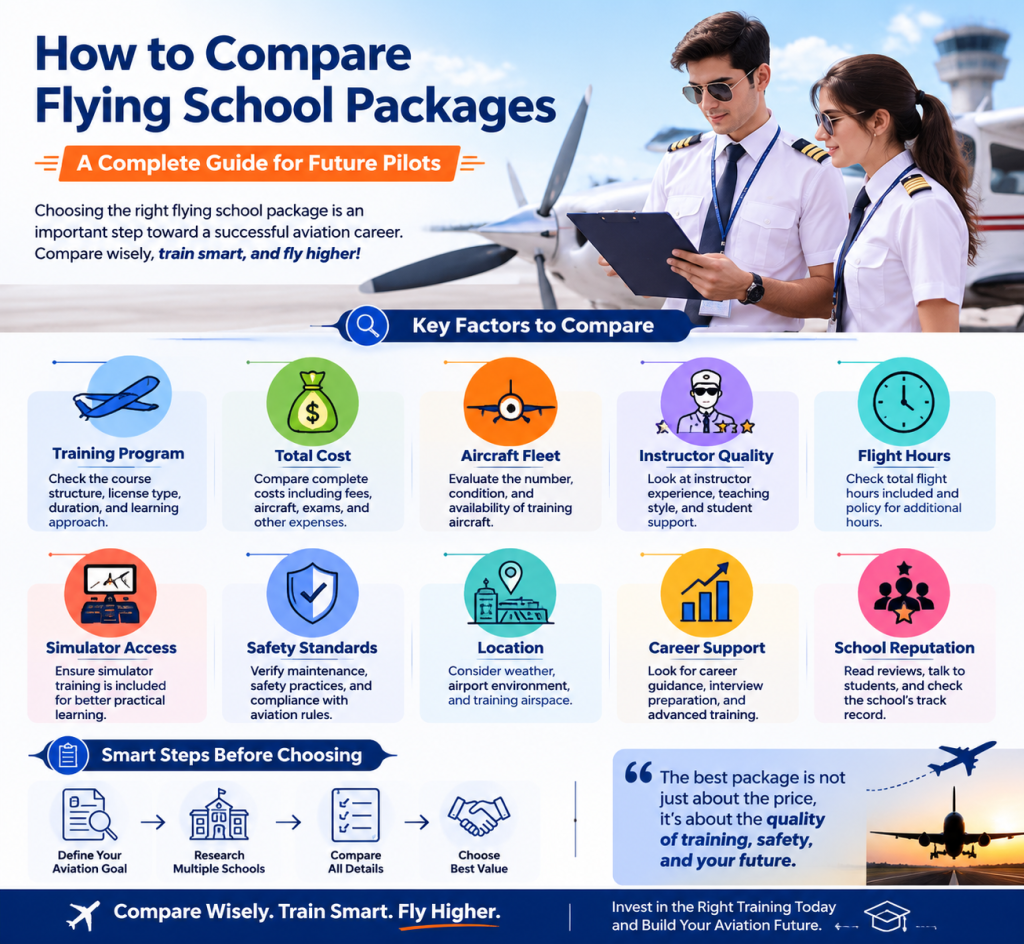
Key Factors to Compare Flying School Packages
1. Training Program Structure
The first step is understanding how the training program is organized.
Different flying schools may offer different pathways based on the type of license a student wants to achieve.
Important points to compare include:
- Type of pilot license offered
- Course duration
- Training schedule
- Ground school structure
- Practical flight training approach
- Progress evaluation methods
A well-organized program helps students develop knowledge and flying skills in a systematic way.
Before selecting a package, students should understand whether the program matches their aviation goals, such as becoming a private pilot, commercial pilot, or pursuing advanced aviation training.
2. Total Training Cost
Cost is one of the biggest factors when comparing flying school packages, but students should look beyond the advertised package price.
A complete cost evaluation should include:
- Flight training fees
- Aircraft rental charges
- Instructor fees
- Simulator training costs
- Examination expenses
- Licensing fees
- Study materials
- Medical certification costs
- Additional flight hours if required
Some packages may appear affordable initially but may exclude important expenses.
Students should always request a complete cost breakdown before making a decision.
3. Aircraft Fleet and Availability
The aircraft used during training directly affects the learning experience.
When comparing packages, consider:
- Number of training aircraft available
- Aircraft models used
- Aircraft condition
- Maintenance standards
- Availability for regular practice
A school with limited aircraft availability may create scheduling delays and increase training duration.
Consistent access to aircraft allows students to maintain learning momentum and complete training more efficiently.
4. Instructor Experience and Quality
Flight instructors play a major role in shaping a student pilot’s skills and confidence.
Important factors to evaluate include:
- Instructor qualifications
- Aviation experience
- Teaching approach
- Communication skills
- Student feedback
- Instructor availability
A skilled instructor does more than teach aircraft controls. They help students develop decision-making abilities, safety awareness, and professional flying habits.
The quality of instruction can significantly influence a student’s overall training experience.
5. Flight Training Hours Included
Flight hours are one of the most important parts of any flying school package.
Students should check:
- Number of flight hours included
- Type of flight hours provided
- Solo flight opportunities
- Cross-country training availability
- Additional hour policies
Different students progress at different speeds, so some may require additional training hours.
Understanding the included flight hours helps students estimate the actual training requirement and potential additional costs.
6. Simulator Training Facilities
Simulator training is an important part of modern aviation education.
A good flying school package may include simulator sessions that help students practice different flight situations.
Benefits of simulator training include:
- Learning aircraft systems
- Practicing emergency scenarios
- Improving cockpit familiarity
- Developing decision-making skills
- Building confidence before actual flights
Students should compare whether simulator access is included and what type of training environment is provided.
7. Safety Standards and Compliance
Safety should always be a top priority when selecting a flying school package.
Students should evaluate:
- Aircraft maintenance procedures
- Safety policies
- Training standards
- Instructor practices
- Emergency preparation
A professional flight school focuses on creating a strong safety culture where students learn responsible aviation practices from the beginning.
A lower-cost package should never compromise training quality or safety standards.
8. Location and Training Environment
The location of a flying school can influence the overall training experience.
Important factors include:
Weather Conditions
Weather affects flight schedules and training consistency.
Airport Environment
A busy airport environment can provide valuable experience in real aviation operations.
Training Airspace
Different airspaces offer different levels of learning opportunities.
Accessibility
Location convenience can affect daily attendance and overall training progress.
Students should consider whether the training environment supports their learning goals.
9. Career Support and Additional Benefits
A good flying school package may provide support beyond basic flight training.
Additional benefits may include:
- Career guidance
- Interview preparation
- Aviation knowledge development
- Advanced training options
- Professional development support
For students planning an airline career, career preparation services can add significant value.
A training package should help students prepare for both licensing requirements and professional aviation expectations.
10. Student Reviews and School Reputation
Researching a flying school’s reputation helps students understand the actual training experience.
Consider:
- Student experiences
- Training environment
- Instructor quality feedback
- Completion experiences
- Professional reputation
Reviews should be considered along with other factors because individual experiences can vary.
A complete evaluation should include both online research and direct communication with the school.
Flying School Package Comparison Checklist
Before selecting a package, students can compare schools using the following checklist:
| Comparison Factor | Questions to Ask |
|---|---|
| Training Structure | What licenses and training stages are included? |
| Total Cost | Are all fees clearly mentioned? |
| Aircraft Availability | How many aircraft are available for students? |
| Instructor Support | What experience do instructors have? |
| Flight Hours | How many flying hours are included? |
| Simulator Access | Are simulator sessions part of the package? |
| Safety Standards | What procedures are followed for safety? |
| Career Support | Is guidance available after training? |
This checklist helps students compare packages more effectively.
Common Mistakes When Choosing a Flying School Package
Choosing Only Based on Price
A cheaper package may exclude important services or require additional expenses later.
Students should compare overall value instead of only comparing initial costs.
Ignoring Hidden Costs
Some additional expenses may not be included in the main package.
Always ask about:
- Extra flight hours
- Examination fees
- Training materials
- Administrative charges
Not Checking Aircraft Availability
Limited aircraft availability can delay training progress.
Students should understand how easily they can schedule flights.
Overlooking Instructor Quality
Good instructors help students build strong aviation foundations.
Choosing a school only because of price without considering teaching quality can affect learning outcomes.
Not Understanding Package Terms
Students should carefully review:
- Included services
- Payment conditions
- Training duration
- Additional requirements
Clear understanding prevents confusion later.
How to Choose the Right Flying School Package
A practical approach for selecting a package includes:
Step 1: Define Your Aviation Goal
Understand whether you want private pilot training, commercial pilot training, or another aviation pathway.
Step 2: Research Multiple Schools
Compare different schools instead of choosing the first option.
Step 3: Review Complete Package Details
Look at everything included in the program.
Step 4: Compare Training Quality
Evaluate instructors, aircraft, facilities, and safety standards.
Step 5: Calculate Complete Costs
Consider the total investment rather than only the starting price.
Step 6: Visit or Contact the School
Speaking directly with instructors and staff can provide better understanding.
Step 7: Choose Based on Value
Select a package that provides the best combination of quality, safety, and career preparation.
Questions to Ask Before Buying a Flying School Package
Before enrolling, students should ask:
- What type of pilot license does this package include?
- How many flight hours are included?
- Are instructor fees included?
- Are aircraft rental charges included?
- Are simulator sessions available?
- What additional expenses should students expect?
- How many aircraft are available for training?
- What qualifications do instructors have?
- What support is provided after completing training?
- How long does the complete training program usually take?
These questions help students make a more informed decision.
Benefits of Choosing the Right Flying School Package
Selecting the right package provides several advantages:
- Better learning experience
- More predictable training expenses
- Improved pilot preparation
- Stronger aviation foundation
- Better use of training time
- Increased confidence during flight operations
The right package supports students throughout their training journey and prepares them for future aviation responsibilities.
Frequently Asked Questions
1. What should I consider when comparing flying school packages?
Students should compare training structure, total costs, aircraft availability, instructors, flight hours, safety standards, and career support before choosing a package.
2. Is the cheapest flight training package the best option?
Not always. A lower-cost package may exclude important services. Students should compare overall value instead of only price.
3. What is usually included in a flying school package?
Most packages include ground training, flight lessons, aircraft usage, instructor support, and licensing preparation.
4. How can I compare flight training costs?
Compare the complete cost, including flight hours, instructor fees, simulator sessions, exams, and possible additional expenses.
5. Why is aircraft availability important in flight training?
Regular aircraft availability helps students maintain consistent practice and complete training without unnecessary delays.
6. How important are flight instructors when choosing a school?
Experienced instructors help students develop safe flying habits, technical knowledge, and confidence.
7. Should simulator training be included in a flying school package?
Simulator training can provide valuable practice for aircraft systems, procedures, and emergency situations.
8. What hidden costs should students check before enrolling?
Students should ask about additional flight hours, examination fees, study materials, accommodation, and administrative charges.
9. How do I choose the best flying school package for my career?
Choose a package that matches your aviation goals and provides quality training, safety support, experienced instructors, and career preparation.
10. Can flying school packages help reduce training expenses?
Well-designed packages can help students plan expenses better by combining multiple training services into a structured program.
Conclusion
Comparing flying school packages requires careful evaluation of multiple factors rather than focusing only on the advertised price. Training quality, instructor experience, aircraft availability, safety practices, and career support all contribute to the overall value of a flight training program.
For aspiring pilots, selecting the right package is an important step toward building a successful aviation career. A well-researched decision can provide better training experience, stronger skills, and greater confidence throughout the pilot journey.
Future pilots should take time to compare options, ask detailed questions, and choose a flying school package that supports their long-term aviation goals.

