
Introduction
Pilot training is one of the most exciting but also one of the most expensive career paths in aviation. Many students and parents plan their budget by looking at the advertised fees of flying schools, but the reality is often very different. The total cost of becoming a pilot includes several additional expenses that are not always clearly explained in the beginning.
These hidden costs can significantly increase the overall training budget and sometimes cause delays or financial stress for students. Understanding these expenses in advance helps aviation aspirants plan better, avoid surprises, and complete training smoothly.
This guide explains all the hidden costs in pilot training in simple language so students can prepare realistically before joining a flying school.
Why Pilot Training Costs Are Not Always Transparent
Pilot training is a structured process involving multiple components such as flight hours, ground school, examinations, medicals, and operational charges. Because of this complexity, many flying schools advertise only basic tuition fees.
Reasons for hidden costs include:
- Training depends on flight hours, which may vary by student
- Different schools use different pricing models
- Operational costs like fuel and maintenance fluctuate
- Additional services are charged separately
- Regulatory and exam fees are not always included
As a result, students often realize the true cost only after starting training.
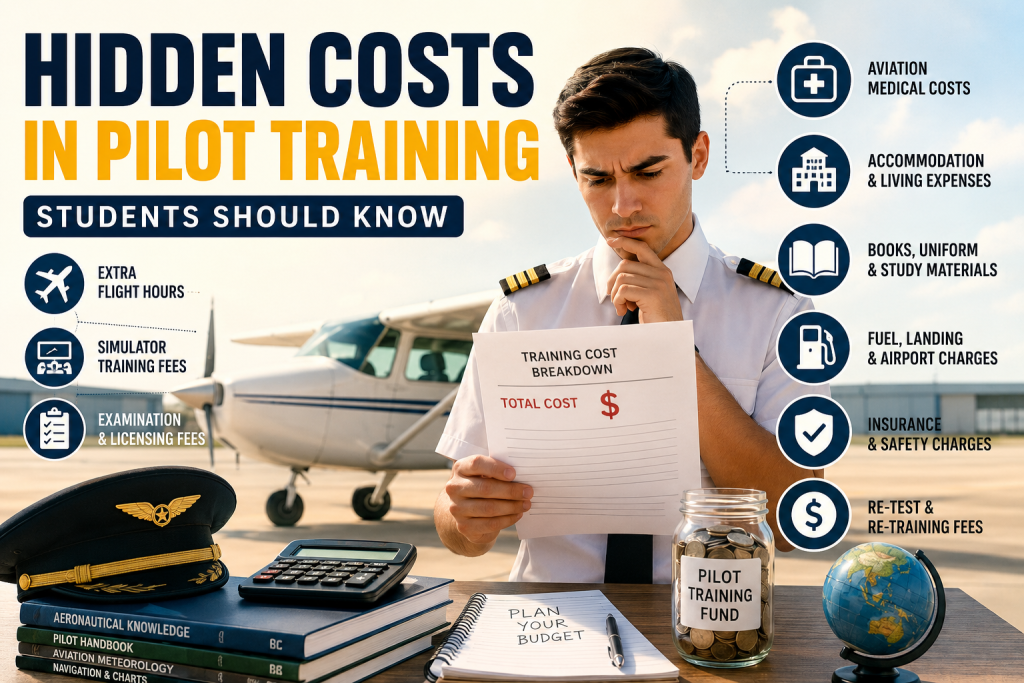
Major Hidden Costs in Pilot Training
Below are the most common hidden expenses that students should be aware of before enrolling in any flying school.
Extra Flight Hour Charges
One of the biggest hidden costs in pilot training is extra flying hours.
Most training programs include a fixed number of flight hours, but many students need additional hours to meet skill or licensing requirements.
Extra charges may include:
- Additional dual flight instruction
- Solo flying extensions
- Re-training for missed skills
- Weather or delay-related extra sessions
Even a small increase in flight hours can significantly impact the total cost.
Simulator Training Fees
Simulators are used for advanced training, emergency practice, and instrument flying practice.
Hidden simulator costs include:
- Hourly simulator usage charges
- Advanced scenario training sessions
- Repeated practice sessions for weak areas
Some schools include basic simulator time, but advanced usage is often billed separately.
Examination and Licensing Fees
Pilot training includes multiple exams conducted by aviation authorities.
Hidden costs may include:
- Written exam fees
- Practical check ride fees
- License issuance charges
- Re-attempt fees if exams are not cleared
These costs are often not included in basic training packages.
Aviation Medical Costs
Medical fitness is mandatory for pilots, and these expenses can add up over time.
Common medical-related costs include:
- Initial aviation medical examination
- Class 2 and Class 1 medical certification
- Specialist medical tests if required
- Periodic medical renewals
If a student is found temporarily unfit, re-tests may increase costs further.
Accommodation and Living Expenses
If the flying school is located in another city or country, living expenses become a major hidden cost.
These include:
- Hostel or rental accommodation
- Food and daily expenses
- Transportation to flying school
- Utility bills and local travel
In many cases, living costs become a large portion of total training expenses.
Uniform, Books, and Study Materials
Pilot training requires specific materials that are not always included in tuition fees.
Hidden academic costs include:
- Uniform and dress code requirements
- Aviation textbooks and manuals
- Navigation charts and study kits
- Online learning platforms or subscriptions
These are essential for training success but often billed separately.
Aircraft Fuel Surcharge
Fuel is one of the biggest operational costs in aviation.
Some flying schools apply:
- Fuel surcharges per flight hour
- Variable pricing based on fuel rates
- Seasonal cost adjustments
This can make flight hours more expensive than initially expected.
Landing and Airport Charges
Each landing or takeoff may involve airport-related charges.
Hidden costs include:
- Landing fees
- Parking or hangar charges
- Air traffic handling fees
- Airport usage taxes
These are often passed directly to students in training programs.
Re-Test and Re-Training Fees
Not all students pass exams or flight tests on the first attempt.
Additional costs may include:
- Re-examination fees
- Extra training sessions
- Instructor review sessions
- Re-check flight hours
Repeated attempts can increase overall training cost significantly.
Insurance and Safety Charges
Some flying schools include insurance and safety-related costs separately.
These may include:
- Student insurance coverage
- Aircraft insurance contribution
- Safety training programs
- Emergency preparedness training
These costs ensure safety compliance but are often not included in base fees.
Real Cost vs Advertised Cost
Flying schools often advertise only the base training fee, which does not reflect the full financial requirement.
| Category | Advertised Cost | Real Cost |
|---|---|---|
| Flight training | Basic package | Includes extra hours |
| Exams | Sometimes excluded | Multiple attempts included |
| Living expenses | Not included | Significant ongoing cost |
| Simulator | Partial inclusion | Additional usage charges |
| Medicals | Basic mention | Multiple certifications |
The real cost of pilot training is always higher than the advertised fee due to these hidden components.
How Flying Schools Hide Costs
Not all schools are transparent about pricing structures. Some common methods include:
- Showing only minimum package fees
- Charging flight hours separately
- Listing optional services as extra
- Excluding exam and licensing costs
- Not including accommodation in total cost
Students should always ask for a complete breakdown before enrolling.
How to Calculate True Pilot Training Cost
To estimate real pilot training cost, students should follow a structured approach:
Step 1: Base Training Fee
Check what is included in the standard package.
Step 2: Flight Hour Costs
Ask about cost per additional flying hour.
Step 3: Living Expenses
Add accommodation, food, and transport costs.
Step 4: Exam and Medical Fees
Include all regulatory charges.
Step 5: Buffer Budget
Keep extra funds for delays or re-training.
This helps avoid financial surprises during training.
How to Reduce Pilot Training Costs
Students can reduce expenses with smart planning.
Useful strategies include:
- Strong preparation before flight lessons
- Avoiding repeated flying hours
- Clearing exams in first attempt
- Choosing cost-effective training locations
- Planning finances before joining
- Applying for scholarships or education loans
- Maintaining consistent training schedule
Efficient training reduces unnecessary cost escalation.
Common Financial Mistakes Students Make
Many students face financial pressure due to avoidable mistakes:
- Choosing school only based on low advertised fees
- Not asking about hidden charges
- Ignoring accommodation and living costs
- Underestimating extra flying hours
- Not preparing backup funds
- Lack of financial planning
Avoiding these mistakes can make training smoother and more predictable.
Why Financial Awareness Matters in Aviation
Understanding real training costs is important because:
- It prevents sudden financial stress
- Helps complete training without delays
- Improves decision-making
- Reduces dropouts in training programs
- Builds realistic career expectations
Financial awareness is as important as technical training in aviation.
How PilotsDeal.com Helps Students
PilotsDeal.com helps aviation aspirants by providing clear and simple information about:
- Pilot training cost structure
- Flying school selection guidance
- License and training explanations
- Aviation career planning
- Beginner-friendly aviation education
It helps students and parents make informed financial and career decisions.
Frequently Asked Questions
1- What are hidden costs in pilot training?
Hidden costs are additional expenses like extra flying hours, exams, medicals, and living costs not included in base fees.
2- Why is pilot training expensive?
Pilot training involves aircraft operations, fuel, instructors, maintenance, and regulatory costs.
3- Are flight hours included in fees?
Some hours are included, but extra flying hours are usually charged separately.
4- What medical costs are required?
Students need aviation medical tests and periodic renewals depending on license stage.
5- Do flying schools charge extra fees?
Yes, many schools charge separately for exams, simulator training, and operational costs.
6- How much extra flying time is needed?
It varies by student performance, skill development, and licensing requirements.
7- Are simulator charges separate?
In many cases, advanced simulator training is charged separately.
8- What is total pilot training cost?
Total cost includes flight training, exams, medicals, living expenses, and hidden charges.
9- Can I reduce training expenses?
Yes, through proper preparation, efficient training, and financial planning.
10- Why do students face extra charges later?
Because many costs are variable and not included in initial advertised fees.
Conclusion
Pilot training is not just about the advertised fee structure; it involves multiple hidden costs that can significantly impact the total investment. From extra flight hours to medical tests, simulator training, accommodation, and exam fees, students must understand the full financial picture before starting their aviation journey.
Careful planning, awareness, and the right guidance can help students avoid surprises and complete their training smoothly. PilotsDeal.com plays an important role in helping aspiring pilots understand these hidden costs and make smarter career decisions in aviation.

