
Introduction
A Student Pilot License (SPL) is the first official entry point into the aviation world. It allows aspiring pilots to begin structured flight training under supervision and is often the foundation for advanced certifications such as the Private Pilot License (PPL) and Commercial Pilot License (CPL). For aviation aspirants, this stage is where the journey from theory to actual flying begins.
Before starting training, understanding the cost of a Student Pilot License is essential. Even though SPL is the most basic aviation license, it still includes multiple components such as medical exams, registration fees, study materials, and administrative charges. Knowing the full cost structure helps students plan better and avoid unexpected financial pressure.
What is a Student Pilot License?
A Student Pilot License is a beginner-level aviation certification issued by aviation authorities that allows a student to begin flying training under the supervision of a certified flight instructor.
Key Purpose of SPL:
- Introduces students to real aviation environment
- Allows supervised flying practice
- Acts as the first step toward professional pilot training
Eligibility Requirements:
- Minimum age requirement (generally 16–17 years or above depending on country)
- Basic educational qualification as per aviation authority rules
- Valid aviation medical certificate
- Enrollment in an approved flying school
Role in Pilot Career:
SPL is the foundation stage where students:
- Learn basic aviation theory
- Understand aircraft and cockpit environment
- Develop discipline and flight awareness
- Prepare for Private Pilot License training
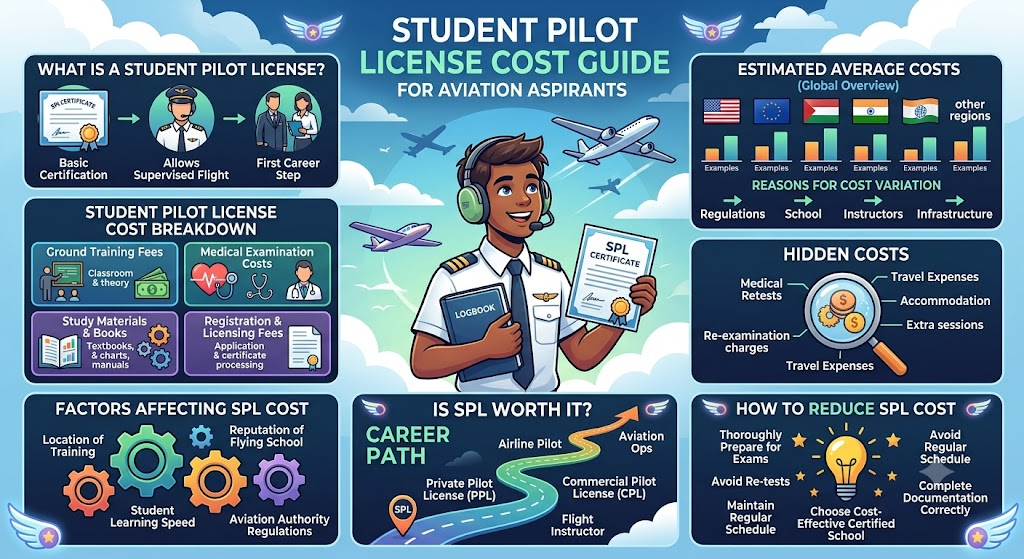
Student Pilot License Cost Breakdown
The total cost of SPL includes several individual components rather than a single fixed fee.
1. Application and Registration Fees
- Charged by aviation authorities or flying schools
- Covers student registration and documentation processing
2. Ground Training Fees
- Basic aviation theory classes
- Includes classroom instruction and pilot theory fundamentals
3. Medical Examination Costs
- Aviation medical test required for fitness approval
- Ensures physical and mental readiness for flying training
4. Study Materials and Books
- Aviation textbooks
- Training manuals and reference guides
- Basic navigation charts and materials
5. Examination Fees
- Written theory test charges
- Evaluation and assessment fees
6. Licensing and Administrative Charges
- Issuance of SPL certificate
- Processing and verification costs
Average Cost of Student Pilot License
The cost of SPL varies significantly depending on country, aviation authority, and training institute.
Estimated Cost Overview:
- India: Generally affordable compared to global standards
- USA: Higher due to operational and regulatory expenses
- Europe: Moderate to high depending on country
- Other regions: Varies based on aviation infrastructure
Reasons for Cost Variation:
- Government aviation regulations
- Training school infrastructure
- Medical certification requirements
- Local administrative and licensing policies
- Availability of certified instructors
Hidden Costs Students Should Know
Apart from basic fees, students may also face additional expenses such as:
- Medical retest fees if required
- Re-examination charges for theory tests
- Travel expenses to flying schools
- Accommodation for outstation students
- Additional documentation and verification costs
- Extra academic or remedial support sessions
These costs are often overlooked but can increase the total budget significantly.
Factors Affecting SPL Cost
Several key factors influence the overall cost of a Student Pilot License:
1. Location of Training Institute
Flying schools in major cities often have higher costs compared to smaller locations.
2. Aviation Authority Regulations
Different countries follow different licensing structures and fee systems.
3. Reputation of Flying School
Established institutions may charge more but offer better training efficiency.
4. Student Learning Speed
Faster learners complete training with fewer additional sessions, reducing cost.
How to Reduce Student Pilot License Cost
Students can manage and reduce SPL expenses through smart planning:
- Choose a certified and cost-effective flying school
- Prepare thoroughly for written examinations
- Avoid unnecessary re-tests through consistent study
- Maintain a regular training schedule
- Complete documentation correctly to avoid delays
Is Student Pilot License Worth It?
A Student Pilot License is not just a certificate; it is the foundation of all aviation careers.
Why SPL Matters:
- First step toward professional pilot training
- Builds aviation awareness and discipline
- Provides early exposure to flying environment
- Required for progression to higher licenses in many systems
Career Path After SPL:
- Private Pilot License (PPL)
- Commercial Pilot License (CPL)
- Flight instructor roles
- Aviation operations and management careers
SPL is a small but critical investment in a long-term aviation career.
FAQs
1. What is a Student Pilot License?
A Student Pilot License is a basic aviation certification that allows students to start supervised flight training at an approved flying school.
2. What is the minimum age for SPL?
The minimum age is usually 16 to 17 years depending on the aviation authority of the country.
3. Is medical fitness required for SPL?
Yes, a valid aviation medical certificate is mandatory before starting flight training.
4. Can SPL holders fly alone?
No, SPL holders can only fly under the supervision of a certified flight instructor.
5. How long is a Student Pilot License valid?
Validity varies by country and may require renewal or progression to the next license level.
6. Can SPL lead to a commercial pilot career?
Yes, SPL is the first step toward PPL and eventually CPL training.
7. What subjects are included in SPL training?
Basic aviation theory including air regulations, aircraft fundamentals, and introductory navigation.
8. Is SPL mandatory for all pilot training paths?
In many aviation systems, SPL is required before starting formal flight training.
9. Can students pursue SPL along with studies?
Yes, many students complete SPL training while continuing school or college education.
10. What happens after SPL completion?
After SPL, students usually progress to Private Pilot License training.
Conclusion
The Student Pilot License is the first important milestone in a pilot’s journey. While it is the most basic level of aviation certification, understanding its cost structure is essential for proper financial planning. SPL includes several components such as medical tests, training fees, study materials, and administrative charges, all of which contribute to the overall investment.
By selecting the right flying school, preparing well for exams, and maintaining consistent training, students can reduce unnecessary expenses and complete their SPL efficiently. More importantly, SPL builds the foundation for advanced aviation training and prepares students for the responsibilities of becoming a professional pilot.
For every aviation aspirant, this is the first structured step toward turning the dream of flying into reality. Proper planning at this stage ensures a smoother and more successful aviation career ahead.

