
Introduction
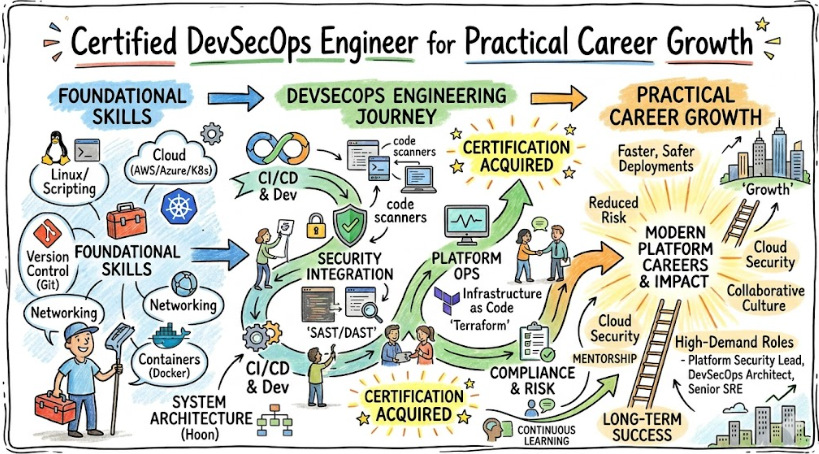
In today’s fast-paced software landscape, integrating security seamlessly into development processes is no longer optional—it’s essential. The Certified DevSecOps Engineer program offers a structured path for professionals aiming to embed security practices directly into their DevOps workflows.
This guide is tailored for engineers, security specialists, and managers seeking to understand the certification’s value, prerequisites, and how it fits into modern cloud-native and platform engineering careers. Whether you are starting out or looking to deepen your expertise, this comprehensive overview helps you make informed decisions about your learning journey.
What is the Certified DevSecOps Engineer?
The Certified DevSecOps Engineer represents a practical, production-focused mastery of integrating security into Continuous Integration, Continuous Delivery, and overall DevOps pipelines. It emphasizes real-world application over theoretical knowledge, ensuring professionals can implement security controls, automate compliance, and respond proactively within enterprise environments.
This certification aligns with modern engineering workflows that demand fast, secure, and reliable delivery of software, making security an integral part of the software lifecycle rather than an afterthought.
Who Should Pursue the Certified DevSecOps Engineer?
This certification is ideal for a wide range of professionals including DevOps engineers, security specialists, cloud architects, and platform engineers. Both beginners with some operational experience and seasoned practitioners aiming to formalize their security skills will benefit.
Managers and technical leaders who oversee security policies or drive DevSecOps adoption in their teams should also pursue this credential. Its relevance spans globally and within India, reflecting the universal need for security-aware development practices in diverse industries and enterprise sizes.
Why the Certified DevSecOps Engineer is Valuable and Beyond
As cyber threats grow more sophisticated, organizations increasingly seek professionals capable of embedding security into every phase of software development. The demand for DevSecOps expertise continues to rise, ensuring career longevity.
This certification demonstrates a commitment to security best practices, making certified professionals more competitive and valuable. With enterprise adoption of cloud-native and automation tools expanding, this credential provides a future-proof foundation, helping professionals stay relevant despite rapid technological changes.
Certified DevSecOps Engineer Certification Overview
The program is delivered via Certified DevSecOps Engineer Certification and hosted on DevSecOpsSchool. It features a comprehensive assessment approach combining practical exams and scenario-based evaluations.
Certification levels include foundational, professional, and advanced stages, enabling learners to progress based on experience and expertise. The structure emphasizes hands-on skills, security automation, and integration techniques, preparing professionals for real-world challenges.
Certified DevSecOps Engineer Certification Tracks & Levels
| Track | Level | Who it’s for | Prerequisites | Skills Covered | Recommended Order |
|---|---|---|---|---|---|
| DevSecOps | Foundation | Beginners, DevOps practitioners | Basic DevOps knowledge | Security fundamentals, automation basics | 1 |
| DevSecOps | Professional | Mid-level engineers, security teams | Foundation level certification | Security automation, CI/CD security practices | 2 |
| DevSecOps | Advanced | Security engineers, architects | Professional level certification | Threat modeling, compliance, advanced automation | 3 |
Detailed Guide for Each Certified DevSecOps Engineer Certification
Certified DevSecOps Engineer – Foundation Level
What it is
This credential validates understanding of fundamental security concepts integrated into DevOps environments. It covers basic security controls, risk awareness, and automation principles.
Who should take it
Ideal for entry-level engineers, developers transitioning into security roles, or those new to DevSecOps practices.
Skills you’ll gain
- Basic security principles and best practices
- Introduction to security automation tools
- Understanding of compliance fundamentals
Real-world projects you should be able to do
- Implement security checks in CI/CD pipelines
- Automate vulnerability scanning during build processes
- Apply basic access controls in cloud environments
Preparation plan
- Spend 7–14 days reviewing core security concepts and automation tools. Use hands-on labs for practical exposure.
- Over 30 days, deepen understanding by working on small automation projects.
- In 60 days, simulate real deployment scenarios integrating security checks.
Common mistakes
Neglecting automation, underestimating the importance of compliance, and over-relying on manual controls are common pitfalls.
Best next certification after this
- Same-track option: Certified DevSecOps Engineer – Professional Level
- Cross-track option: Cloud Security certifications or SRE fundamentals
- Leadership option: Security Management or DevSecOps Strategy certifications
Choose Your Learning Path
DevOps Path
Focuses on continuous integration and delivery with security embedded at every step, suitable for engineers wanting to strengthen automation and deployment skills.
DevSecOps Path
Centers on secure development pipelines, threat mitigation, and compliance automation—perfect for security-oriented engineers.
SRE Path
Emphasizes reliability, incident response, and automation, with security as a key component for resilient systems.
AIOps / MLOps Path
Focuses on automating security monitoring and anomaly detection in AI-driven workflows, suited for data and AI practitioners.
DataOps Path
Incorporates security best practices for data pipelines, privacy, and compliance, ideal for data engineers.
FinOps Path
Addresses cost management with security controls, ensuring cost-effective yet secure cloud operations.
| Role | Recommended Certifications |
|---|---|
| DevOps Engineer | Certified DevSecOps Engineer – Foundation, Professional |
| SRE | Certified DevSecOps Engineer – Professional, Advanced |
| Platform Engineer | Certified DevSecOps Engineer – Foundation |
| Cloud Engineer | Certified DevSecOps Engineer – Professional |
| Security Engineer | Certified DevSecOps Engineer – Professional, Advanced |
| Data Engineer | DataOps certifications & security basics |
| FinOps Practitioner | FinOps certifications with security focus |
| Engineering Manager | Leadership & strategy certifications in DevSecOps |
Next Certifications to Take After Certified DevSecOps Engineer
- Same Track Progression: Advanced DevSecOps, Cloud Security Certifications
- Cross-Track Expansion: Cloud Architecture, Security Leadership Programs
- Leadership & Management Track: DevSecOps Program Management, Security Leadership Courses
Training & Certification Support Providers for Certified DevSecOps Engineer
DevOpsSchool offers comprehensive hands-on labs, real-world scenarios, and expert mentorship tailored for DevSecOps certification aspirants. Their courses emphasize automation, security integration, and enterprise workflows, making them ideal for professionals seeking practical mastery.
Cotocus provides structured training modules, project-based learning, and industry-recognized certification prep designed to accelerate your DevSecOps journey.
Scmgalaxy specializes in comprehensive security and DevOps courses, emphasizing automation tools, compliance, and real-world deployment strategies suitable for all experience levels.
BestDevOps offers tailored courses focusing on practical security automation, pipeline security, and enterprise-grade DevSecOps practices, ensuring hands-on readiness.
devsecopsschool.com delivers expert-led modules with a focus on real-world scenarios, automation, and compliance, preparing professionals for complex enterprise environments.
sreschool.com provides focused training on reliability engineering integrated with security practices, essential for SREs expanding into security automation.
aiopsschool.com covers automation and AI-driven security monitoring, ideal for those interested in AIOps and MLOps pathways.
dataopsschool.com emphasizes secure data pipelines, privacy, and compliance, beneficial for DataOps professionals.
finopsschool.com centers on cloud cost management with security controls, perfect for FinOps practitioners.
Frequently Asked Questions
1. How difficult is the Certified DevSecOps Engineer certification?
The certification is moderately challenging, requiring a good understanding of DevOps, security fundamentals, and automation tools. Hands-on experience significantly eases preparation.
2. How much time should I allocate for preparation?
Typically, 30 to 60 days of dedicated study and hands-on practice are sufficient, depending on your existing experience and familiarity with security practices.
3. What prerequisites are necessary?
A basic understanding of DevOps processes, cloud platforms, scripting, and security concepts is recommended. Prior experience in automation tools will be advantageous.
4. Is this certification worth the investment?
Absolutely. It aligns with industry demands for security-aware DevOps professionals and enhances career prospects in enterprise environments.
5. Can beginners pursue this certification?
Beginners should start with foundational DevOps and security courses before attempting this credential to ensure a solid understanding.
6. How does this certification impact career growth?
It positions you as a key player in securing modern pipelines, opens opportunities for leadership roles, and increases earning potential.
7. What are the common mistakes candidates make?
Overlooking hands-on labs, underestimating security nuances, and neglecting automation practices are typical pitfalls.
8. How should I sequence my learning?
Start with fundamentals, progress to foundational certifications, then advance to professional and specialized courses based on your career focus.
Final Thoughts: Is the Certified DevSecOps Engineer Worth It?
For professionals committed to integrating security seamlessly into development workflows, this certification offers tangible value. It bridges the gap between traditional security roles and modern automation-driven pipelines, making you more relevant and versatile. However, success depends on practical application and continuous learning.
It’s not just about passing an exam but about embedding security deeply into your engineering mindset. If you aim to lead secure, agile teams and stay ahead of emerging threats, pursuing this certification is a prudent investment in your career.

