
Introduction
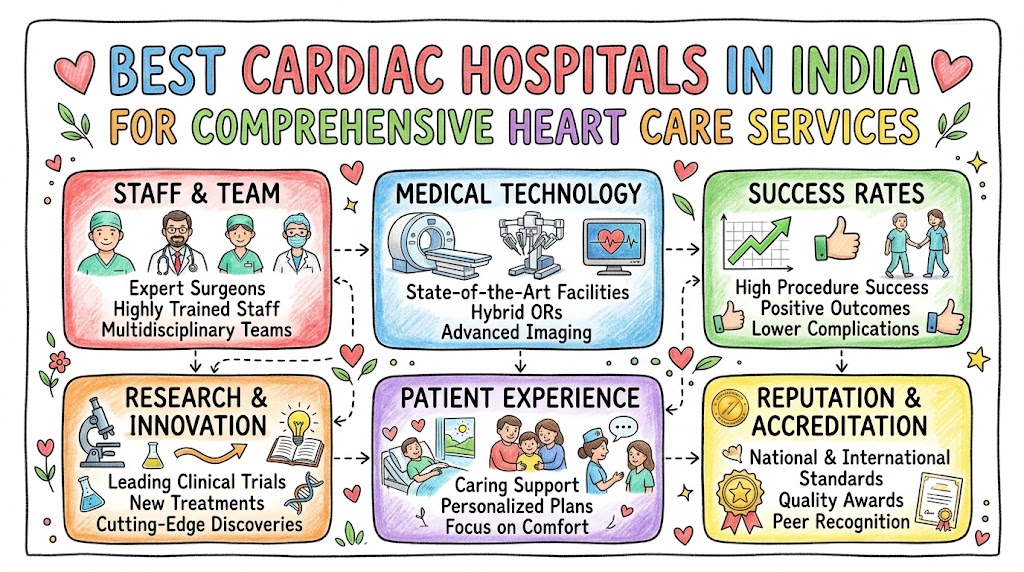
Choosing a hospital for heart treatment is an important decision that requires careful research. Patients may need anything from routine cardiac screening and medication management to angioplasty, bypass surgery, valve treatment, rhythm correction, or long-term rehabilitation. The best cardiac hospitals in India usually combine experienced specialists, modern diagnostic technology, advanced treatment facilities, emergency services, intensive care, and coordinated recovery support.
However, the right hospital is not necessarily the largest or most widely advertised facility. It should be a hospital that has suitable expertise for the patient’s specific heart condition, maintains strong patient-safety systems, communicates clearly, and provides complete care before, during, and after treatment.
This guide explains the services commonly available at comprehensive cardiac hospitals and the factors patients should evaluate before choosing a heart care provider in India.
Understanding Comprehensive Heart Care
Comprehensive heart care means that patients can receive multiple levels of cardiac support within a coordinated healthcare system. Instead of focusing only on surgery or emergency treatment, comprehensive care covers prevention, diagnosis, medical management, procedures, recovery, rehabilitation, and follow-up.
Cardiovascular disease includes several conditions affecting the heart and blood vessels, such as coronary artery disease, heart failure, rhythm disorders, valve disease, congenital heart problems, and cerebrovascular conditions. The World Health Organization identifies cardiovascular diseases as the leading cause of death globally, which highlights the importance of timely diagnosis and properly coordinated treatment.
A comprehensive cardiac hospital may bring together:
- Clinical cardiologists
- Interventional cardiologists
- Cardiothoracic surgeons
- Cardiac anesthesiologists
- Electrophysiologists
- Critical-care specialists
- Pediatric cardiologists
- Cardiac imaging specialists
- Rehabilitation professionals
- Dietitians and physiotherapists
- Specially trained cardiac nurses
This multidisciplinary approach is particularly valuable for complex cases in which several specialists must review the diagnosis and agree on the most appropriate treatment plan.
Major Services Offered by Leading Cardiac Hospitals
Preventive Cardiology
Preventive cardiology focuses on identifying and controlling heart disease risk factors before serious complications occur. Services may include:
- Blood pressure evaluation
- Cholesterol testing
- Diabetes risk assessment
- Weight-management guidance
- Smoking-cessation support
- Exercise and nutrition planning
- Family-history assessment
- Long-term monitoring of high-risk patients
Preventive care is especially important for people with hypertension, diabetes, obesity, a sedentary lifestyle, previous heart disease, or a strong family history of cardiac conditions.
Advanced Cardiac Diagnostics
Accurate diagnosis is essential before any treatment decision is made. The best cardiology hospitals generally provide access to several diagnostic services, depending on their facilities and clinical capabilities.
Common investigations include:
- Electrocardiogram
- Echocardiography
- Exercise stress testing
- Holter monitoring
- Coronary angiography
- CT coronary angiography
- Cardiac MRI
- Nuclear cardiac imaging
- Blood and biomarker testing
- Electrophysiology studies
Not every patient needs every test. The cardiologist should select investigations based on symptoms, age, medical history, previous reports, and suspected heart condition.
Emergency Cardiac Care
Heart attacks and other cardiac emergencies require rapid evaluation. A comprehensive heart hospital should have systems for emergency triage, cardiac monitoring, immediate diagnostic testing, specialist availability, and critical-care support.
Important emergency facilities can include:
- A 24-hour emergency department
- A coronary care unit
- A cardiac catheterization laboratory
- Emergency angioplasty capability
- Cardiac surgery backup
- Blood-bank access
- Ventilator and life-support facilities
- Critical-care specialists
- Rapid laboratory and imaging services
Patients should verify whether emergency cardiac services operate around the clock, particularly when selecting a hospital for a high-risk condition.
Interventional Cardiology
Interventional cardiology uses catheter-based procedures to diagnose and treat certain heart and blood-vessel conditions without traditional open-heart surgery.
Services may include:
- Coronary angiography
- Balloon angioplasty
- Coronary stent placement
- Structural heart procedures
- Device closure for selected heart defects
- Peripheral vascular interventions
- Catheter-based valve procedures
Angioplasty, also known as percutaneous coronary intervention, uses a catheter and balloon to open a narrowed or blocked coronary artery. A stent may be placed to help keep the artery open. Whether angioplasty is appropriate depends on the patient’s symptoms, artery anatomy, disease severity, overall health, and medical history.
Patients searching for the best hospitals for angioplasty should evaluate the experience of the interventional team, catheterization-laboratory availability, emergency coverage, intensive-care facilities, and follow-up arrangements.
Cardiothoracic and Heart Surgery
The best heart surgery hospitals may provide both conventional and minimally invasive procedures for adults and children.
Common surgical services include:
- Coronary artery bypass grafting
- Heart valve repair or replacement
- Aortic surgery
- Congenital heart surgery
- Minimally invasive cardiac surgery
- Surgery for heart tumors
- Combined valve and bypass procedures
- Selected heart-failure surgeries
The suitability of surgery depends on the patient’s diagnosis and clinical condition. A hospital should explain why surgery is being recommended, what alternatives are available, what risks may be involved, and how recovery will be managed.
Patients comparing the best hospitals for bypass surgery should consider the surgeon’s relevant experience, the hospital’s cardiac intensive-care unit, infection-control systems, anesthesia support, blood-bank services, and rehabilitation program.
Heart Rhythm and Electrophysiology Services
Heart rhythm disorders can cause palpitations, dizziness, fainting, fatigue, breathlessness, or an unusually fast or slow heartbeat.
Electrophysiology services may include:
- Rhythm monitoring
- Electrophysiology studies
- Catheter ablation
- Pacemaker implantation
- Implantable cardioverter-defibrillator placement
- Cardiac resynchronization therapy
- Long-term device monitoring
Patients with rhythm disorders should look for hospitals with trained electrophysiologists and dedicated facilities for both procedures and follow-up monitoring.
Heart-Failure Management
Heart failure often requires continuous care rather than a single procedure. Comprehensive programs may include medication adjustment, imaging, dietary guidance, symptom monitoring, device therapy, rehabilitation, and evaluation for advanced treatment.
A multidisciplinary heart-failure team can help patients understand warning signs, manage medicines, reduce avoidable hospital admissions, and plan long-term care.
Pediatric and Congenital Heart Care
Children with congenital or acquired heart conditions require specialized evaluation. Pediatric cardiac services may include:
- Fetal heart assessment
- Pediatric echocardiography
- Congenital heart surgery
- Catheter-based interventions
- Pediatric cardiac intensive care
- Growth and nutrition support
- Long-term congenital heart follow-up
Families should confirm that the hospital has pediatric cardiologists, congenital heart surgeons, pediatric anesthesiologists, and specialized intensive-care facilities.
How to Identify the Best Cardiac Hospitals in India
Check Hospital Accreditation
Accreditation can provide useful information about a hospital’s commitment to standardized processes, quality improvement, and patient safety. In India, the National Accreditation Board for Hospitals and Healthcare Providers establishes healthcare quality and patient-safety benchmarks.
NABH accreditation focuses on structured systems, clinical practices, patient rights, medication management, infection control, and continuous quality improvement. Patients can use accreditation as one selection factor, although it should be considered alongside specialist expertise and condition-specific facilities.
Review Condition-Specific Expertise
A hospital may be highly experienced in one area of cardiac care but less specialized in another. Patients should look for expertise directly related to their condition.
For example:
- Coronary artery disease may require an interventional cardiologist or bypass surgeon.
- Valve disease may require a valve specialist and cardiac surgeon.
- Arrhythmia may require an electrophysiologist.
- Congenital heart disease may require a pediatric cardiac team.
- Advanced heart failure may require a dedicated heart-failure program.
Patients should avoid selecting a hospital based only on general reputation.
Evaluate the Cardiac Team
The quality of care depends on the complete medical team, not only one well-known doctor. Patients should review:
- Specialist qualifications
- Experience with the required procedure
- Availability of multidisciplinary consultations
- Anesthesia and intensive-care support
- Nursing experience
- Emergency coverage
- Follow-up availability
Patients may also ask how often the doctor or team manages cases similar to theirs.
Examine Infrastructure and Technology
Modern technology can support accurate diagnosis and advanced treatment, but equipment alone does not guarantee good care. Technology must be supported by trained doctors, technicians, nurses, maintenance systems, and clinical protocols.
Relevant facilities may include:
- Cardiac catheterization laboratories
- Advanced operation theatres
- Cardiac intensive-care units
- CT and MRI imaging
- Electrophysiology laboratories
- Blood-bank services
- Infection-control facilities
- Emergency life-support systems
The required infrastructure will depend on the patient’s condition and planned treatment.
Ask About Safety and Infection-Control Practices
Patients should understand how the hospital protects them during admission and treatment. Useful questions include:
- How are surgical infections monitored?
- How are medicines verified?
- What safety checks are performed before surgery?
- How are complications managed?
- Is critical-care support available at all times?
- How does the hospital protect patient privacy?
- What is the process for raising concerns?
Clear answers can help patients understand whether the hospital follows organized and patient-centred systems.
Request Transparent Treatment Estimates
Before admission, patients should request a written estimate that explains:
- Specialist consultation charges
- Diagnostic-test expenses
- Procedure or surgery charges
- Surgeon and anesthesia fees
- Operation-theatre expenses
- Implant or stent costs
- Intensive-care charges
- Room category charges
- Medicine and consumable costs
- Rehabilitation expenses
- Follow-up consultation charges
The final bill can change when complications occur, additional tests become necessary, or hospital stays are extended. Patients should ask which expenses are included, excluded, or variable.
Understanding Heart Surgery Cost in India
The heart surgery cost in India varies significantly because every patient and treatment plan is different. Two patients undergoing procedures with similar names may still receive different estimates.
Major cost factors include:
- Type and complexity of surgery
- Patient’s age and overall health
- Surgeon and specialist fees
- Hospital location
- Room category
- Length of hospital stay
- Intensive-care requirements
- Type of implant or device
- Diagnostic tests
- Medicines and consumables
- Rehabilitation needs
- Management of unexpected complications
Patients should not select a hospital based only on the lowest estimate. An unusually low quotation may not include implants, specialist fees, medicines, intensive care, or follow-up services.
Insurance holders should obtain pre-authorization and confirm whether the hospital, surgeon, procedure, implants, and room category are covered under their policy.
Importance of Cardiac Rehabilitation
Treatment does not always end when a patient leaves the hospital. Recovery may involve supervised exercise, medication education, nutritional support, stress management, smoking cessation, and monitoring of symptoms.
Cardiac rehabilitation is a medically supervised program commonly recommended after selected heart attacks, angioplasty procedures, heart surgeries, and for some people with heart failure. It can support physical recovery and help patients manage risk factors under professional supervision.
Patients should ask whether the hospital provides:
- Inpatient rehabilitation support
- Outpatient cardiac rehabilitation
- Physiotherapy
- Dietary counselling
- Psychological support
- Medication education
- Home-recovery instructions
- Scheduled follow-up appointments
The rehabilitation plan should always be personalized by the treating healthcare team.
Medical Tourism for Heart Surgery in India
India is considered by many international patients when they are comparing cardiac specialists, treatment availability, hospital facilities, and costs. However, medical travel requires more preparation than domestic treatment.
International patients should consider:
- Medical-record review before travelling
- A written treatment plan
- Estimated hospital and recovery duration
- Passport and medical-visa requirements
- Interpreter availability
- Local accommodation
- Airport and hospital transportation
- Payment methods
- Travel insurance
- Fitness-to-fly guidance
- Follow-up care after returning home
Patients should not book travel based only on an online quotation. The final treatment plan may change after physical examination and diagnostic testing.
A treating doctor should also advise when air travel is safe after angioplasty, bypass surgery, valve treatment, or another major cardiac procedure.
Questions to Ask Before Choosing a Cardiac Hospital
Patients and families can use the following checklist during hospital comparison:
- Does the hospital regularly treat this specific heart condition?
- Which specialist will lead the treatment?
- How experienced is the team with the recommended procedure?
- Is emergency cardiac care available 24 hours a day?
- Does the hospital have a dedicated cardiac intensive-care unit?
- Are alternative treatments available?
- What risks and possible complications should be considered?
- What is included in the written cost estimate?
- How long may hospitalization and recovery take?
- What rehabilitation and follow-up services are available?
- What should the patient do if symptoms return after discharge?
- Can the hospital coordinate care with the patient’s local doctor?
Warning Signs That Require Emergency Care
Symptoms such as chest pressure, severe breathlessness, sudden sweating, fainting, or pain spreading to the arm, shoulder, back, neck, or jaw may indicate a medical emergency.
A patient with possible heart-attack symptoms should seek emergency medical help immediately rather than travelling long distances to a preferred hospital or waiting for an online consultation. Treatment decisions depend on rapid medical assessment.
Common Mistakes to Avoid
Choosing a Hospital Only by Reputation
A famous hospital may not necessarily have the most appropriate department or specialist for every condition.
Focusing Only on Cost
Cost matters, but it should be considered alongside safety, expertise, emergency support, infrastructure, and follow-up care.
Ignoring the Second Opinion
A second medical opinion can be helpful before a major surgery or complex procedure, especially when several treatment options are available.
Depending Only on Online Reviews
Online reviews can provide general impressions but cannot replace medical credentials, accreditation, clinical assessment, or condition-specific experience.
Overlooking Rehabilitation
Patients may focus entirely on surgery and fail to plan for medicines, diet, exercise, wound care, follow-up appointments, and emotional recovery.
Delaying Emergency Treatment
Hospital comparison is useful for planned care. It should never delay immediate treatment during a suspected cardiac emergency.
Frequently Asked Questions
1. What makes a cardiac hospital comprehensive?
A comprehensive cardiac hospital provides coordinated services such as prevention, diagnosis, emergency care, interventional cardiology, surgery, critical care, rehabilitation, and follow-up.
2. How should I select among the best cardiac hospitals in India?
Compare condition-specific expertise, specialist experience, accreditation, emergency services, critical-care facilities, treatment transparency, cost estimates, and rehabilitation support.
3. Is an accredited hospital always the best choice?
Accreditation is an important quality indicator, but it should be evaluated with the hospital’s experience in treating the patient’s specific condition.
4. What is the difference between a cardiologist and a cardiac surgeon?
A cardiologist diagnoses and medically manages heart conditions and may perform catheter-based procedures. A cardiac surgeon performs operations such as bypass surgery and valve surgery.
5. How can I find the best cardiac surgeons in India?
Review the surgeon’s qualifications, relevant procedure experience, hospital support system, communication approach, and involvement in postoperative care.
6. Which hospital is best for bypass surgery?
The appropriate hospital should have an experienced bypass-surgery team, cardiac anesthesiology, a dedicated cardiac intensive-care unit, infection-control systems, emergency support, and rehabilitation services.
7. Which hospital is best for angioplasty?
Look for an experienced interventional cardiology team, a well-equipped catheterization laboratory, 24-hour emergency capability, critical-care support, and clear follow-up arrangements.
8. Why do heart surgery estimates differ between hospitals?
Estimates vary according to treatment complexity, hospital location, surgeon fees, implants, room category, intensive-care requirements, length of stay, and the patient’s medical condition.
9. Should every heart patient seek treatment at a large hospital?
Not always. Routine monitoring may be handled safely by a qualified local cardiologist. Complex conditions, high-risk procedures, or emergencies may require a specialized tertiary cardiac centre.
10. Is cardiac rehabilitation necessary after treatment?
It may be recommended after certain heart attacks, angioplasty procedures, surgeries, or for heart failure. The treating cardiologist should decide whether rehabilitation is suitable for the individual patient.
Conclusion
The best cardiac hospitals in India provide more than advanced procedures. They combine experienced specialists, reliable diagnostics, emergency support, surgical and interventional expertise, intensive care, patient-safety systems, rehabilitation, and long-term follow-up. Patients should compare hospitals according to their specific diagnosis rather than relying only on popularity, price, or general rankings. Reviewing accreditation, specialist experience, infrastructure, estimated costs, recovery support, and communication standards can help families make more informed decisions. A qualified cardiologist should evaluate the patient and recommend the most appropriate hospital, specialist, and treatment plan.

