
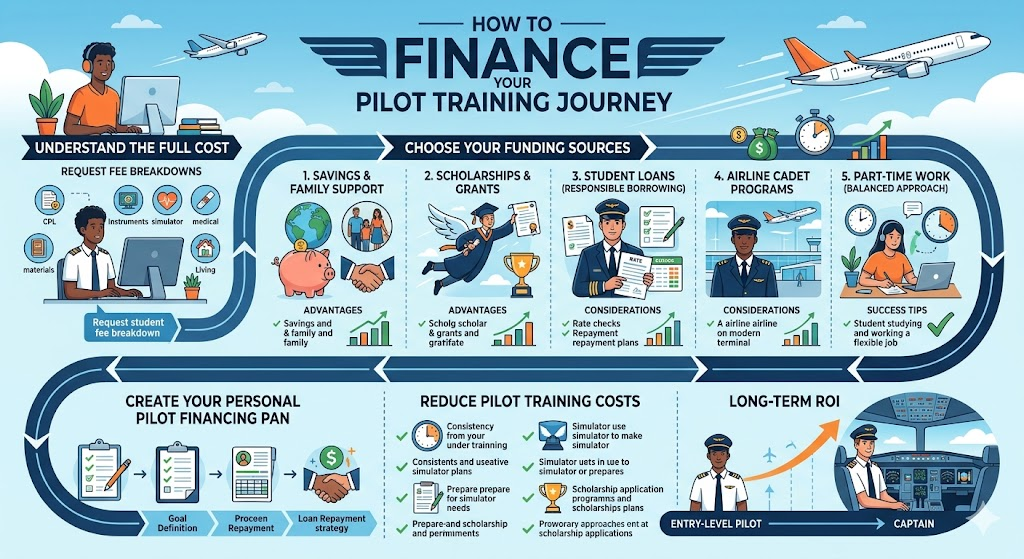
Introduction
Pilot training is one of the most exciting career investments an aspiring aviator can make. It opens the door to opportunities in airlines, charter aviation, cargo operations, corporate flying, flight instruction, and other aviation careers. However, flight training also requires serious financial planning because the cost does not end with one license or one course. Students must prepare for flying hours, instructor fees, exams, medical checks, study materials, equipment, accommodation, and future ratings.
Financing your pilot training journey is not only about finding money. It is about creating a clear plan, choosing the right funding sources, reducing unnecessary expenses, and avoiding financial stress during training. A smart financing strategy helps you stay consistent, complete training faster, and move toward your aviation career with confidence.
Understanding the Cost of Pilot Training
Pilot training costs vary depending on the country, flight school, aircraft type, fuel prices, training pace, weather conditions, and student performance. Some students complete training efficiently, while others spend more due to repeated lessons, long gaps, or extra flying hours.
Common cost areas include:
- Private Pilot License training
- Instrument Rating
- Commercial Pilot License
- Multi-Engine Rating
- Flight Instructor Certification
- Airline preparation programs
- Simulator training
- Written exams and check rides
- Medical examinations
- Aviation books and online courses
- Headset, flight bag, logbook, and tools
- Travel, accommodation, and food
- License application and documentation fees
Before starting, every future pilot should request a complete fee breakdown from multiple flight schools.
Why Financial Planning Matters Before Starting
Aviation training requires consistency. If a student starts training without enough funds, they may be forced to pause lessons. Long breaks can increase the total cost because students often need revision flights to regain confidence and skill.
Financial planning helps you:
- Avoid training interruptions
- Reduce stress during studies
- Compare flight schools properly
- Plan loan repayment early
- Apply for scholarships on time
- Maintain emergency funds
- Complete training more efficiently
Self-Funding Your Pilot Training
Self-funding means paying for training through personal savings, family savings, or income. This is one of the safest options because it reduces dependency on loans.
Advantages of Self-Funding
- No interest burden
- No monthly loan pressure
- More financial flexibility
- Lower long-term risk
- Better control over training decisions
Challenges of Self-Funding
- It may take longer to start training
- Savings may not cover advanced ratings
- Inflation or fee increases may affect the plan
- Emergency expenses can disturb the budget
Self-funding works best when students start saving early and divide training costs into phases.
Student Loans for Pilot Training
Many aspiring pilots use loans to finance training. These may include education loans, private loans, aviation-specific loans, or financial products offered through training institutions.
Before taking a loan, check:
- Interest rate
- Processing fees
- Repayment period
- Grace period
- Collateral requirement
- Co-signer requirement
- Monthly EMI
- Prepayment rules
- Total repayment amount
Loans can be useful, but borrowing should be done carefully. Avoid taking more than required, and always calculate how repayment will fit into your early aviation career income.
Aviation Scholarships and Grants
Scholarships can reduce the financial burden for student pilots. They may be offered by aviation associations, foundations, flight schools, airlines, government bodies, or private organizations.
Common scholarship categories include:
- Flight training scholarships
- Youth aviation scholarships
- Women in aviation scholarships
- Merit-based scholarships
- Need-based scholarships
- Airline-supported programs
- Military-related aviation support
- Community aviation grants
To improve your chances:
- Apply early
- Prepare a strong personal statement
- Highlight your aviation goals
- Maintain good academic records
- Show commitment to flying
- Apply to multiple programs
- Follow instructions carefully
Airline Cadet Programs and Sponsored Training
Airline cadet programs are structured training pathways designed for future airline pilots. Some programs may offer financial support, training guidance, or conditional career pathways.
Benefits
- Structured training route
- Airline-focused preparation
- Professional guidance
- Possible career pathway support
- Clear training milestones
Things to Check
- Total cost
- Selection process
- Medical requirements
- Contract obligations
- Job guarantee terms
- Repayment conditions
- Training location
- Failure or withdrawal policy
Cadet programs can be helpful, but students should read all terms carefully before joining.
Working While Completing Flight Training
Some students work part-time or full-time while training. This can reduce loan dependency and support living expenses.
Possible work options include:
- Part-time remote work
- Weekend jobs
- Flight school support roles
- Aviation office assistant roles
- Ground operations support
- Tutoring or freelance work
- Customer service jobs
The key challenge is balance. Flying requires focus, preparation, and rest. If work affects training quality, it may increase costs in the long run.
Family Support and Sponsorship
Many aspiring pilots receive support from parents or family members. This can be helpful when planned responsibly.
A good family funding plan should include:
- Clear total budget
- Written cost estimate
- Shared expectations
- Emergency reserve
- Loan or support agreement if needed
- Regular expense tracking
- Repayment discussion if applicable
Family support should be treated professionally, especially when large training amounts are involved.
Military Aviation Pathways
Military aviation can be another route for those interested in disciplined service and long-term commitment. In many countries, military pilots receive structured training, salary, and aviation experience.
Benefits
- Sponsored training
- Strong aviation discipline
- Advanced flying exposure
- Career stability
- Leadership development
Considerations
- Competitive selection
- Service commitment
- Medical and physical standards
- Limited personal flexibility
- Different career structure from civil aviation
This path is ideal for candidates who are genuinely interested in military service, not only free training.
Creating a Personal Pilot Financing Plan
Step 1- Define Your Aviation Goal
Decide whether you want to become an airline pilot, private pilot, corporate pilot, cargo pilot, charter pilot, or flight instructor.
Step 2- Estimate Total Training Costs
Collect fee structures from different flight schools and include hidden expenses like exams, accommodation, equipment, and extra hours.
Step 3- Identify Funding Sources
List all possible sources such as savings, family support, loans, scholarships, income, and sponsorships.
Step 4- Build a Savings Timeline
Set a monthly savings target before and during training.
Step 5- Calculate Loan Requirement
Borrow only the amount needed after using savings, scholarships, and other support.
Step 6- Create an Emergency Fund
Keep extra money for delays, medical renewal, exam rescheduling, aircraft availability issues, or unexpected expenses.
Step 7- Review Monthly Progress
Track spending and compare it with your planned budget.
Sample Pilot Financing Strategy
| Funding Source | Suggested Use | Benefit |
|---|---|---|
| Personal Savings | Initial training and equipment | Reduces loan dependency |
| Scholarships | License or rating support | Lowers total cost |
| Family Support | Major training phases | Provides flexible support |
| Student Loan | Remaining training cost | Helps start training sooner |
| Part-Time Income | Living expenses and study material | Supports monthly cash flow |
| Emergency Fund | Delays and extra flying hours | Prevents training interruption |
Common Financing Mistakes Future Pilots Make
- Starting training without a full budget
- Ignoring hidden costs
- Taking loans without repayment planning
- Choosing a school only because it is cheap
- Not applying for scholarships
- Buying expensive equipment too early
- Underestimating living expenses
- Training inconsistently
- Not keeping an emergency fund
- Depending on one funding source only
Tips to Reduce Pilot Training Costs
- Compare multiple flight schools
- Prepare before every lesson
- Use simulators where allowed
- Avoid long training gaps
- Buy practical gear first
- Share accommodation if training away from home
- Apply for scholarships regularly
- Track every expense
- Maintain strong study discipline
- Complete ground school seriously before flying
Long-Term Return on Investment
Pilot training should be seen as a long-term career investment. The early stages may be financially challenging, but proper planning can make the journey manageable. After completing training, pilots may begin with entry-level roles and gradually move toward better opportunities as they gain experience, ratings, and flight hours.
A strong financial plan should include:
- Loan repayment strategy
- Savings after employment
- Future rating costs
- Medical renewal expenses
- License renewal costs
- Career upgrade planning
- Emergency savings
- Long-term investment habits
Frequently Asked Questions
1- What is the best way to finance pilot training?
The best method is usually a mix of savings, scholarships, family support, part-time income, and responsible loans. Depending on one source can create risk, so a balanced funding plan is better.
2- Can I get a loan for pilot training?
Yes, many students use education loans or aviation training loans. Before applying, compare interest rates, repayment terms, collateral requirements, and total repayment amount.
3- Are scholarships available for pilot training?
Yes, scholarships are available through aviation organizations, schools, airlines, foundations, and some government or community programs. Students should apply early and to multiple opportunities.
4- Should I self-fund or take a loan?
Self-funding reduces debt, but it may delay your training. Loans can help you start sooner, but they create repayment responsibility. The right choice depends on your savings, career timeline, and financial stability.
5- Can I work while doing flight training?
Yes, but you must manage time carefully. Training requires focus, preparation, and regular flying. If work causes long gaps, your total training cost may increase.
6- How can I reduce pilot training expenses?
Prepare before each flight, train consistently, avoid unnecessary breaks, compare schools carefully, use simulators wisely, and avoid buying costly gear too early.
7- Are airline cadet programs worth it?
They can be useful for students who want a structured airline pathway. However, always review the cost, selection process, contract terms, job conditions, and repayment rules before joining.
8- What hidden costs should I include in my budget?
Include medical exams, written tests, check rides, study material, headset, travel, accommodation, food, documentation, simulator sessions, and extra flying hours.
9- How early should I start saving for pilot training?
Start as early as possible. Early saving reduces loan pressure and gives you more time to compare schools, apply for scholarships, and plan your career properly.
10- Is pilot training a good financial investment?
Pilot training can be a strong career investment when planned carefully. Success depends on choosing the right training path, controlling debt, completing training efficiently, and building long-term career discipline.
Conclusion
Financing your pilot training journey requires careful planning, patience, and discipline. Future pilots should understand the full cost of training, explore multiple funding sources, apply for scholarships, compare loan options, and maintain emergency savings. A smart financing plan can reduce stress, prevent training delays, and help students stay focused on their aviation goals. Whether you use savings, loans, family support, scholarships, cadet programs, or part-time income, the most important step is to plan before you begin. With the right financial strategy, your dream of becoming a pilot becomes more achievable and more sustainable.

