
Introduction
Choosing the right flying school is one of the biggest decisions for any student who dreams of becoming a pilot. Pilot training requires planning, discipline, time, and a major financial investment, so students should not select a school only because it looks cheap. A good flying school should offer a balance of affordability, safety, instructor quality, aircraft availability, training structure, and career guidance. Many students make the mistake of looking only at advertised fees and later discover hidden expenses, training delays, poor aircraft availability, or weak support. This guide explains how aviation aspirants can choose an affordable flying school wisely without compromising training quality.
Why Flying School Selection Matters
A flying school is not just a place where students learn to fly. It shapes their discipline, safety mindset, technical knowledge, confidence, and professional attitude. The quality of training can directly affect licensing progress, flying skills, and future career opportunities.
A good flying school helps students with:
- Strong flight training foundation
- Better understanding of aviation safety
- Proper ground school preparation
- Efficient completion of flying hours
- Professional instructor guidance
- Confidence during practical training
- Better preparation for future pilot careers
Choosing the wrong school can lead to training delays, extra expenses, weak learning outcomes, and frustration.
Understanding the True Cost of Pilot Training
Many students compare only the basic fee shown by flying schools, but pilot training cost includes several different expenses. To choose an affordable flying school, students must understand the full cost structure.
Tuition Fees
Tuition fees usually cover classroom training, theory lessons, administrative support, and basic academic guidance. Some schools include ground school charges in the package, while others charge separately.
Flight Hour Charges
Flight hour charges are one of the biggest parts of pilot training expenses. Students pay for aircraft usage, fuel, instructor time, and operational costs. Always ask whether the flying hour rate includes fuel, instructor charges, taxes, and other fees.
Ground School Costs
Ground school teaches important subjects such as air regulations, navigation, meteorology, aircraft technical knowledge, and radio communication. Good ground training helps students pass exams faster and become safer pilots.
Examination Fees
Pilot training may include written exams, oral checks, practical assessments, and license-related charges. These costs should be included in the student’s budget.
Medical Costs
Medical fitness is mandatory for pilot training. Students may need to pay for aviation medical examinations, tests, and related documentation.
Accommodation and Living Expenses
If the flying school is located away from home, students must calculate hostel fees, rent, food, transport, laundry, and daily living expenses. A low-fee school in an expensive city may not be affordable overall.
Additional Hidden Expenses
Students should ask about possible extra costs such as:
- Uniform charges
- Study materials
- Airport fees
- Insurance
- Simulator charges
- Re-test fees
- Extra flying hours
- Documentation charges
- Transportation costs
Understanding the total cost helps students avoid financial surprises.
Characteristics of an Affordable Flying School
An affordable flying school is not simply the cheapest school. It is a school that gives good value for money and helps students complete training efficiently.
Important characteristics include:
- Transparent fee structure
- Clear refund and payment policy
- Good aircraft availability
- Qualified instructors
- Strong safety culture
- Proper maintenance standards
- Well-planned training schedule
- Reliable ground school support
- Honest communication with students
- Practical career guidance
The best choice is a school that offers quality training at a reasonable cost.
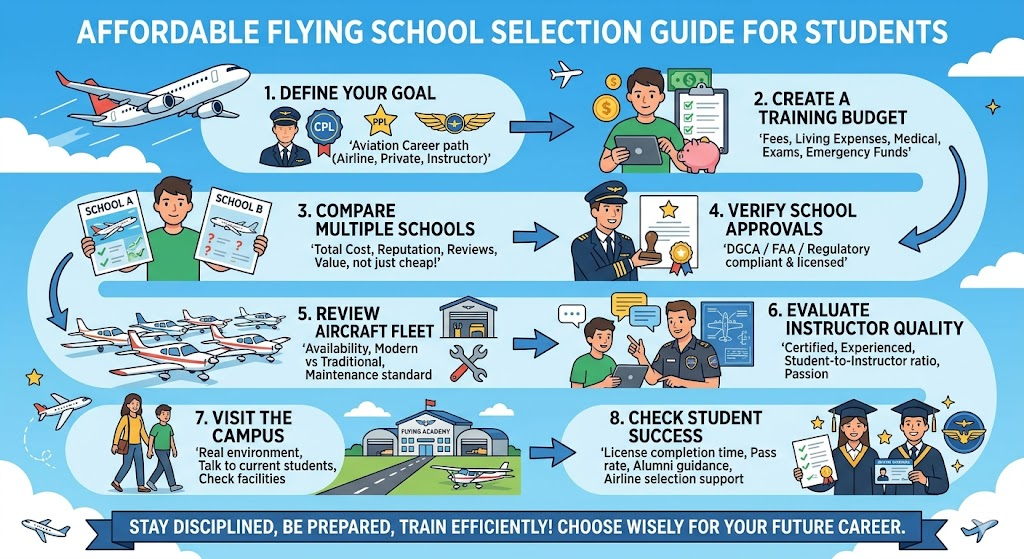
Step-by-Step Guide to Choosing an Affordable Flying School
Step 1: Define Your Career Goal
Before choosing a flying school, students should understand their aviation goal. The training path may differ depending on whether the student wants to become a private pilot, commercial pilot, or airline pilot.
Common goals include:
- Flying for personal interest
- Becoming a commercial pilot
- Joining an airline
- Becoming a flight instructor
- Building an aviation career abroad
A clear goal helps students choose the right training program.
Step 2: Create a Training Budget
Students should prepare a realistic budget before applying. This budget should include training fees, flight hours, exams, medicals, accommodation, food, travel, and emergency funds.
A practical training budget should include:
- Main training cost
- Extra flying hour buffer
- Living expenses
- Medical and examination cost
- Travel cost
- Study material cost
- Backup fund for delays
Pilot training can become stressful if students start without financial planning.
Step 3: Compare Multiple Schools
Never choose the first school you find. Compare at least a few flying schools before making a decision.
Compare schools based on:
- Total fees
- Aircraft availability
- Instructor quality
- Training duration
- Student feedback
- Safety record
- Facilities
- Exam support
- Career guidance
- Payment flexibility
A proper comparison helps students identify the best value option.
Step 4: Verify School Approvals
Students should always check whether the flying school is approved by the relevant aviation authority. Approved schools follow required training, safety, and licensing standards.
Before enrolling, verify:
- School approval status
- Training program authorization
- Instructor certification
- Aircraft registration and maintenance compliance
- License support process
Avoid schools that are unclear about approvals or regulatory compliance.
Step 5: Review Aircraft Fleet
Aircraft availability affects training speed and cost. If a school has too many students and too few aircraft, training may be delayed. Delays can increase accommodation and living expenses.
Check:
- Number of training aircraft
- Aircraft condition
- Maintenance process
- Aircraft usage schedule
- Backup aircraft availability
- Type of aircraft used for training
Good aircraft availability helps students complete flight hours more efficiently.
Step 6: Evaluate Instructor Quality
A good instructor can make a big difference in student confidence and learning speed. Students should look beyond fees and understand instructor quality.
Ask about:
- Instructor experience
- Instructor certifications
- Student-to-instructor ratio
- Teaching style
- Availability for doubt clearing
- Student feedback
A low-cost school with poor instructor support may become expensive in the long run.
Step 7: Visit the Campus
A campus visit helps students understand the real training environment. Brochures and websites may not show the full picture.
During the visit, observe:
- Classrooms
- Aircraft condition
- Simulator facilities
- Student discipline
- Safety procedures
- Maintenance area
- Hostel or accommodation support
- General campus environment
Speaking with current students can also provide honest insights.
Step 8: Check Student Success Rates
A flying school’s success rate can show how effectively it supports students. Students should ask about license completion, exam support, and training timelines.
Important points to check:
- Average training completion time
- Student pass rate
- License completion support
- Career placement assistance
- Alumni feedback
- Airline selection guidance
A school that helps students complete training smoothly provides better long-term value.
Warning Signs of Poor Flying Schools
Students should be careful if a school makes promises that sound too good to be true. Very low fees may sometimes hide poor training quality, weak safety practices, or hidden charges.
Warning signs include:
- Unrealistically low fees
- No clear fee breakdown
- Poor aircraft maintenance
- Limited aircraft availability
- Unqualified or unavailable instructors
- Negative student reviews
- Weak safety culture
- No proper campus facilities
- Delayed training schedules
- Pressure to enroll quickly
Aviation training should never compromise safety for cost savings.
Questions Students Should Ask Before Enrolling
Before paying fees, students should ask clear questions to the flying school.
Important questions include:
- What is the total estimated training cost?
- Are there any hidden charges?
- What is included in the fee package?
- How many aircraft are available?
- How many students are currently enrolled?
- What are instructor qualifications?
- What is the average training completion time?
- How are aircraft maintained?
- What happens if training is delayed?
- Is accommodation available?
- Are payment plans available?
- What exam support is provided?
- Does the school offer career guidance?
A transparent school should answer these questions clearly.
How to Reduce Pilot Training Costs
Students can reduce pilot training costs with smart planning and discipline.
Useful tips include:
- Prepare well before each flight lesson
- Attend ground school seriously
- Avoid repeated mistakes during training
- Schedule flying regularly
- Maintain good communication with instructors
- Choose a location with reasonable living costs
- Apply for scholarships where available
- Compare loan options carefully
- Avoid unnecessary training delays
- Keep documents ready on time
The more prepared a student is, the more efficiently training can be completed.
Affordable Flying School vs Cheapest Flying School
There is a big difference between an affordable flying school and the cheapest flying school.
A cheapest flying school may offer low fees but may have poor aircraft availability, weak maintenance, unplanned schedules, hidden charges, or limited instructor support.
An affordable flying school offers reasonable pricing with good training quality, safety, transparent costs, and reliable student support.
Students should focus on value, not just price. In aviation, poor training can cost more later through delays, repeat lessons, failed exams, or weak flying skills.
Career Benefits of Choosing the Right Flying School
The right flying school can support a student’s long-term aviation career. Good training builds strong habits that continue throughout a pilot’s professional journey.
Career benefits include:
- Stronger flying skills
- Better aviation discipline
- Improved exam preparation
- Higher confidence during flight checks
- Better safety awareness
- Professional communication skills
- Stronger career foundation
- Better preparation for commercial pilot training
A flying school is the foundation of a pilot’s career, so students should choose carefully.
How PilotsDeal.com Helps Students
PilotsDeal.com can help aviation aspirants understand pilot training options, compare flying schools, plan training budgets, and make informed decisions. For students and parents, clear information is very important because pilot training involves financial commitment and long-term planning.
PilotsDeal.com can support students with:
- Flying school research
- Aviation training guidance
- Cost planning information
- Pilot career resources
- Training comparison support
- Beginner-friendly aviation content
With the right guidance, students can avoid common mistakes and choose a better path toward their aviation goals.
Common Mistakes Students Make
Many students make decisions quickly because they are excited to start flying. However, rushing the process can lead to poor choices.
Common mistakes include:
- Choosing only based on low fees
- Not checking school approvals
- Ignoring aircraft availability
- Not reviewing instructor quality
- Forgetting accommodation costs
- Ignoring hidden charges
- Not visiting the campus
- Trusting unrealistic promises
- Failing to plan finances
- Not speaking with current students
Avoiding these mistakes can save money, time, and stress.
Frequently Asked Questions
1- How much does pilot training typically cost?
Pilot training cost depends on the country, flying school, aircraft type, flight hour charges, accommodation, exams, medicals, and additional fees. Students should always ask for a full cost estimate instead of relying only on advertised fees.
2- How can I find an affordable flying school?
To find an affordable flying school, compare multiple schools based on total cost, aircraft availability, instructor quality, safety standards, student reviews, and training duration. The best option should offer good value, not just the lowest price.
3- Should I choose the cheapest flying school available?
No, students should not choose a school only because it is the cheapest. Very low fees may come with hidden costs, poor training quality, limited aircraft, or delays. Safety and quality should always come first.
4- How important is aircraft availability?
Aircraft availability is very important because it affects training speed. If aircraft are not available regularly, students may face delays, which can increase accommodation and living expenses.
5- What qualifications should instructors have?
Flight instructors should be properly certified, experienced, patient, and capable of teaching students clearly. A good instructor helps students build confidence, safety awareness, and practical flying skills.
6- Can scholarships reduce training costs?
Yes, scholarships can help reduce training costs if available. Students should check with aviation academies, government programs, private institutions, and education financing providers for possible support.
7- How do I compare flying schools effectively?
Compare flying schools by looking at total fees, approval status, aircraft fleet, instructor experience, student feedback, safety practices, ground school quality, training timeline, and career guidance support.
8- What hidden costs should I expect?
Hidden costs may include uniform fees, study materials, simulator charges, exam fees, medical tests, airport charges, accommodation, transport, re-test fees, and extra flying hours. Always ask for a detailed fee breakdown.
9- How long does pilot training take?
Pilot training duration depends on the license type, weather, aircraft availability, student performance, exam schedules, and school efficiency. Regular flying and strong preparation can help students complete training faster.
10- Does flying school quality affect airline opportunities?
Yes, flying school quality can affect a student’s foundation, confidence, discipline, and technical skills. While airline selection depends on many factors, strong training can help students perform better in future aviation steps.
Conclusion
Selecting an affordable flying school is not about choosing the lowest fee. It is about finding the right balance between cost, safety, aircraft availability, instructor quality, training support, and career value. Students should compare schools carefully, ask detailed questions, understand the full cost, and avoid unrealistic promises. A good flying school helps students save money by reducing delays, improving preparation, and supporting efficient training completion. For aviation aspirants, the right decision at the beginning can create a strong foundation for a successful pilot career. PilotsDeal.com can help students make smarter choices by providing practical guidance, training information, and aviation career support.

