
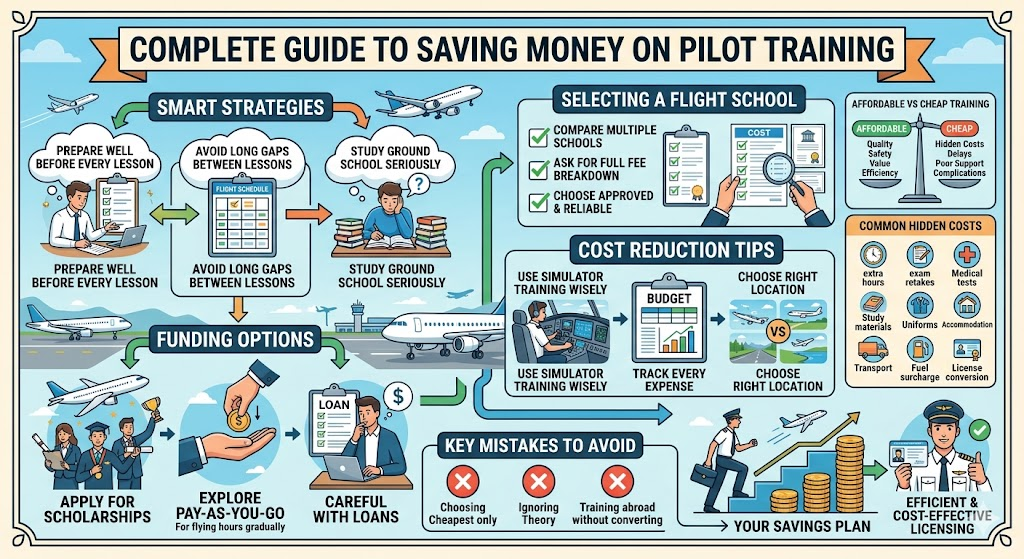
Introduction
Pilot training is one of the most exciting investments a student can make for a future in aviation. For many aspiring pilots, flying an aircraft is not just a career goal but a lifelong dream. However, pilot training can also be expensive because it includes aircraft rental, instructor fees, fuel, maintenance, simulator sessions, exams, medical checks, and living expenses. This is why many students and parents start looking for practical ways to reduce the overall cost before joining a flight school.
Saving money on pilot training does not mean choosing the cheapest school or compromising safety. It means making smarter decisions at every stage of the training journey. The right planning can help students avoid unnecessary expenses, reduce delays, improve lesson efficiency, and choose a flight school that offers real value.
This guide will help aspiring pilots understand why pilot training costs so much, how to reduce expenses, what hidden costs to check, and how to build a realistic training budget before enrollment.
Why Pilot Training Costs So Much
Pilot training is different from many other education programs because it involves both classroom learning and practical aircraft operation. Every flight lesson requires an aircraft, fuel, maintenance support, airport access, instructor time, and safety procedures. These factors make aviation training more expensive than regular classroom-based courses.
Aircraft Rental
Aircraft rental is usually one of the biggest expenses in pilot training. Students pay for the aircraft used during practical flying lessons. The rental cost can depend on the aircraft type, fuel use, maintenance needs, and school pricing structure.
Flight Instructor Fees
Flight instructors teach students how to operate the aircraft safely and confidently. Their role is very important because they guide students during takeoff, landing, navigation, emergency procedures, radio communication, and flight planning. Instructor fees may be included in the package or charged separately.
Fuel and Maintenance
Aircraft require regular fuel, inspections, maintenance, repairs, and safety checks. These costs are part of the training structure and can affect overall fees. A well-maintained aircraft fleet is important for safety and training continuity.
Ground School
Ground school covers aviation theory such as navigation, meteorology, air regulations, aircraft systems, flight planning, and human performance. Some schools include ground school in the package, while others charge separately.
Simulator Training
Simulator training helps students practice procedures, emergency handling, instrument basics, and navigation in a controlled environment. It can be very useful, but it may also add to the training cost if not included in the main package.
Exams and Licensing Fees
Students must pay for written exams, skill tests, license applications, documentation, and sometimes additional authority charges. These fees vary by training location and license type.
Medical Certification
Pilot medical fitness is mandatory. Students must complete aviation medical tests before or during training. Medical delays or repeat tests can increase both time and cost.
Study Materials and Uniforms
Books, charts, manuals, logbooks, headsets, uniforms, navigation tools, and other materials may be required. These may not always be included in the advertised training fee.
Accommodation and Travel
If the flight school is in another city or country, students must budget for rent, food, transport, travel, and daily living expenses. These costs can become significant during long training periods.
Extra Flying Hours
Some students need additional flying hours to improve confidence or meet required skill standards. Extra flying hours can increase the final training cost, especially if the student is not prepared or training is delayed.
Smart Ways to Save Money on Pilot Training
Saving money on pilot training requires careful planning before and during the course. Students who prepare well, compare properly, and stay consistent usually manage their training expenses better.
1- Compare Multiple Flight Schools
Do not choose a flight school only because it appears first in search results or offers a low advertised fee. Compare multiple schools before making a decision. A cheaper school may not always be affordable in the long run if it has hidden charges, limited aircraft, poor scheduling, or weak student support.
When comparing flight schools, check:
- Approval status
- Total training fee
- Aircraft availability
- Instructor experience
- Safety standards
- Student reviews
- Course completion time
- Extra flying hour cost
- Ground school quality
- Refund policy
A school with slightly higher fees may still save money if it helps students complete training efficiently and without unnecessary delays.
2- Ask for a Complete Fee Breakdown
One of the best ways to save money is to understand the full cost before joining. Some schools advertise a base fee that does not include all required expenses. Students should always ask for a written cost sheet.
A complete fee breakdown should include:
- Flying hours
- Aircraft rental
- Instructor fees
- Ground school
- Simulator sessions
- Exam fees
- License application charges
- Medical costs
- Study materials
- Uniforms
- Accommodation if available
- Extra flying hour rate
- Refund conditions
Written fee details help students avoid surprises during training.
3- Choose an Approved and Reliable Flight School
A properly approved flight school is important for safety, licensing, and career progress. Choosing an unapproved or poorly recognized school can create future problems, including retraining, license delays, or conversion issues.
Before enrolling, verify that the school is recognized by the relevant aviation authority. Also check whether the training program matches your career goal. For example, a student planning to become a commercial pilot should ensure the training pathway supports commercial licensing requirements.
4- Prepare Well Before Every Flight Lesson
Good preparation is one of the most effective ways to reduce flight training expenses. Every aircraft lesson costs money, so students should arrive prepared.
Before each flight, students should review:
- Lesson objectives
- Aircraft checklist
- Weather conditions
- Radio communication
- Navigation route
- Emergency procedures
- Instructor feedback from previous lessons
Prepared students learn faster, make fewer repeated mistakes, and use flying time more efficiently.
5- Use Simulator Training Wisely
Simulator training can help students practice important procedures before entering the aircraft. It is especially useful for emergency handling, navigation practice, instrument basics, and cockpit familiarization.
Simulator practice can help students:
- Improve confidence
- Understand procedures
- Practice radio communication
- Learn emergency response
- Reduce pressure during real flights
- Prepare for advanced training
However, simulator sessions should be used wisely. Students should ask whether simulator training is included in the course fee or charged separately.
6- Avoid Long Gaps Between Flying Lessons
Long breaks between lessons can increase training costs. When students stop flying for weeks or months, they may forget procedures, lose confidence, and need extra revision flights.
A regular flying schedule helps students retain skills and progress faster. Even if the training is pay-as-you-go, students should try to maintain consistency. Frequent short gaps are better than long interruptions.
7- Study Ground School Seriously
Ground school is not just theory. It directly supports practical flying. A student who understands navigation, weather, aircraft systems, and flight rules can perform better during flight lessons.
Strong theory knowledge can help students:
- Pass exams more confidently
- Understand instructor instructions faster
- Make better in-flight decisions
- Reduce repeated explanations
- Prepare for check rides
- Avoid unnecessary delays
Students should treat ground school as seriously as flying lessons.
8- Track Every Training Expense
Many students lose control of their budget because they do not track daily expenses. A simple training expense sheet can help students understand where their money is going.
Track expenses such as:
- Tuition payments
- Flying hours
- Simulator fees
- Exam fees
- Books and materials
- Accommodation
- Food
- Local transport
- Travel
- Medical costs
- Extra flying charges
Tracking expenses helps students identify unnecessary spending and plan future payments more carefully.
9- Apply for Scholarships and Grants
Scholarships can reduce the financial burden of pilot training. Some aviation organizations, training academies, private foundations, educational institutions, and airline-related programs may offer financial support to eligible students.
Scholarships may be based on:
- Academic performance
- Financial need
- Aviation interest
- Entrance test results
- Merit
- Leadership qualities
- Career goals
Students should apply early because deadlines may close before training begins. Prepare your documents, academic records, aviation goals, and personal statement in advance.
10- Consider Pay-As-You-Go Training
Pay-as-you-go training allows students to pay gradually instead of paying the full training amount upfront. This can help students and families manage cash flow better.
This option is useful for students with limited budgets, but it requires discipline. If a student pays slowly and takes long breaks, training may become more expensive due to revision flights.
Before choosing pay-as-you-go training, ask:
- Are hourly rates fixed?
- Can fees increase later?
- Is there a minimum payment requirement?
- Are there any penalties for delayed payments?
- Can training be paused?
- What happens if aircraft rates change?
11- Explore Education Loans and EMI Options Carefully
Education loans, aviation loans, and EMI options can help students start pilot training, but they must be handled carefully. A loan is useful only when the repayment plan is realistic.
Before signing any loan or financing agreement, check:
- Interest rate
- Processing fees
- Repayment period
- Monthly installment amount
- Total repayment value
- Collateral requirements
- Moratorium period
- Penalty charges
- Disbursement process
Students should avoid taking loans without understanding the full repayment responsibility.
12- Choose the Right Training Location
Location affects both training cost and completion time. Some places offer better weather, lower living costs, or more flying days. Others may have higher rent, expensive transport, or frequent weather delays.
Before choosing a training location, check:
- Weather conditions
- Cost of living
- Aircraft availability
- Rent and food expenses
- Airport accessibility
- Transport cost
- Training approval
- License conversion rules
- Safety standards
A lower training fee may not be useful if the living cost is high or the weather causes regular delays.
13- Avoid Paying Large Amounts Without Written Terms
Never pay a large amount without written confirmation. Students should always collect receipts, signed fee details, refund terms, and course structure documents.
Before payment, confirm:
- What is included in the fee
- What is not included
- Refund rules
- Training timeline
- Extra charges
- Delay policy
- Payment schedule
- License outcome
Clear written terms protect students from confusion and financial risk.
14- Keep Your Medical Fitness Ready
Aviation medical certification is essential for pilot training. Medical delays can slow down training and increase expenses. Students should complete required medical checks early and understand fitness requirements before investing heavily.
A medical issue discovered late can create financial and emotional stress. It is better to confirm eligibility before starting expensive flight training.
15- Learn From Current Students and Alumni
Current students and alumni can provide real information about training quality, instructor support, hidden costs, aircraft availability, and course delays.
Ask them:
- How often do students fly?
- Are instructors available?
- Are aircraft well maintained?
- Are there hidden charges?
- Is the training schedule reliable?
- Is the school supportive?
- How long does completion usually take?
Student feedback can help you avoid costly mistakes.
Affordable Training vs Cheap Training
Affordable pilot training and cheap pilot training are not the same.
Affordable training means the program provides good value for money. It includes proper approvals, safe aircraft, transparent pricing, strong instruction, and realistic timelines. It helps students complete training efficiently without unnecessary delays or hidden expenses.
Cheap training may look attractive because of low advertised fees, but it can become costly later. If a school has poor scheduling, limited aircraft, hidden charges, weak support, or unclear policies, students may spend more than expected.
Affordable training focuses on:
- Safety
- Value
- Transparency
- Good instructors
- Proper approvals
- Efficient scheduling
- Strong support
- Clear fee structure
Cheap training may involve:
- Hidden costs
- Delays
- Poor aircraft availability
- Weak ground school
- Limited instructor support
- Unclear refund terms
- Extra flying hours
- License complications
Students should choose value and safety over the lowest fee.
Common Hidden Costs in Pilot Training
Hidden costs can make pilot training more expensive than expected. Before enrollment, students should ask about every possible charge.
Extra Flying Hours
If a student needs more practice before a test or check ride, extra flying hours may be required. These hours are usually charged separately.
Exam Retake Fees
If a student does not pass an exam, retake fees may apply. Good preparation can reduce this risk.
Medical Tests
Medical tests and renewals may not be included in the training fee. Students should confirm medical costs early.
Study Materials
Books, manuals, charts, logbooks, headsets, and other materials may be extra.
Uniforms
Some schools require uniforms, shoes, or aviation dress codes. These may be separate costs.
Accommodation
Rent, hostel fees, or shared housing can add significantly to the total budget.
Local Transport
Daily travel between accommodation and flight school should be included in the budget.
Fuel Surcharge
Some schools may charge extra if fuel prices increase. Ask whether fuel surcharge is included or separate.
Simulator Sessions
Simulator practice may be included in some packages but separately charged in others.
License Application Charges
License application, documentation, and aviation authority fees may be additional.
Visa or Travel Costs for International Training
Students training abroad must include visa fees, flights, insurance, and travel expenses.
License Conversion Costs
If you train in another country, you may need to convert your license later. Conversion may involve additional exams, flying checks, paperwork, and fees.
Mistakes That Increase Pilot Training Costs
Many students spend more than necessary because of avoidable mistakes.
Choosing Only the Cheapest School
A very low fee can hide poor scheduling, limited aircraft, or extra charges. Always compare value, not just price.
Not Checking Approval Status
Training at an unapproved or poorly recognized school can create licensing problems and extra costs.
Poor Lesson Preparation
Unprepared students may repeat lessons, misunderstand instructions, and require more flying hours.
Long Gaps Between Lessons
Long breaks reduce skill retention and increase the need for revision flights.
Ignoring Theory Study
Weak theory knowledge can delay exams and affect practical performance.
Not Budgeting for Living Expenses
Rent, food, travel, and transport can become a major part of total training cost.
Not Checking Aircraft Availability
Limited aircraft availability can delay training and increase accommodation expenses.
Not Asking About Refund Policy
A clear refund policy is important if plans change or training does not continue.
Not Comparing Multiple Programs
Students who compare only one school may miss better training options.
Training Abroad Without Understanding License Conversion
International training can be useful, but license conversion rules must be understood before enrollment.
Step-by-Step Plan to Save Money on Pilot Training
A structured plan can help students reduce unnecessary expenses and make better training decisions.
1- Decide Your Pilot Career Goal
Understand whether you want to become a private pilot, commercial pilot, airline pilot, flight instructor, or aviation professional. Your goal will decide the license and training route.
2- Understand the License Type You Need
Different licenses have different requirements and costs. Learn the difference between private pilot training, commercial pilot training, modular training, integrated training, and cadet programs.
3- Research Approved Flight Schools
Create a list of approved flight schools that match your career goal. Check recognition, training structure, aircraft fleet, instructor experience, and student feedback.
4- Compare Full Cost Breakdowns
Ask every school for a detailed fee structure. Compare total cost, not only advertised fees.
5- Check Scholarship and Financing Options
Apply for scholarships, ask about installment plans, and compare education loan options carefully.
6- Speak With Students or Alumni
Real student feedback can reveal practical details that are not always visible in brochures.
7- Plan Your Training and Living Budget
Include training fees, rent, food, transport, travel, medical, exams, and emergency funds.
8- Prepare Strongly Before Starting
Start learning aviation basics before training begins. This helps you understand lessons faster.
9- Track Your Progress and Expenses
Maintain a log of your learning progress and spending. This helps you stay financially and academically organized.
10- Complete Training Consistently Without Unnecessary Gaps
Consistency saves time and money. Try to maintain a regular training schedule and avoid long breaks.
Budget Checklist Before Joining a Flight School
Before joining a flight school, use this checklist to estimate your total cost.
- Training fee
- Flying hour charges
- Ground school fee
- Instructor fee
- Simulator fee
- Exam and licensing fee
- Medical certificate fee
- Books and materials
- Uniforms
- Accommodation
- Food
- Local transport
- Travel expenses
- Insurance
- Emergency fund
- Extra flying hour buffer
- License conversion cost if training abroad
- Visa cost if training internationally
- Refund and cancellation terms
A proper budget checklist helps students avoid financial stress during training.
How PilotsDeal Can Help Students Save Money
PilotsDeal can help aspiring pilots and parents understand pilot training costs in a simple and practical way. Many beginners feel confused when comparing flight schools, license types, fee structures, and financing options. PilotsDeal can become a helpful platform for students who want clear aviation guidance before making a major investment.
PilotsDeal can support students by helping them:
- Understand pilot training expenses
- Compare training options
- Learn about affordable aviation pathways
- Avoid common cost-related mistakes
- Explore scholarship and financing ideas
- Understand flight school selection factors
- Plan a realistic training budget
- Make informed aviation career decisions
The goal of PilotsDeal is to help students choose smarter, safer, and more cost-effective pilot training options.
Who Should Read This Guide?
This guide is useful for anyone planning pilot training with a clear budget.
Students After School or College
Students who want to begin aviation early can use this guide to understand cost-saving steps before joining a flight school.
Parents Planning Pilot Training Budgets
Parents can use this guide to estimate total expenses and avoid hidden costs.
Career Changers
Professionals switching careers can compare flexible training routes and financing options.
International Students
Students planning to train abroad can understand the importance of living costs, visa expenses, and license conversion.
Working Professionals
Working professionals can explore modular or pay-as-you-go options if they cannot train full-time.
Aviation Beginners
Beginners can learn how pilot training works and how to prepare financially.
Students Looking for Scholarships
Students searching for financial support can use this guide to start scholarship research early.
Anyone Comparing Flight Schools
This guide helps compare schools based on value, transparency, safety, and total cost.
Frequently Asked Questions
1- How can I save money on pilot training?
You can save money on pilot training by comparing multiple approved flight schools, asking for a complete fee breakdown, preparing well before each lesson, avoiding long gaps between flights, studying theory seriously, applying for scholarships, and tracking every expense. Smart planning and consistent training can reduce unnecessary costs.
2- Is the cheapest flight school the best option?
No, the cheapest flight school is not always the best option. A low advertised fee may hide extra charges, delays, weak support, or limited aircraft availability. Choose a school that offers safety, proper approval, transparent pricing, good instructors, and reliable training schedules.
3- Can scholarships reduce pilot training costs?
Yes, scholarships can help reduce pilot training costs if you qualify. Some aviation schools, foundations, organizations, and airline-related programs may offer financial assistance. Students should research early, prepare documents, and apply before deadlines.
4- Is simulator training useful for saving money?
Simulator training can be useful because it helps students practice procedures, emergency handling, navigation, and communication before flying in an actual aircraft. It can improve confidence and reduce repeated mistakes. However, students should confirm whether simulator sessions are included in the fee or charged separately.
5- How do extra flying hours increase cost?
Extra flying hours increase cost because students must pay for additional aircraft rental, instructor time, and related charges. Extra hours may be needed if a student is not prepared, takes long breaks, or requires more practice before a test. Good preparation and regular flying can reduce this risk.
6- Should I choose local or international pilot training?
Both options can work depending on your budget, goals, and licensing needs. Local training may simplify license recognition and reduce travel issues. International training may offer different cost or weather advantages, but students must check visa costs, accommodation, approval status, and license conversion rules.
7- Can I pay pilot training fees in installments?
Many flight schools may offer installment plans, pay-as-you-go training, or financing support. This can help students manage expenses better. However, students should check written payment terms, possible fee changes, penalties, and the impact of delayed payments on training continuity.
8- What hidden costs should I check before joining?
You should check costs for extra flying hours, exam retakes, medical tests, study materials, uniforms, simulator sessions, accommodation, transport, fuel surcharge, license application, visa, travel, and license conversion. Always ask for a written fee breakdown before enrollment.
9- How can I avoid wasting money during flight training?
You can avoid wasting money by preparing before each lesson, maintaining a regular training schedule, studying theory seriously, listening to instructor feedback, using simulator practice effectively, and tracking your progress. Avoid long gaps and unclear payment agreements.
10- How can PilotsDeal help me compare pilot training options?
PilotsDeal can help students understand pilot training costs, compare program options, learn about affordable training pathways, avoid common mistakes, and make informed decisions before choosing a flight school. It can be a useful resource for beginners, students, and parents planning aviation training.
Conclusion
Saving money on pilot training is possible when students plan carefully and make informed decisions. The goal should not be to find the cheapest school, but to choose a training program that offers safety, transparency, quality instruction, and good value. Students can reduce expenses by comparing multiple schools, asking for full fee details, preparing well for lessons, using simulator training wisely, avoiding long gaps, applying for scholarships, and tracking every cost. Pilot training is a serious investment, and smart planning can help students complete their journey with less financial stress. PilotsDeal can support aspiring pilots by helping them understand costs, compare options, and choose a training path that matches their career goals and budget.

