
Introduction
Commercial pilot training is one of the biggest investments an aviation student can make. It includes flight hours, instructor fees, aircraft rental, ground school, medical exams, written tests, licensing fees, accommodation, travel, and study materials. For many students, the dream of becoming a commercial pilot feels expensive at first, but smart planning can make the journey more manageable. Reducing training costs does not mean choosing unsafe shortcuts or low-quality training. It means making better decisions, preparing properly, training consistently, and avoiding mistakes that increase expenses. With the right strategy, students can save money while still receiving safe, professional, and effective pilot training.
Understanding Commercial Pilot Training Costs
Before reducing costs, students must understand where the money goes. Commercial pilot training is not one single expense. It is a combination of many smaller and larger costs that add up over time.
Flight Training Fees
Flight training is usually the largest expense. Students pay for aircraft use, instructor time, fuel, maintenance, and operational support. The more efficiently a student learns, the fewer extra hours they may need.
Aircraft Rental Charges
Training aircraft are usually charged by the hour. Different aircraft types may have different hourly rates. A basic training aircraft may cost less than a more advanced aircraft.
Instructor Fees
Flight instructors guide students through every stage of training. Instructor fees may be included in the hourly training package or charged separately, depending on the school.
Ground School Costs
Ground school teaches aviation theory such as navigation, meteorology, air regulations, aircraft systems, and flight planning. Strong theory knowledge can reduce practical training mistakes.
Medical Examination Expenses
Pilot students must complete aviation medical examinations. Delays in medical approval can interrupt training, so students should complete medical checks early.
Examination and Licensing Fees
Written exams, skill tests, licensing applications, and regulatory fees are part of the total cost. Students should include these in their budget from the beginning.
Accommodation and Living Expenses
If students train away from home, they may need money for rent, food, transport, and daily living costs. These expenses can become significant during long training periods.
Why Cost Planning Matters
Cost planning is important because pilot training requires consistency. If a student runs out of money halfway through training, long breaks can lead to skill loss and additional refresher flights.
Good financial planning helps students:
- Avoid training interruptions
- Manage expenses clearly
- Reduce stress during training
- Prevent unnecessary loans
- Complete training more efficiently
- Prepare for hidden costs
A clear budget gives students confidence and helps them stay focused on learning.
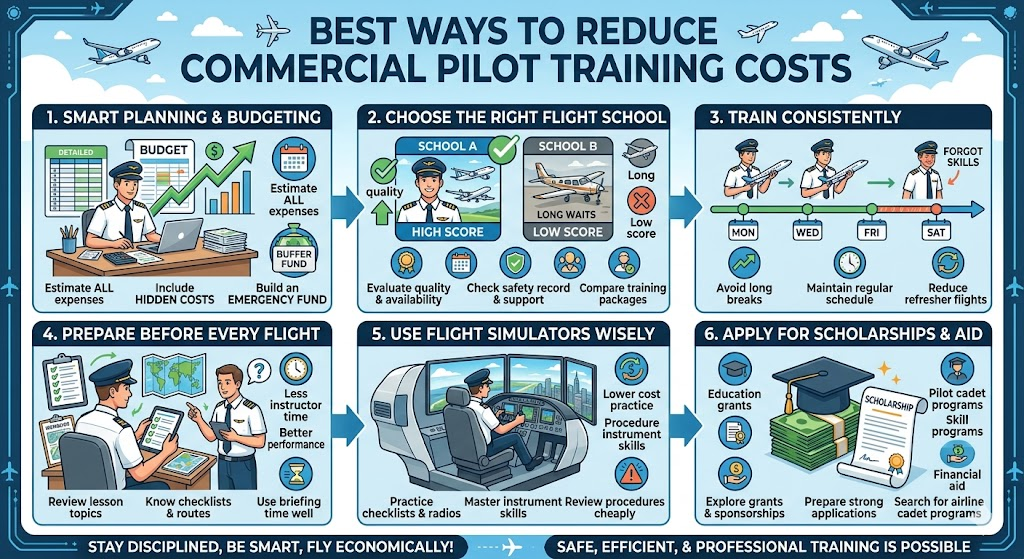
Start with a Detailed Budget
A detailed budget is the first step to reducing commercial pilot training costs. Students should not begin training with only a rough estimate.
Estimate Total Training Expenses
Ask the flight school for a complete fee structure. Include aircraft rental, instructor charges, ground school, exams, medical checks, licensing fees, materials, and taxes if applicable.
Include Hidden Costs
Hidden costs may include extra flying hours, exam retakes, uniform, headset, books, transportation, accommodation, meals, and document processing.
Build an Emergency Fund
Students should keep extra money aside for unexpected delays or additional training. Weather, aircraft maintenance, exam schedules, and personal learning speed can all affect total cost.
Choose the Right Flight School
Choosing the right flight school can make a major difference in total cost. The cheapest school is not always the most affordable in the long run.
Compare Training Packages
Compare what each school includes in its package. Some schools may include ground school and exam support, while others charge separately.
Check Aircraft Availability
If aircraft are not available regularly, training may become slow and inconsistent. This can increase costs because students may need revision flights.
Evaluate Instructor Quality
Good instructors help students learn faster and safer. Poor instruction can lead to repeated lessons, confusion, and extra flying hours.
Review Student Support
A good school provides proper scheduling, exam guidance, progress tracking, and student support. These services help students avoid delays.
Understand Fee Structures
Students should ask whether fees are fixed, hourly, refundable, or subject to change. Clear fee understanding prevents surprises later.
Avoid Unnecessary Flight Hours
Extra flight hours are one of the biggest reasons training costs increase. Some extra hours are normal, but poor preparation can make students spend more than needed.
Study Before Flying
Students should review the lesson topic before every flight. If the instructor spends too much time explaining basic theory during paid flight time, costs can increase.
Prepare for Every Lesson
Before each flight, students should know the planned exercise, checklist, route, weather, and lesson objective.
Use Briefings Effectively
Pre-flight and post-flight briefings are valuable. Students should listen carefully, ask questions, and understand mistakes before the next lesson.
Review Mistakes Quickly
Repeating the same mistake wastes time and money. After each lesson, students should note what went wrong and how to improve.
Take Ground School Seriously
Ground school is not just an exam requirement. It directly affects flight performance and training cost.
Strong ground school helps students:
- Understand aircraft behavior
- Read weather better
- Plan flights accurately
- Communicate confidently
- Make safer decisions
- Pass exams faster
- Reduce repeated flight lessons
Students who ignore theory often struggle during practical training and may need more instructor time.
Use Flight Simulators Wisely
Flight simulators can help students practice procedures at a lower cost than aircraft flying. They do not replace real flying, but they can support training.
Simulators can help with:
- Checklist practice
- Radio communication
- Instrument scanning
- Navigation procedures
- Emergency scenarios
- Cockpit familiarization
- Flight planning practice
Using simulators wisely can reduce confusion before real flights and improve confidence.
Train Consistently
Consistency is one of the best ways to reduce pilot training costs. Long gaps between lessons can cause skill loss.
Avoid Long Breaks
When students stop training for weeks or months, they may need extra revision flights. This increases cost and delays progress.
Maintain Skill Progress
Regular flying helps students remember procedures, improve aircraft control, and build confidence.
Plan a Realistic Schedule
Students should create a training schedule that matches their budget, school availability, and personal responsibilities.
Improve Learning Efficiency
Frequent and focused lessons help students progress faster and reduce unnecessary repetition.
Apply for Scholarships and Financial Assistance
Scholarships and financial support can reduce the burden of commercial pilot training costs.
Students can explore:
- Aviation scholarships
- Education grants
- Training sponsorships
- Airline cadet programs
- Government skill programs
- Aviation foundation support
- School-based discounts
- Education loans
Scholarships can be competitive, so students should prepare strong applications, academic records, motivation letters, and required documents.
Consider Cost-Effective Training Locations
Training location can affect total cost. Some cities or regions may have lower aircraft rental rates, accommodation costs, or living expenses.
Compare Regional Flight Schools
Regional flight schools may offer lower costs than schools in expensive cities. However, students should still check safety standards and training quality.
Check Weather Conditions
A location with frequent bad weather may cause delays. Good weather conditions can help students fly more regularly.
Review Accommodation Costs
Living costs can increase the total budget. Students should compare housing, transport, food, and daily expenses.
Check Airport Traffic
Busy airports may cause delays, while smaller airports may allow more efficient training. However, students should also gain experience in controlled airspace when required.
Maintain Good Health
Health problems can delay training and increase costs. Aviation medical fitness is important for student pilots.
Students should:
- Complete medical checks early
- Maintain good sleep habits
- Eat healthy food
- Exercise regularly
- Avoid harmful habits
- Manage stress
- Follow medical advice
A delay in medical approval can stop training and create financial pressure.
Share Resources with Other Students
Students can reduce smaller expenses by sharing learning resources responsibly.
Useful ideas include:
- Group study sessions
- Shared aviation books
- Practice question discussions
- Peer learning groups
- Shared transport to flight school
- Study notes exchange
However, students should avoid using outdated or unreliable materials. Aviation knowledge must be accurate and current.
Avoid Common Financial Mistakes
Many students spend more than necessary because of poor planning.
Common mistakes include:
- Choosing a school only by low price
- Not checking hidden fees
- Ignoring medical requirements
- Training irregularly
- Poor ground school preparation
- Not budgeting for extra hours
- Delaying exams
- Not tracking expenses
- Taking long breaks
- Underestimating living costs
Avoiding these mistakes can save a large amount over the full training journey.
Smart Ways to Finance Pilot Training
Pilot training often requires planned financing. Students should choose a method that suits their financial situation.
Personal Savings
Using savings can reduce loan pressure. Students should still keep an emergency fund for unexpected costs.
Education Loans
Education loans can help students fund training, but repayment planning is important. Students should understand interest rates, repayment timelines, and total loan cost.
Family Support
Some students receive family support. In this case, a transparent training budget helps everyone understand expected expenses.
Structured Payment Plans
Some flight schools offer payment plans. Students should ask about installment options, refund rules, and payment deadlines.
Sponsorship Opportunities
Some airline or aviation programs may support selected students. These opportunities are competitive and require strong preparation.
Long-Term Return on Investment
Commercial pilot training is expensive, but it can be a valuable long-term investment when planned wisely. A professional pilot career can lead to opportunities in airlines, charter aviation, cargo operations, corporate aviation, instruction, and other aviation roles.
Students should think beyond only the training cost. They should also consider:
- Training quality
- Safety standards
- Career support
- Licensing success
- Skill development
- Long-term employability
- Professional growth
Reducing cost is important, but reducing quality can harm future career opportunities.
Cost-Saving Checklist for Student Pilots
Use this checklist before and during commercial pilot training:
- Create a complete training budget
- Complete medical checks early
- Compare multiple flight schools
- Understand all fees clearly
- Choose quality over lowest price
- Study theory before each flight
- Attend ground school seriously
- Train consistently
- Avoid long breaks
- Use simulators where useful
- Track every expense
- Prepare well for exams
- Apply for scholarships
- Plan accommodation carefully
- Review lessons after every flight
- Ask instructors for feedback
- Avoid unnecessary aircraft upgrades
- Keep an emergency fund
- Stay healthy and focused
- Follow a realistic training schedule
FAQs
1- Why is commercial pilot training expensive?
Commercial pilot training is expensive because it includes aircraft rental, fuel, instructor fees, maintenance, insurance, ground school, exams, medical checks, and licensing costs. Aircraft operation itself is costly, and students need many flight hours to meet licensing requirements. Proper budgeting helps manage these expenses better.
2- Can I reduce costs without affecting training quality?
Yes, students can reduce costs without compromising safety or quality by preparing well, training consistently, choosing a reliable school, using simulators wisely, and avoiding unnecessary repeat lessons. Cost reduction should never mean choosing unsafe aircraft, poor instructors, or shortcuts.
3- Do flight simulators save money?
Flight simulators can help save money by allowing students to practice procedures, navigation, communication, and emergency scenarios before flying the real aircraft. They are useful for building confidence and reducing confusion. However, simulators cannot fully replace actual flight hours.
4- How important is consistent training?
Consistent training is very important because long breaks can cause students to forget skills and procedures. When students return after a long gap, they may need extra refresher flights, which increases cost. Regular training helps maintain progress and confidence.
5- Are scholarships available for pilot students?
Yes, some aviation organizations, training schools, foundations, airlines, and educational programs may offer scholarships or financial assistance. These opportunities can be competitive, so students should prepare early, maintain good academic records, and submit complete applications.
6- How can ground school help reduce costs?
Ground school helps students understand aviation theory before applying it in the aircraft. When students know weather, navigation, aircraft systems, and procedures well, they learn faster during flight lessons. This can reduce repeated training and unnecessary extra hours.
7- What hidden expenses should students plan for?
Hidden expenses may include extra flying hours, exam retakes, medical tests, books, uniforms, headsets, accommodation, transport, meals, document processing, and licensing fees. Students should add an emergency buffer to their training budget to handle these costs.
8- Is it better to pay upfront or use financing?
This depends on the student’s financial situation and the flight school’s policies. Paying upfront may sometimes offer discounts, but it can be risky if refund rules are unclear. Financing helps spread payments, but students must understand interest rates and repayment responsibilities.
9- Can changing training locations reduce costs?
Yes, training in a cost-effective location may reduce aircraft rental, accommodation, and living expenses. However, students should check weather conditions, aircraft availability, instructor quality, safety standards, and licensing support before choosing a location.
10- What is the biggest mistake students make with training budgets?
The biggest mistake is underestimating the total cost. Many students only calculate basic flight training fees and forget extra hours, exams, accommodation, medical checks, and daily expenses. A realistic budget with emergency funds is essential for completing training smoothly.
Conclusion
Reducing commercial pilot training costs requires smart planning, discipline, and consistent effort. Students can save money by choosing the right flight school, preparing before every lesson, taking ground school seriously, using simulators wisely, maintaining good health, applying for scholarships, and avoiding long training breaks. The goal should never be to cut corners on safety or training quality. Instead, students should focus on learning efficiently and managing money wisely. A well-planned training journey reduces stress, prevents unnecessary delays, and helps aspiring pilots move toward their commercial aviation goals with confidence. With patience, preparation, and the right financial strategy, becoming a commercial pilot can be more achievable.

