
Introduction
Pilot training is one of the most exciting investments an aspiring aviator can make. For many students, the dream of becoming a pilot begins with passion, but the journey also requires careful financial planning. Training fees can vary widely based on the country, flight school, aircraft type, training pathway, instructor availability, and the number of flying hours required.
Many new aspirants only look at the advertised course fee and forget about additional expenses such as medical tests, exams, equipment, accommodation, extra flight hours, and license processing. This is why understanding the complete cost structure is important before joining any flight school. A clear budget helps students avoid surprises, compare training options, and complete training with better confidence.
Why Pilot Training Costs Vary So Much
Pilot training fees are not the same everywhere. One student may pay a lower amount at a smaller local flight school, while another may pay more at a premium academy with modern aircraft, advanced simulators, and airline-style training.
Key reasons fees vary include:
- Country and aviation authority requirements
- Aircraft rental rates
- Fuel prices
- Instructor fees
- Simulator availability
- Flight school reputation
- Weather conditions
- Training duration
- Student performance
- Extra flight-hour requirements
A lower fee does not always mean better value. Students should compare safety standards, instructor quality, aircraft maintenance, training structure, and total cost transparency.
Understanding the Pilot Training Journey
Before understanding fees, beginners should know the typical training path.
1- Student Pilot Phase
This is the starting stage where students learn basic aviation rules, aircraft controls, safety procedures, and ground school concepts.
2- Private Pilot License
A private pilot license allows a person to fly for personal or recreational purposes, depending on local aviation rules. It is often the first major milestone.
3- Hour Building
After basic licensing, students may need to build flight hours before moving toward commercial-level training.
4- Commercial Pilot License
A commercial pilot license is required for those who want to work professionally as pilots.
5- Instrument Rating
Instrument training teaches pilots to fly using cockpit instruments, especially in reduced visibility or controlled conditions.
6- Multi-Engine Rating
This training prepares pilots to operate aircraft with more than one engine.
7- Airline Preparation
Future airline pilots may need additional preparation, simulator training, interview preparation, and type rating depending on career goals.
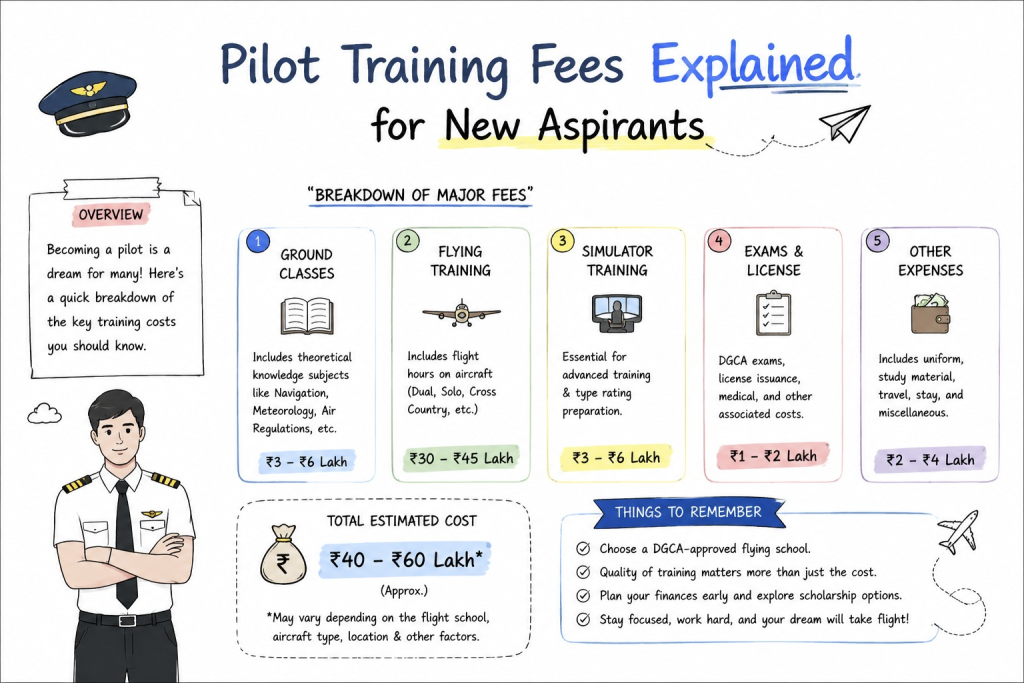
Major Components of Pilot Training Fees
1- Admission and Registration Fees
Most flight schools charge an admission or registration fee when a student enrolls. This may cover documentation, student records, administrative setup, identity verification, and initial processing.
Students should ask whether this fee is refundable or non-refundable before paying.
2- Ground School Fees
Ground school teaches the theory behind flying. It may include subjects like:
- Air regulations
- Navigation
- Meteorology
- Aircraft systems
- Flight planning
- Radio communication
- Human performance
- Aviation safety
Ground school fees may include classroom training, online modules, books, notes, mock tests, and instructor support.
3- Flight Training Costs
Flight training is usually the largest cost. It includes aircraft rental, instructor time, fuel-related charges, maintenance-related costs, and actual flight-hour charges.
The total cost depends on:
- Number of required flight hours
- Type of aircraft used
- Student learning speed
- Instructor availability
- Weather delays
- Repeated practice sessions
Students should confirm whether quoted fees include only minimum hours or realistic completion hours.
4- Simulator Training Costs
Simulators help students practice procedures, navigation, emergencies, instrument flying, and cockpit discipline. Simulator training can reduce pressure during real aircraft training and may help students learn more efficiently.
Simulator sessions may be cheaper than aircraft time, but they are usually an additional fee unless included in the package.
5- Medical Examination Fees
Every pilot must meet required medical standards. Aviation medical exams may include vision checks, hearing tests, general health assessment, and other evaluations depending on the license type.
Students should complete the medical check early because medical eligibility is essential before investing heavily in training.
6- Examination and Licensing Fees
Pilot training includes written exams, practical flight tests, skill checks, and license processing. These costs may be charged separately by aviation authorities, exam centers, or training organizations.
Students should budget for:
- Theory exams
- Practical flight tests
- Skill assessment
- License application
- Document verification
- License renewal where applicable
7- Uniforms and Pilot Equipment
Many new students forget equipment costs. Common items include:
- Pilot headset
- Logbook
- Flight bag
- Charts
- Navigation tools
- Kneeboard
- Flashlight
- Uniform
- Study materials
- Aviation calculator or apps where required
A good headset and proper study materials can improve the training experience.
8- Accommodation and Living Expenses
If the flight school is away from home, students must plan for living costs. These may include:
- Hostel or rent
- Food
- Local travel
- Laundry
- Internet
- Daily transport to airport
- Personal expenses
For long training programs, living expenses can become a major part of the total budget.
Hidden Costs Many Student Pilots Miss
Many students focus only on tuition or aircraft hours. However, hidden costs can increase the total investment.
Common hidden costs include:
- Extra flight hours
- Weather-related delays
- Re-examination fees
- Additional simulator sessions
- Medical retesting
- Travel expenses
- Accommodation extensions
- License conversion
- Visa or documentation costs for international training
- Training interruptions
A smart student should always keep an emergency buffer in the budget.
How Much Does It Cost to Become a Commercial Pilot?
The total cost of becoming a commercial pilot depends on the training country, license pathway, school type, aircraft used, and student performance. Instead of trusting one advertised number, students should ask for a complete cost estimate covering every stage.
A realistic commercial pilot training budget should include:
- Admission fees
- Ground school fees
- Aircraft flying hours
- Instructor fees
- Simulator training
- Medical checks
- Exams
- License charges
- Equipment
- Living expenses
- Extra training buffer
Premium academies may cost more but may offer structured programs, better aircraft availability, and stronger placement support. Smaller schools may be more affordable but require careful checking of quality, safety, and scheduling.
Pilot Training Financing Options
Pilot training is a major investment, so many students use financial support.
Common financing options include:
Education Loans
Banks and financial institutions may offer education loans for aviation training. Students should compare interest rates, repayment terms, collateral requirements, and approval conditions.
Flight School Payment Plans
Some schools allow students to pay in installments. This can reduce upfront burden but students should understand payment deadlines clearly.
Family Sponsorship
Many aspiring pilots receive support from family members. In this case, having a written budget and timeline helps everyone plan better.
Personal Savings
Some students work and save before starting full-time training. This can reduce loan pressure.
Employer or Airline Sponsorship
Some airline-linked programs may provide sponsored or partially supported training, but selection is usually competitive.
Scholarships for Aspiring Pilots
Scholarships can reduce training pressure for eligible students. These may come from aviation organizations, pilot associations, airlines, government programs, or educational foundations.
Students should prepare:
- Academic records
- Motivation letter
- Aviation goals
- Medical eligibility proof
- Financial documents
- Interview readiness
Scholarships are competitive, so applying early and carefully is important.
Ways to Reduce Pilot Training Costs
1- Train Consistently
Flying regularly helps students retain skills and reduce repeated lessons.
2- Study Before Every Flight
Prepared students use flight time better. Poor preparation can increase aircraft hours and costs.
3- Pass Exams on First Attempt
Re-exams add cost and delay. Good ground school preparation saves money.
4- Use Simulator Training Smartly
Simulator practice can help students improve procedures before entering the aircraft.
5- Choose the Right Flight School
The cheapest school is not always cost-effective. Poor scheduling, weak instruction, or aircraft delays can increase total cost.
6- Complete Medical Checks Early
Medical issues discovered late can create financial and emotional stress.
7- Avoid Long Training Gaps
Long breaks may force students to repeat lessons and spend more money.
Return on Investment of Pilot Training
Pilot training is expensive, but it can open the door to multiple aviation career paths. The return on investment depends on licensing success, skill development, market demand, career planning, and continuous learning.
Career options may include:
- Flight instructor
- Charter pilot
- Corporate pilot
- Cargo pilot
- Airline pilot
- Aerial survey pilot
- Aviation trainer
- Private aviation professional
Students should treat pilot training as a long-term career investment, not just a course fee.
Common Financial Mistakes New Aspirants Make
1- Looking Only at Advertised Fees
Advertised fees may not include exams, equipment, extra hours, accommodation, or license charges.
2- Choosing the Cheapest School
Low fees may hide poor aircraft availability, limited instructors, or weak support.
3- Ignoring Medical Requirements
Students should confirm medical eligibility before spending heavily.
4- Not Keeping Extra Budget
Extra hours are common in flight training. A financial buffer is important.
5- Training Without a Clear Plan
Without a timeline and budget, students may face delays and unnecessary expenses.
Budget Planning Checklist for Future Pilots
- Decide your goal: private flying or professional aviation
- Research training pathways
- Compare multiple flight schools
- Ask for a complete fee breakdown
- Complete your aviation medical check
- Estimate equipment and exam costs
- Add accommodation and living expenses
- Keep an emergency training buffer
- Explore loans and scholarships
- Create a realistic payment timeline
Frequently Asked Questions
1- How much does pilot training typically cost?
Pilot training cost depends on the license type, country, school, aircraft, fuel prices, and number of flight hours required. Students should always ask for a full cost estimate, not just the basic course fee. The final amount may increase if extra hours or re-exams are needed.
2- What is the most expensive part of pilot training?
Flight training is usually the most expensive part because it includes aircraft rental, instructor time, fuel-related expenses, and maintenance-related costs. The number of flying hours needed directly affects the total training budget.
3- Can I become a pilot on a budget?
Yes, but careful planning is necessary. Students can reduce costs by choosing the right school, studying well, flying consistently, using simulators effectively, and avoiding long training breaks. However, safety and quality should never be compromised.
4- Are scholarships available for pilots?
Yes, scholarships may be available through aviation organizations, training institutions, airlines, government programs, and pilot associations. Eligibility depends on academic background, financial need, performance, motivation, and program rules.
5- Is simulator training cheaper than aircraft training?
Simulator training is often cheaper than aircraft training and helps students practice procedures, emergencies, and instrument skills. However, simulator time cannot fully replace real aircraft experience. Both have important roles in pilot training.
6- Do airlines pay for pilot training?
Some airlines may offer sponsored or cadet training programs, but these are competitive and may include strict selection processes. Many students still pay for their own training before applying to airlines or aviation employers.
7- What hidden costs should I expect?
Hidden costs may include extra flight hours, re-exams, medical retesting, travel, accommodation extensions, equipment, additional simulator sessions, and license conversion fees. A financial buffer helps manage these surprises.
8- How can I finance flight school?
Flight school can be financed through education loans, personal savings, family support, school payment plans, scholarships, or sponsorship programs. Students should compare repayment terms and avoid borrowing without a clear career plan.
9- Are private pilot and commercial pilot costs different?
Yes, commercial pilot training usually costs more because it requires advanced skills, more flight hours, additional ratings, exams, and professional-level preparation. Private pilot training is generally shorter and focused on personal flying.
10- What happens if I need extra flight hours?
Extra flight hours increase the total cost, but they are common in flight training. Every student learns at a different pace. It is better to take extra training and become safe than rush through weak skills.
11- Is pilot training worth the investment?
Pilot training can be worth it for students who are committed, medically fit, financially prepared, and serious about aviation. The value depends on career goals, training quality, job readiness, and long-term planning.
12- Can international students apply for financing?
International financing depends on the country, lender, school, visa status, and financial documents. Some schools may guide international students, but loan approval rules vary widely.
13- How long does pilot training take?
Training duration depends on the license pathway, weather, aircraft availability, student performance, exam schedules, and training frequency. Full-time students may progress faster, while part-time students may need more time.
14- Which training pathway offers the best value?
The best value pathway is the one that balances cost, safety, aircraft availability, instructor quality, exam support, and career goals. Students should avoid judging value only by the lowest advertised price.
15- How should I start planning my budget?
Start by identifying your pilot goal, then collect detailed fee structures from multiple schools. Add medical, exams, equipment, accommodation, travel, and extra-hour buffer. This gives a more realistic training budget.
Conclusion
Pilot training is a major financial commitment, but proper planning can make the journey more manageable. New aspirants should understand every cost component before choosing a flight school, including ground school, aircraft hours, instructor fees, exams, medical checks, equipment, accommodation, and hidden expenses. The best approach is to compare multiple schools, ask detailed questions, complete medical checks early, and keep a financial buffer for unexpected costs. Whether your goal is private flying or a professional airline career, smart budgeting helps you stay focused and complete training successfully. With the right preparation, pilot training becomes not just an expense, but a strong investment in your aviation future.

