
Introduction
Your first flying lesson is one of the most memorable steps in your aviation journey. For many beginners, it is the first real moment when the dream of becoming a pilot starts to feel possible. You enter a flight school, meet an instructor, see the aircraft closely, sit inside the cockpit, and experience how flying actually feels.
But before booking the first lesson, most beginners have many questions.
How much does a first flying lesson cost?
What is included in the price?
Do I need medical fitness?
Can I touch the aircraft controls?
What should I wear?
What documents should I carry?
Is it safe for a complete beginner?
This First Flying Lesson Cost and Preparation Guide is written for students, parents, and aviation beginners who want clear and simple answers. The goal is to help you understand the cost, preparation steps, common mistakes, and full experience of your first flying lesson.
The actual cost of your first flying lesson can vary based on country, city, flight school, aircraft type, instructor fee, fuel cost, airport charges, and lesson duration. So instead of focusing only on a fixed number, this guide explains the full cost structure and preparation process in a practical way.
What Is a First Flying Lesson?
A first flying lesson is usually an introductory flight experience for beginners. It may also be called a trial flying lesson, discovery flight, introductory flight, or first flight lesson.
During this lesson, you are introduced to the aircraft, instructor, cockpit controls, safety rules, and basic flying experience. You do not need to be an expert. You do not need to know advanced aviation theory. The instructor is there to guide you step by step.
A first flying lesson usually includes:
- Basic safety briefing
- Aircraft introduction
- Pre-flight aircraft walkaround
- Cockpit familiarization
- Short flying session
- Basic control demonstration
- Instructor-guided flying experience
- Post-flight feedback
For many students, this lesson helps them decide whether they want to continue toward a Private Pilot License, Commercial Pilot License, or hobby flying.
First Flying Lesson Cost and Preparation Guide for Beginners
The cost of a first flying lesson depends on many factors. A short introductory flight may cost less than a full training lesson. A lesson in a small single-engine aircraft may cost less than a lesson in a larger or more advanced aircraft.
In most cases, the first flying lesson cost may include aircraft rental, instructor time, fuel, briefing, and basic flight school support. However, every school has a different fee structure.
Some schools offer a fixed trial flight package. Others charge based on aircraft hourly rate. Some may include instructor charges in the package, while others may add them separately.
Before booking, always ask the school for a complete cost breakdown in writing.
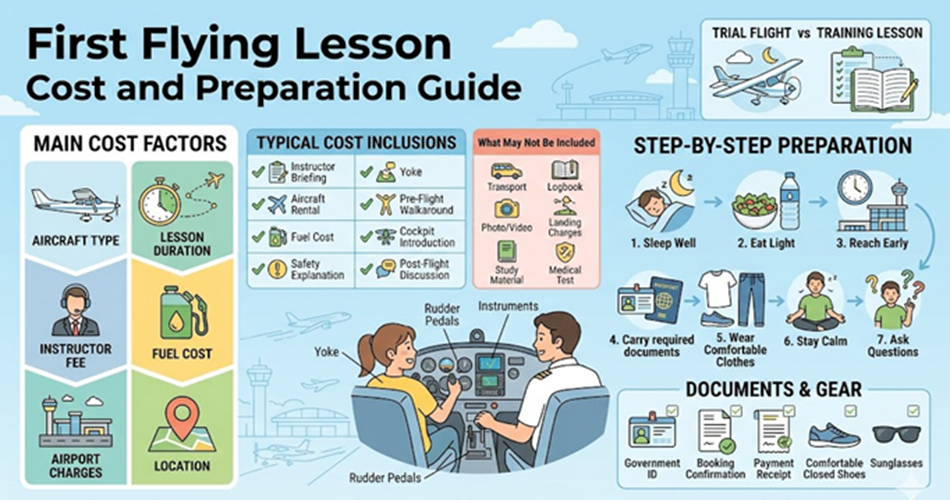
Main Factors That Affect First Flying Lesson Cost
1. Aircraft Type
The type of aircraft used for training has a big impact on cost. A small single-engine training aircraft is usually more affordable than a larger or more advanced aircraft.
Aircraft cost depends on:
- Fuel consumption
- Maintenance cost
- Insurance
- Engine type
- Aircraft age
- Avionics and equipment
- Single-engine or multi-engine setup
For a beginner’s first lesson, most schools use a basic training aircraft because it is simple, safe, and suitable for learning basic controls.
2. Lesson Duration
A first flying lesson may be short or long, depending on the school package. Some introductory lessons may include only a short flying experience. Others may include more detailed briefing and longer flight time.
Remember that total visit time and actual flying time are different.
For example, your total visit may take two to three hours, but actual flying time may be shorter. This is because the process includes paperwork, safety briefing, aircraft checks, and post-flight discussion.
3. Instructor Fee
The instructor is one of the most important parts of your first flying lesson. A qualified instructor explains safety, aircraft controls, basic flying techniques, and cockpit discipline.
Some flight schools include instructor fees in the package. Others may charge separately for:
- Pre-flight briefing
- In-flight instruction
- Post-flight feedback
- Ground explanation
Always ask whether the instructor fee is included in the quoted price.
4. Fuel Cost
Aircraft fuel is a major part of flying cost. If fuel prices are high in a specific country or airport, the first flying lesson cost may also be higher.
This is one reason why prices differ between flight schools and locations.
5. Airport Charges
Some airports charge landing fees, parking fees, handling charges, or other operational fees. These charges may be included in your lesson package or added separately.
Before booking, ask the school if there are any airport or landing charges.
6. Location of the Flight School
A flight school located at a busy airport or expensive city may charge more. Schools in smaller aviation training locations may offer lower costs, but you should still check safety standards, aircraft condition, and instructor quality.
Low cost should never be the only deciding factor.
7. Trial Flight or Logged Training Lesson
A trial flight is usually designed for experience and introduction. An official training lesson may be recorded in your pilot logbook if it meets school and regulatory requirements.
If you want your first flying lesson to count toward pilot training hours, ask the school before booking.
What Is Usually Included in First Flying Lesson Cost?
Most first flying lesson packages may include the following:
Instructor Briefing
Before the flight, the instructor explains basic safety rules, aircraft behavior, cockpit discipline, and what will happen during the lesson.
Aircraft Rental
Aircraft rental usually covers the use of the aircraft for the flying session. This is often the biggest part of the cost.
Fuel Cost
Fuel may be included in the aircraft hourly rate or package price.
Safety Explanation
You will learn basic safety points such as seatbelt use, emergency awareness, cockpit rules, and how to follow instructor instructions.
Pre-Flight Walkaround
The instructor may show you how pilots inspect the aircraft before flying. This may include checking wings, tires, fuel, control surfaces, and general aircraft condition.
Cockpit Introduction
You may be introduced to basic cockpit instruments, controls, radio, throttle, yoke or control stick, rudder pedals, and seat adjustment.
Flying Session
The instructor usually handles takeoff and landing. During the flight, you may get a chance to hold the controls under supervision.
Post-Flight Discussion
After landing, the instructor may explain how the flight went and answer your questions.
What May Not Be Included in the Cost?
Some expenses may not be included in the first flying lesson package. These can include:
- Registration fee
- Transport to the airport
- Headset rental
- Logbook
- Extra flying time
- Landing charges
- Taxes
- Photo or video package
- Study material
- Medical test
- Parent or visitor fee, if applicable
- Rescheduling charges
This is why beginners should never assume everything is included. Always ask for a clear list of inclusions and exclusions.
First Flying Lesson Cost Table
| Cost Item | What It Means | Included or Extra | Beginner Tip |
|---|---|---|---|
| Aircraft Rental | Cost of using the training aircraft | Usually included | Ask for the aircraft hourly rate |
| Instructor Fee | Cost of instructor guidance | Included or extra | Confirm before booking |
| Fuel Cost | Fuel used during flight | Usually included | Ask if fuel surcharge applies |
| Safety Briefing | Basic safety explanation | Usually included | Listen carefully |
| Pre-Flight Walkaround | Aircraft inspection introduction | Usually included | Ask questions during walkaround |
| Landing Charges | Airport landing-related fee | Included or extra | Confirm with the school |
| Headset | Communication equipment | Included or rental | Ask if headset is provided |
| Logbook | Record of flight hours | Usually extra | Needed if flight is logged |
| Photo or Video | Memory package | Usually extra | Optional, not necessary |
| Transport | Travel to flight school | Extra | Plan arrival early |
| Extra Flying Time | Additional time beyond package | Extra | Ask per-minute or hourly rate |
Typical Duration of a First Flying Lesson
A first flying lesson is not only about the time spent in the air. The complete experience can take longer.
A typical first lesson may include:
- Arrival and registration
- Meeting the instructor
- Safety briefing
- Aircraft walkaround
- Cockpit introduction
- Flying time
- Landing
- Post-flight discussion
Actual flying time may be short, but the overall visit may take much longer. Beginners should keep enough time in their schedule and avoid booking another urgent activity immediately after the lesson.
Step-by-Step Experience of Your First Flying Lesson
1. Arrival at the Flight School
Reach the flight school early. This gives you time to complete paperwork, meet the staff, and feel relaxed before the lesson.
2. Basic Registration
You may need to show your ID, booking confirmation, payment receipt, or signed form. Some schools may ask for a basic medical declaration.
3. Meeting the Instructor
Your instructor will introduce themselves and explain the lesson plan. This is a good time to ask questions if you feel nervous.
4. Safety Briefing
The instructor will explain important safety points. You should listen carefully and follow every instruction.
5. Aircraft Introduction
You will see the training aircraft closely. The instructor may explain basic parts such as wings, propeller, landing gear, flaps, engine area, and control surfaces.
6. Pre-Flight Inspection
Pilots inspect the aircraft before flying. The instructor may show you how the aircraft is checked for safety before takeoff.
7. Cockpit Familiarization
Once inside the cockpit, the instructor may explain basic instruments and controls. You do not need to remember everything in the first lesson.
8. Takeoff
The instructor usually performs the takeoff. You may observe how the aircraft moves, lifts off, and climbs.
9. Basic Control Demonstration
During the flight, the instructor may explain how small control movements affect the aircraft.
10. Student Control Experience
In many first flying lessons, the student may be allowed to hold the controls under instructor supervision. This depends on school policy, weather, airspace, and instructor decision.
11. Landing
The instructor usually handles the landing. Your job is to stay calm, follow instructions, and enjoy the experience.
12. Post-Flight Feedback
After the flight, the instructor may give feedback and explain what you experienced. This is a good time to ask whether pilot training is suitable for your goals.
How to Prepare Before Your First Flying Lesson
Sleep Well
A fresh mind helps you enjoy the lesson better. Avoid staying up late the night before your flight.
Eat Light Food
Do not fly on an empty stomach, but also avoid heavy meals. A light meal helps reduce discomfort.
Avoid Alcohol
Do not consume alcohol before flying. It affects your body, focus, and safety.
Reach Early
Arrive before the scheduled time. Airports and flight schools may have security checks and paperwork.
Carry Required Documents
Keep your ID, booking confirmation, payment receipt, and any forms requested by the school.
Wear Comfortable Clothes
Choose clothing that allows easy movement. Avoid tight or uncomfortable outfits.
Wear Closed Shoes
Closed shoes are safer and more comfortable for aircraft pedals. Avoid sandals, slippers, or high heels.
Check Weather Updates
Weather can affect flying schedules. Confirm with the school before leaving home.
Prepare Questions
Write down any questions you want to ask the instructor. Beginners should never feel shy about asking basic questions.
Stay Calm
It is normal to feel excited or nervous. The instructor is trained to guide beginners safely.
What to Wear for Your First Flying Lesson
Comfort is more important than style during a flying lesson.
Good choices include:
- Comfortable shirt or T-shirt
- Jeans or comfortable trousers
- Closed shoes
- Light jacket, if weather is cool
- Sunglasses, if flying during daytime
- Simple watch, if needed
Avoid:
- High heels
- Loose scarves
- Heavy jewelry
- Slippers or sandals
- Very tight clothes
- Large hats
- Strong perfume
- Bulky bags
The cockpit can be small, so simple and comfortable clothing is best.
Documents to Carry
Different schools may ask for different documents, but beginners should usually carry:
- Government ID
- Booking confirmation
- Payment receipt
- Passport-size photo, if requested
- Medical declaration, if required
- Parent or guardian consent for minors
- Any form shared by the flight school
- Emergency contact details
Before visiting the school, confirm the document list by phone or email.
Questions to Ask the Flight School Before Booking
Before paying for your first flying lesson, ask these questions:
- What is the total cost of the lesson?
- What is included in the price?
- What is not included?
- How much actual flying time will I get?
- Is instructor fee included?
- Is fuel cost included?
- Are airport or landing charges extra?
- What aircraft will be used?
- Is the aircraft suitable for beginners?
- Can the flight time be logged?
- Will I get a certificate or logbook entry?
- What happens if weather is bad?
- Is there a refund or reschedule policy?
- Can parents or friends come to the flight school?
- Are photos or videos allowed?
- Do I need medical fitness for this lesson?
- What should I wear?
- What documents should I bring?
These questions help you avoid confusion and hidden charges.
Difference Between Trial Flight and Official Training Lesson
A trial flight and an official training lesson may look similar, but they are not always the same.
Trial Flight
A trial flight is mainly for experience. It helps beginners understand how flying feels. It may or may not count toward future pilot training hours.
Official Training Lesson
An official training lesson is part of structured pilot training. It may be recorded in your logbook if it follows school and regulatory requirements.
If your goal is to become a pilot, ask the school whether your first flight can be logged as training time.
Is the First Flying Lesson Safe?
A first flying lesson is conducted under the supervision of a trained instructor. The instructor is responsible for safety, aircraft control, communication, takeoff, landing, and emergency handling.
Beginners are not expected to fly alone. You will not be left to manage the aircraft by yourself.
Safety depends on:
- Licensed instructor
- Well-maintained aircraft
- Good weather
- Proper briefing
- Flight school standards
- Student discipline
Always choose a flight school that takes safety seriously.
Can Beginners Control the Aircraft?
In many first flying lessons, beginners may be allowed to gently control the aircraft under instructor supervision. This usually happens only when conditions are safe and the instructor feels it is appropriate.
You may get to try simple movements such as:
- Keeping the aircraft level
- Gentle turns
- Small climbs or descents
- Understanding how controls feel
The instructor remains in full control and can take over at any time.
Common Beginner Mistakes
Booking Only Based on Lowest Price
A cheap lesson may not include important items. Always check what is included before comparing prices.
Not Asking About Flying Time
Some packages may mention total session time, but actual flying time may be shorter. Ask clearly.
Reaching Late
Flight schools work on schedules. Reaching late may reduce your experience or create rescheduling issues.
Wearing Uncomfortable Clothes
Wrong clothing can make you uncomfortable in the cockpit.
Eating Too Much Before the Flight
A heavy meal may cause discomfort, especially if you are nervous.
Expecting to Fly Alone
Beginners do not fly alone during the first lesson. The instructor is always there to guide and control the aircraft.
Ignoring Safety Instructions
Safety instructions are important. Listen carefully and follow them.
Forgetting Documents
Missing documents can delay or cancel your lesson.
Not Checking Weather Policy
Weather can change quickly. Always ask what happens if the flight is cancelled due to weather.
Not Confirming Logged Time
If you want the lesson to count toward training, confirm logbook rules before booking.
How Parents Can Help Beginner Students
Parents often play an important role when students are starting pilot training. A first flying lesson can help parents understand the student’s interest and comfort level before committing to a full training program.
Parents should check:
- Flight school reputation
- Instructor qualification
- Aircraft condition
- Safety standards
- Total cost
- Refund policy
- Student support
- Training path after the first lesson
Parents should not choose only the cheapest option. Safety and training quality matter more than a small price difference.
Safety Tips for First-Time Flyers
- Follow instructor instructions at all times
- Wear your seatbelt properly
- Do not touch controls without permission
- Keep your phone silent during the flight
- Avoid sudden movements in the cockpit
- Inform the instructor if you feel uncomfortable
- Stay calm during normal aircraft sounds
- Ask questions after the flight
- Do not panic during turns or small bumps
- Trust the instructor’s guidance
Aircraft make sounds and movements that may feel new to beginners. Most of these are normal. Your instructor will guide you throughout the flight.
Is the First Flying Lesson Worth the Cost?
Yes, for most beginners, the first flying lesson is worth it. It gives you real exposure to aviation before you invest in full pilot training.
A first flying lesson helps you understand:
- Whether you enjoy flying
- Whether you feel comfortable in the cockpit
- How a flight school works
- How instructors teach
- What aircraft training feels like
- Whether pilot training is the right path for you
It is better to take one introductory lesson before spending a large amount on full training.
Final Checklist Before Your First Flying Lesson
Use this checklist before leaving for the flight school:
- Booking confirmed
- Total cost confirmed
- Inclusions checked
- Weather checked
- Documents packed
- Comfortable clothes selected
- Closed shoes worn
- Light meal taken
- Phone charged
- Arrival time planned
- Questions prepared
- Transport arranged
- Parent consent ready, if required
- Reschedule policy understood
This simple checklist can make your first flying lesson smoother and stress-free.
Real-World Example
Imagine a beginner student named Rohan wants to experience his first flying lesson before joining full pilot training. He contacts a flight school and asks about the cost, flying time, aircraft type, instructor fee, and weather policy.
The school tells him that the lesson includes instructor briefing, aircraft rental, fuel, basic cockpit introduction, and a short flying session. However, transport and photo package are not included.
Rohan reaches early, carries his ID, wears comfortable clothes and closed shoes, eats a light meal, and prepares a few questions. During the flight, the instructor handles takeoff and landing but allows him to gently hold the controls for a short time.
After the flight, Rohan feels more confident and understands that flying is something he wants to pursue seriously. Because he prepared properly, his first lesson becomes useful, safe, and memorable.
FAQs
1. How much does a first flying lesson cost?
The cost depends on the flight school, aircraft type, instructor fee, lesson duration, fuel price, airport charges, and country. Always ask for a complete cost breakdown before booking.
2. Is the first flying lesson safe?
Yes, it is generally safe when conducted by a qualified instructor in a properly maintained aircraft. The instructor remains responsible for aircraft control and safety.
3. Can beginners control the aircraft in the first lesson?
In many cases, the instructor may allow beginners to try simple control movements under supervision. This depends on weather, airspace, school policy, and instructor decision.
4. Do I need medical fitness for a first flying lesson?
For a basic introductory flight, some schools may not require full pilot medical certification. However, requirements vary, so confirm with the school before booking.
5. What should I wear for my first flying lesson?
Wear comfortable clothes and closed shoes. Avoid sandals, high heels, loose scarves, heavy jewelry, and uncomfortable outfits.
6. Can the first flying lesson count toward pilot training hours?
It may count only if it follows official training requirements and is recorded properly in a logbook. Ask the flight school before booking.
7. What happens if weather is bad?
The flight may be delayed or rescheduled. Always ask the school about its weather cancellation and rescheduling policy.
8. Can parents or friends come to the flight school?
Many schools allow parents or friends to visit, but access may be limited due to airport security and school rules. Confirm in advance.
9. Should I book the cheapest flying lesson?
Not always. Check safety, instructor quality, aircraft condition, included services, and school reputation before choosing based on price.
10. Is a first flying lesson worth it before joining pilot training?
Yes. It helps you understand whether you enjoy flying and whether pilot training is the right path before making a bigger investment.
Conclusion
This First Flying Lesson Cost and Preparation Guide shows that your first flying lesson is not only about price. It is about understanding the aircraft, meeting an instructor, learning basic safety, experiencing the cockpit, and deciding whether flying is right for you.
Before booking, ask clear questions about cost, flying time, instructor fee, aircraft rental, extra charges, weather policy, and logbook entry. Prepare properly by carrying documents, wearing comfortable clothes, eating light, reaching early, and listening carefully to safety instructions.
Your first flying lesson can become a powerful starting point in your aviation journey. With the right preparation and the right flight school, it can be safe, exciting, educational, and unforgettable.

