
Introduction
The first solo flight is one of the most important moments in a student pilot’s training journey. It is the first time a student pilot flies the aircraft without an instructor sitting beside them. For many students, this moment feels exciting, emotional, and slightly nervous at the same time.
A first solo flight is not just about flying alone. It is about trust, preparation, discipline, safety, and confidence. Your instructor allows you to fly solo only when they believe you can handle the aircraft safely, follow procedures, communicate properly, and make good decisions.
This First Solo Flight Preparation Guide for Students will help beginner pilots understand what to expect before their first solo flight, how to prepare mentally and physically, what skills to master, what items to carry, what mistakes to avoid, and how to stay calm during the flight.
The goal is simple: your first solo flight does not need to be perfect. It needs to be safe, controlled, and disciplined.
What Is a First Solo Flight?
A first solo flight is the first flight where a student pilot operates the aircraft alone without an instructor onboard. The instructor remains on the ground and allows the student to fly only after proper training, evaluation, and approval.
In most cases, a first solo flight is not a long journey. It usually happens in a familiar training area, circuit pattern, or traffic pattern around the airport. The student normally performs basic tasks such as taxiing, takeoff, circuit flying, approach, landing, and taxi back.
The flight instructor decides when a student is ready. A student should never pressure the instructor for solo approval. Solo flying is based on safety, not speed.
Why the First Solo Flight Matters
The first solo flight is a major milestone because it shows that the student has reached a basic level of flying confidence and control.
It matters because it helps students develop:
- Confidence in aircraft handling
- Responsibility as pilot-in-command
- Better decision-making
- Checklist discipline
- Radio communication confidence
- Awareness of weather and runway conditions
- Trust in training
- Respect for aviation safety
For many students, the first solo flight becomes a lifelong memory. But more importantly, it teaches that flying is not only about skill. It is also about judgment, patience, and discipline.
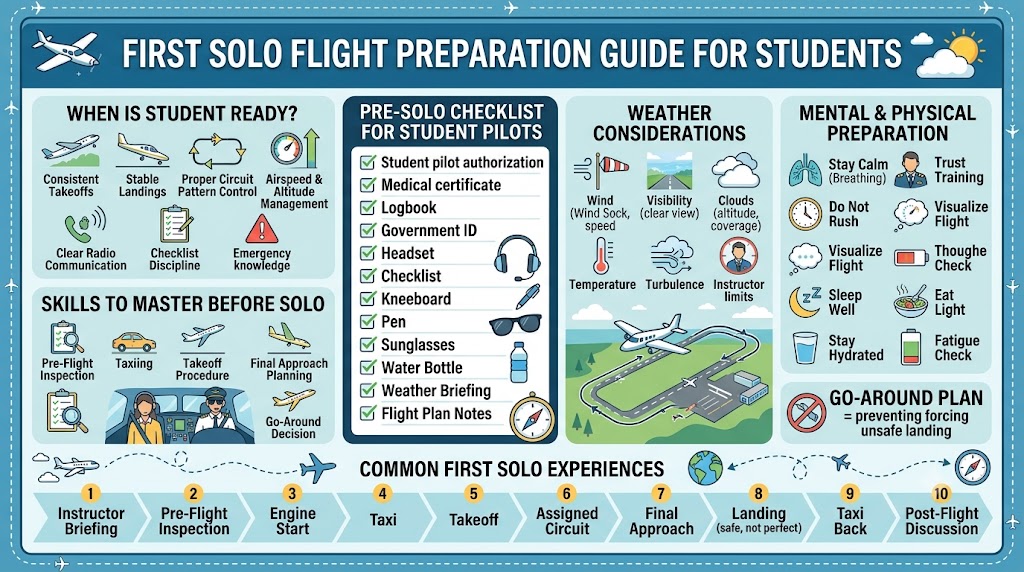
When Is a Student Ready for First Solo Flight?
A student is ready for a first solo flight only when the instructor is fully satisfied with the student’s performance. Readiness is not decided by excitement or number of lessons alone.
Common signs of solo readiness include:
- Stable takeoffs
- Safe and consistent landings
- Proper circuit or traffic pattern control
- Good airspeed management
- Good altitude control
- Clear radio communication
- Proper checklist use
- Situational awareness
- Good runway alignment
- Ability to go around safely
- Basic emergency knowledge
- Calm behavior under pressure
- Respect for instructor guidance
A student must be confident, but not overconfident. Overconfidence can be dangerous in aviation. The safest student pilot is one who follows procedures carefully and accepts guidance from the instructor.
Skills Students Should Master Before Solo
Before a first solo flight, students should be comfortable with basic flying tasks. These skills are usually practiced many times with the instructor before solo approval.
1. Pre-Flight Inspection
The student should understand how to inspect the aircraft before flying. This includes checking fuel, oil, tires, control surfaces, wings, documents, and general aircraft condition.
2. Taxiing
Taxiing means moving the aircraft safely on the ground. The student should control direction, speed, braking, and runway awareness.
3. Takeoff Procedure
The student should know how to line up correctly, apply power smoothly, maintain direction, rotate at the correct speed, and climb safely.
4. Circuit or Traffic Pattern Flying
The first solo often happens in the circuit. The student should understand downwind, base, final approach, runway position, and spacing from other aircraft.
5. Approach Planning
A good landing starts with a good approach. The student should manage speed, height, power, flap setting, and runway alignment.
6. Landing Flare
Landing flare requires timing and control. The student should know how to reduce descent and touch down safely.
7. Go-Around Procedure
A go-around is a normal safety decision when the approach or landing is not stable. Students must never force a bad landing.
8. Radio Communication
The student should be able to make simple, clear radio calls and understand basic instructions.
9. Airspeed Control
Airspeed is very important. The student should avoid flying too fast or too slow, especially during approach and landing.
10. Emergency Handling Basics
The student should know basic emergency procedures such as engine failure after takeoff, radio failure, rejected takeoff, and abnormal aircraft behavior.
Mental Preparation Before First Solo Flight
Mental preparation is just as important as flying skill. Many students feel nervous before their first solo, and that is completely normal.
Stay Calm
Feeling nervous does not mean you are not ready. It means you understand the seriousness of flying. Take slow breaths and focus on one step at a time.
Trust Your Training
Your instructor will not send you solo unless they believe you are ready. Trust the lessons, practice, and procedures you have already completed.
Do Not Rush
A first solo flight should be calm and controlled. Rushing leads to missed checklist items, poor radio calls, and unstable approaches.
Visualize the Flight
Before the flight, mentally rehearse each step: walkaround, startup, taxi, takeoff, circuit, approach, landing, and shutdown.
Focus on Procedures
Do not think about impressing anyone. Focus only on flying safely and following the checklist.
Avoid Overthinking
Too much overthinking can create stress. Keep the process simple: aviate, navigate, communicate, and follow your training.
Physical Preparation Before Solo Flight
Your body and mind should both be ready before solo flying. A tired or unwell student should not fly solo.
Sleep Well
Good sleep improves focus, memory, reaction time, and decision-making.
Eat Light
Avoid flying on an empty stomach, but do not eat too heavily. A light meal is best before flying.
Stay Hydrated
Drink enough water, especially in hot weather. Dehydration can affect concentration.
Avoid Alcohol
Never consume alcohol before flying. Even small effects can reduce performance and safety.
Avoid Fatigue
If you feel tired, stressed, dizzy, or unwell, inform your instructor. Safety is more important than completing the solo flight that day.
Wear Comfortable Clothes
Wear clothes that allow easy movement in the cockpit. Avoid loose items that may interfere with controls.
Use Proper Shoes
Closed shoes are best for rudder pedal control. Avoid sandals, slippers, or high heels.
Documents and Items to Carry
The exact requirements may vary by country, aviation authority, and flight school. But student pilots should usually carry:
- Student pilot authorization, if required
- Medical certificate, if required
- Logbook
- Government ID
- Flight school ID
- Aircraft checklist
- Kneeboard
- Pen
- Headset
- Sunglasses
- Water bottle
- Weather briefing notes
- Flight plan or circuit notes, if required
Before the solo flight, confirm with your instructor what documents and items are needed.
Pre-Solo Checklist for Student Pilots
A checklist helps reduce mistakes and keeps the flight organized.
| Preparation Area | What to Check | Why It Matters | Student Tip |
|---|---|---|---|
| Instructor Approval | Final solo permission | Confirms readiness | Never fly solo without approval |
| Weather | Wind, visibility, clouds | Weather affects safety | Respect instructor limits |
| Aircraft | Fuel, oil, documents, condition | Ensures aircraft readiness | Do a careful walkaround |
| Checklist | Startup, taxi, takeoff, landing | Prevents missed steps | Do not rush checklist items |
| Radio | Frequency and call format | Helps communication | Keep calls simple and clear |
| Circuit Pattern | Direction, altitude, runway | Keeps flight organized | Review before takeoff |
| Emergency Procedures | Engine failure, go-around, radio issue | Builds confidence | Review with instructor |
| Personal Fitness | Sleep, food, health, stress | Affects performance | Speak up if unwell |
| Runway Conditions | Wind direction and runway surface | Helps takeoff and landing | Check before departure |
| Go-Around Plan | When to discontinue landing | Prevents unsafe landing | Go around early if unsure |
Weather Considerations for First Solo Flight
Weather is one of the most important factors before a first solo flight. Even a well-trained student should not fly solo in uncomfortable or unsuitable weather.
Important weather factors include:
- Wind speed
- Crosswind
- Visibility
- Cloud base
- Temperature
- Turbulence
- Rain or storm activity
- Runway condition
- Weather changes
- Instructor weather limits
Crosswind can make takeoff and landing more challenging. Low visibility can reduce situational awareness. Turbulence can make the aircraft feel less stable.
A student should never feel pressured to fly solo in weather conditions that feel uncomfortable. If the weather is not suitable, postponing the solo flight is a smart decision.
Instructor’s Role Before First Solo
The flight instructor plays the most important role before a student’s first solo flight. The instructor observes, trains, corrects, tests, and evaluates the student over many lessons.
Before allowing solo, the instructor may check:
- Takeoff performance
- Landing consistency
- Circuit control
- Radio calls
- Checklist discipline
- Emergency knowledge
- Weather understanding
- Student confidence
- Decision-making ability
- Overall safety attitude
The instructor may also complete required authorization or logbook entries, depending on local rules.
Remember, instructor approval is based on safety. It is not based on student pressure, excitement, or comparison with other students.
Common First Solo Flight Experience
A first solo flight usually follows a simple and familiar pattern. The instructor keeps the flight within the student’s comfort level.
1. Instructor Briefing
The instructor gives a final briefing and explains what the student will do during the solo flight.
2. Pre-Flight Inspection
The student completes the aircraft walkaround and checks the aircraft carefully.
3. Engine Start
The student starts the engine by following the checklist.
4. Taxi
The student taxis the aircraft safely to the runway or holding point.
5. Radio Call
The student makes required radio calls clearly and calmly.
6. Takeoff
The student performs takeoff using practiced procedures.
7. Circuit or Local Flight
The student flies the assigned circuit or training area.
8. Approach
The student plans the approach and maintains proper airspeed and runway alignment.
9. Landing
The student lands the aircraft safely. The landing does not need to be perfect.
10. Taxi Back
After landing, the student taxis back carefully.
11. Shutdown
The student completes shutdown checklist.
12. Post-Flight Discussion
The instructor reviews the flight and gives feedback.
First Solo Flight Safety Tips
Safety should always be the main priority. A student pilot should remember these tips:
- Follow the checklist
- Do not rush
- Maintain correct airspeed
- Keep radio calls simple
- Stay in the assigned circuit or area
- Watch runway alignment
- Be ready to go around
- Avoid unnecessary maneuvers
- Follow instructor instructions
- Land safely, not perfectly
- Do not try to impress anyone
- Stay calm if something feels different
- Ask for help by radio if needed
A first solo flight is not a performance show. It is a safety exercise and confidence milestone.
Common Mistakes Students Should Avoid
1. Overconfidence
Confidence is good, but overconfidence can lead to poor decisions. Stay humble and follow procedures.
2. Ignoring the Checklist
Skipping checklist items can create serious problems. Use the checklist every time.
3. Rushing Takeoff
Takeoff should be smooth and controlled. Do not rush power application or rotation.
4. Poor Airspeed Control
Airspeed is critical, especially during approach and landing. Monitor it carefully.
5. Late Radio Calls
Radio calls should be clear and timely. Practice them before the flight.
6. Forcing a Landing
If the approach is unstable, go around. A go-around is always better than forcing a bad landing.
7. Getting Distracted After Takeoff
After takeoff, focus on climb attitude, airspeed, runway direction, and circuit position.
8. Forgetting Wind Correction
Wind can push the aircraft away from the intended path. Apply correction as trained.
9. Trying to Impress Others
Do not fly for spectators. Fly for safety.
10. Not Speaking Up
If you feel unwell, nervous, or unsure before the flight, tell your instructor.
What to Do If You Feel Nervous
Feeling nervous before your first solo flight is normal. Even confident students may feel pressure before flying alone for the first time.
Here are simple ways to manage nervousness:
- Take slow breaths
- Review the checklist
- Talk to your instructor
- Visualize the flight
- Focus on one step at a time
- Avoid negative thoughts
- Remind yourself that your instructor trusts your ability
- Do not compare yourself with other students
If nervousness feels too strong, speak honestly with your instructor. A good pilot knows when to pause. Postponing a solo flight for safety is not failure.
Go-Around Decision for First Solo Students
A go-around is one of the most important safety decisions in flying. It means discontinuing the landing approach and climbing away to try again.
Students should go around if:
- The aircraft is too high
- The aircraft is too low
- Airspeed is not stable
- Runway alignment is poor
- Touchdown point is not correct
- Wind affects the approach
- Another aircraft or vehicle creates conflict
- The student feels unsure
A go-around is not a mistake. It is a safe and professional decision. A good pilot does not force a landing.
After the First Solo Flight
After landing, the student should continue to stay focused. The flight is not complete until the aircraft is parked and shut down safely.
After the first solo flight:
- Taxi carefully
- Complete shutdown checklist
- Secure the aircraft
- Meet the instructor
- Discuss the flight
- Record flight time
- Review what went well
- Identify areas for improvement
- Celebrate responsibly
- Prepare for the next training step
Many students feel very proud after their first solo flight. That is natural. But it is also important to stay humble because pilot training has many more stages ahead.
Real-World Example
Imagine a student pilot named Aakash preparing for his first solo flight. He has practiced takeoffs, landings, circuit flying, radio calls, and go-around procedures many times with his instructor.
On the day of the solo flight, Aakash arrives early. He checks the weather, reviews the circuit pattern, completes the pre-flight inspection, and listens carefully to the instructor’s final briefing.
During takeoff, he focuses on maintaining direction and airspeed. In the circuit, he makes simple radio calls and follows the pattern he has practiced many times. On final approach, he feels slightly high, so he remembers his training and decides to go around instead of forcing the landing.
On the second approach, he maintains a better path and lands safely. After taxiing back, his instructor congratulates him and reviews the flight. Aakash learns an important lesson: safe decisions matter more than perfect performance.
This is the real meaning of solo flight preparation.
First Solo Flight Preparation Guide for Students: Final Checklist
Before your first solo flight, make sure these points are complete:
- Instructor approval confirmed
- Weather checked and suitable
- Personal health is good
- Documents are ready
- Aircraft inspection completed
- Fuel checked
- Radio frequency confirmed
- Circuit pattern reviewed
- Checklist available
- Emergency procedures reviewed
- Go-around plan clear
- Runway and wind checked
- Final briefing completed
- Mindset calm and focused
This checklist can help you stay organized and confident before your first solo flight.
FAQs
1. What is a first solo flight?
A first solo flight is the first time a student pilot flies an aircraft without an instructor onboard. It is allowed only after proper training and instructor approval.
2. When can a student pilot fly solo?
A student can fly solo only when the instructor believes the student is ready and all required school or aviation authority rules are met.
3. Is the first solo flight safe?
Yes, it is safe when done under proper training, instructor approval, suitable weather, and standard procedures. Safety depends on preparation and discipline.
4. How do I know I am ready for solo flight?
You may be ready if you can perform safe takeoffs, landings, circuit flying, radio calls, checklist use, and basic emergency procedures consistently.
5. What should I carry for my first solo flight?
Carry your required authorization, medical certificate if needed, logbook, ID, checklist, headset, kneeboard, pen, sunglasses, and any documents required by your flight school.
6. What happens if weather changes before solo?
If weather becomes unsuitable, the flight should be delayed or cancelled. Safety is more important than completing the solo on a specific day.
7. Can I cancel my first solo if I feel nervous?
Yes. If you feel unsafe, unwell, or mentally unprepared, speak to your instructor. Postponing for safety is a responsible decision.
8. What is the most important skill before solo flight?
Safe aircraft control, checklist discipline, good landing judgment, and the ability to go around when needed are among the most important skills.
9. Should I force a landing during first solo?
No. Never force a landing. If the approach is unstable or you feel unsure, go around and try again safely.
10. What happens after completing the first solo flight?
After the flight, you will taxi back, shut down the aircraft, discuss the flight with your instructor, record the flight time, and continue with the next stage of training.
Conclusion
The First Solo Flight Preparation Guide for Students is not only about learning aircraft control. It is about becoming responsible, disciplined, calm, and safety-focused.
Your first solo flight is a proud milestone, but it should never be rushed. Listen to your instructor, respect weather limits, follow checklists, review emergency procedures, and stay honest about your personal fitness.
A safe first solo flight does not need to be perfect. It needs good judgment, stable control, clear communication, and the willingness to go around if needed.
For every student pilot, the first solo flight marks the beginning of greater responsibility in aviation. Prepare well, stay calm, trust your training, and always choose safety first.

