
Introduction
Pilot training is one of the biggest educational investments for students who dream of building a career in aviation. Unlike many other courses, pilot training includes classroom learning, flying hours, simulator sessions, medical tests, examinations, licensing fees, and sometimes accommodation and travel expenses.
Many students and parents compare domestic pilot training with international pilot training before choosing a flying school. At first, international training may look attractive because of modern facilities, faster training schedules, and global exposure. On the other hand, domestic pilot training may feel more familiar, affordable, and easier to manage.
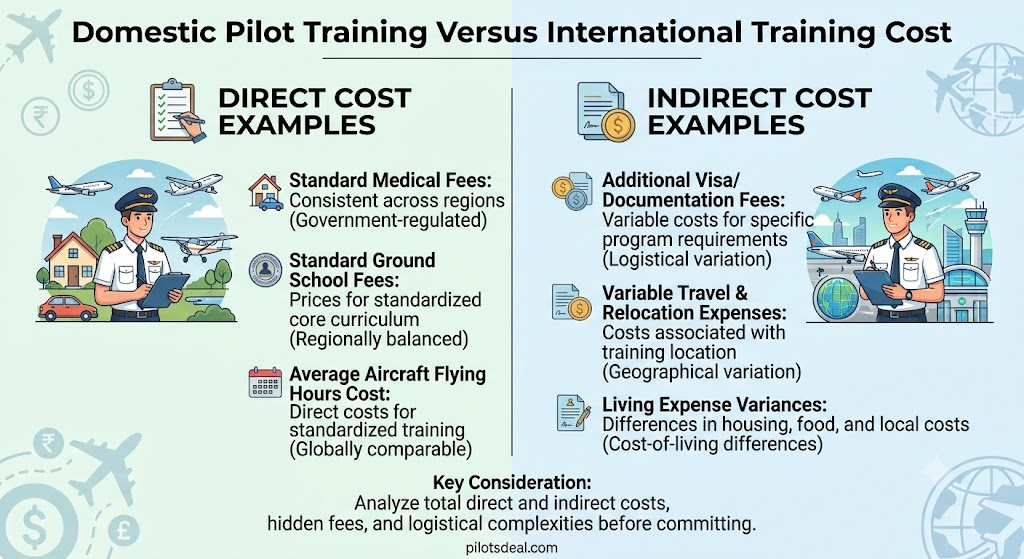
However, the right decision should not be based only on the advertised course fee. Students must compare the total cost, hidden expenses, license conversion rules, living costs, travel, currency exchange, and long-term career goals.
This guide from pilotsdeal.com explains the key cost differences between domestic and international pilot training so students can make a smart financial decision.
Understanding Pilot Training Costs
Pilot training cost is not limited to flying school fees. It includes many direct and indirect expenses. Before choosing any aviation academy, students should understand what they are paying for.
Common pilot training expenses include:
- Admission fee
- Ground school fee
- Flying hour charges
- Simulator training fee
- Examination fee
- Medical test cost
- Uniform and equipment
- Study materials
- License processing fee
- Accommodation
- Food
- Transportation
- Insurance
- Extra flying hours
- Retest charges
A cheaper course may become expensive if hidden charges are not explained clearly. That is why students should always ask for a complete cost breakdown before admission.
What Is Domestic Pilot Training?
Domestic pilot training means completing flight training in your own country. For Indian students, this usually means joining a DGCA approved flying school in India.
Domestic training is often preferred by students who want to stay close to family, reduce living expenses, and complete licensing under the same aviation authority where they plan to work.
Domestic pilot training may include:
- Ground school
- Flight training
- Simulator sessions
- Medical certification
- DGCA examinations
- License processing
- Skill tests
The biggest advantage is that students usually train under the same aviation system required for their local commercial pilot license.
What Is International Pilot Training?
International pilot training means completing flying training in another country. Many students choose countries with strong aviation infrastructure, good weather, and faster training availability.
International training may offer modern aircraft, structured schedules, exposure to global aviation culture, and regular flying opportunities. However, the cost can increase because of travel, visa, accommodation, food, insurance, and currency exchange.
Students must also understand license conversion. A license earned abroad may need to be converted before it can be used in the student’s home country.
Domestic Pilot Training Cost Breakdown
Domestic pilot training costs depend on the flying school, aircraft type, location, number of flying hours, and course structure.
Common domestic expenses include:
1. Admission and Registration Fees
Most flying schools charge an admission or registration fee. This is usually paid at the beginning of the course.
2. Ground School Fees
Ground school covers important subjects such as air regulations, navigation, meteorology, aircraft systems, radio communication, and flight planning.
3. Flying Hour Charges
This is usually the biggest part of the total cost. Students pay for actual aircraft flying hours. The cost depends on aircraft type, fuel prices, instructor charges, and maintenance expenses.
4. Simulator Training Fees
Some schools include simulator training in the package, while others charge separately.
5. Medical Examination Costs
Pilot students must clear required medical tests before or during training. These costs should be included in the budget.
6. Examination and License Fees
Students may need to pay for written exams, skill tests, documentation, and license processing.
7. Accommodation and Daily Expenses
If the flying school is in another city, students must include hostel, rent, food, travel, and personal expenses.
International Pilot Training Cost Breakdown
International pilot training includes all regular training costs plus additional overseas expenses.
Common international expenses include:
1. Tuition and Flying Fees
This includes ground school, flight hours, simulator sessions, instructor fees, and training administration charges.
2. Visa Fees
Students may need a student visa, training visa, or other aviation-related permission depending on the country.
3. Airfare
International travel cost must be included in the total budget, especially if students plan to travel home during breaks.
4. Accommodation
Rent or hostel charges can be high in some countries. Students should compare monthly living costs carefully.
5. Food and Local Transport
Daily living expenses can increase the total investment significantly.
6. Health Insurance
Many countries require international students to have health insurance.
7. Currency Exchange Impact
Exchange rates can increase or reduce the final cost. A weak home currency can make international pilot training more expensive.
8. License Conversion
After returning home, students may need extra exams, flying checks, paperwork, and medical certification to convert their license.
Hidden Costs Students Often Overlook
Many students compare only course fees and forget additional expenses. Hidden costs can create financial pressure later.
Common hidden costs include:
- Extra flying hours due to weak performance
- Weather-related training delays
- Retest fees
- Additional simulator sessions
- License conversion expenses
- Visa extension fees
- Currency fluctuation
- Medical rechecks
- Uniform and headset
- Study material
- Local travel
- Accommodation deposit
- Documentation and notarization
Students should always keep an emergency fund because aviation training often requires flexibility.
Domestic vs International Cost Comparison
| Cost Factor | Domestic Pilot Training | International Pilot Training |
|---|---|---|
| Training Fee | Usually easier to estimate locally | May vary based on country and currency |
| Flying Hours | Based on local authority rules | Based on foreign authority rules |
| Living Expenses | Usually lower if near home | Often higher due to rent, food, insurance |
| Travel Cost | Local travel only | Airfare and international travel |
| Visa Cost | Usually not required | Required in most cases |
| License Conversion | Usually not needed locally | Often required after returning home |
| Currency Risk | Low | High |
| Family Support | Easier | Limited |
| Cultural Adjustment | Easier | May be challenging |
| Total Budget Control | Easier to manage | Requires stronger planning |
Advantages of Domestic Pilot Training
Domestic training can be a practical choice for many students.
Key advantages include:
- Lower travel expenses
- Familiar language and culture
- Easier family support
- Local licensing process
- Lower living cost in many cases
- Easier communication with authorities
- Better understanding of local aviation rules
- Simple documentation process
Domestic training is especially useful for students who want to work in their own country after completing the course.
Advantages of International Pilot Training
International training can also offer strong benefits if planned properly.
Key advantages include:
- Exposure to international aviation standards
- Modern training facilities
- Diverse flying environment
- Better weather in some countries
- Structured training schedules
- Professional aviation culture
- Improved English communication
- Global confidence
For some students, international training may help them complete flying hours faster if the selected country has suitable weather and aircraft availability.
Challenges of Domestic Training
Domestic pilot training may have some challenges depending on the school and location.
Possible challenges include:
- Aircraft availability issues
- Weather delays
- Waiting time for flying slots
- High student-to-aircraft ratio
- Limited simulator facilities in some schools
- Exam scheduling delays
- Training duration uncertainty
Students should research each flying school carefully before joining.
Challenges of International Training
International training also has challenges that students must understand before investing.
Possible challenges include:
- Higher living expenses
- Visa rules and documentation
- Homesickness
- Cultural adjustment
- Currency exchange risk
- Health insurance cost
- License conversion process
- Travel expenses
- Limited family support
- Different aviation regulations
Students should not choose international training only because it sounds faster or more premium. The total cost must be studied carefully.
License Conversion Costs
License conversion is one of the most important factors in international pilot training. A pilot license issued in one country may not automatically allow a student to work in another country.
License conversion may include:
- Written examinations
- Flying skill test
- Medical certification
- Documentation verification
- Additional flying hours
- Radio communication approval
- License processing fee
For example, if a student trains abroad and wants to work in India, they must understand the DGCA license conversion process before admission. This can add time, paperwork, and extra cost.
Return on Investment
Pilot training should be viewed as a career investment. The return depends on training quality, licensing success, job opportunities, airline hiring trends, and the student’s performance.
When comparing domestic and international options, students should ask:
- What is the total investment?
- How long will training take?
- Will the license be valid for my career goal?
- Are there extra conversion costs?
- Does the school provide career support?
- What is the expected time to recover the investment?
- Is the training quality worth the cost?
A lower-cost option is not always better if it causes long delays or poor preparation. Similarly, a higher-cost international option is not always better if conversion and living costs become too high.
Financial Planning Tips for Pilot Training
Strong financial planning can reduce stress during training.
Useful tips include:
- Ask for complete written fee details
- Compare at least three flying schools
- Add living expenses to the budget
- Keep emergency funds
- Check education loan options
- Understand refund policies
- Ask about payment schedules
- Include exam and license fees
- Plan for extra flying hours
- Track currency exchange rates for international training
Parents and students should create a full budget before paying admission fees.
Common Mistakes Students Make
Many students make costly mistakes while comparing domestic and international pilot training.
Avoid these mistakes:
- Comparing only tuition fees
- Ignoring living expenses
- Not checking school approval
- Forgetting license conversion cost
- Not budgeting for extra flying hours
- Choosing a school only because it is abroad
- Not checking aircraft availability
- Ignoring weather conditions
- Not asking about refund policy
- Underestimating total training duration
Careful research can prevent financial loss and training delays.
Domestic vs International Training Checklist
| Checklist Point | Domestic Training | International Training |
|---|---|---|
| Total Fee Clarity | Required | Required |
| School Approval | Must verify | Must verify |
| Aircraft Availability | Must check | Must check |
| Instructor Quality | Important | Important |
| Weather Conditions | Important | Important |
| Living Cost | Usually manageable | Must calculate carefully |
| Visa Requirement | Usually not needed | Required |
| License Conversion | Usually not needed | Often required |
| Career Goal Fit | Must match | Must match |
| Budget Backup | Recommended | Very important |
Who Should Choose Domestic Pilot Training?
Domestic pilot training may be suitable for students who:
- Want to work in their home country
- Prefer family support during training
- Want to reduce travel and living expenses
- Are comfortable with local aviation rules
- Want simpler license processing
- Prefer a familiar environment
- Have a fixed budget
Domestic training can be a practical and cost-effective option when the flying school has good safety standards, aircraft availability, and experienced instructors.
Who Should Choose International Pilot Training?
International pilot training may be suitable for students who:
- Want global aviation exposure
- Can manage overseas living expenses
- Understand license conversion rules
- Are comfortable living away from home
- Want structured training in another country
- Can manage visa and documentation
- Have a flexible budget
- Are prepared for cultural adjustment
International training can be valuable, but only when students calculate the full cost and choose a recognized flying school.
Final Decision: Which Is Better?
There is no single answer for every student. Domestic training may be better for students who want cost control, family support, and local licensing. International training may be better for students who want global exposure, faster flying opportunities, and can manage additional expenses.
The best choice depends on:
- Budget
- Career goal
- Licensing requirement
- Training quality
- Country preference
- Family support
- Timeline
- Long-term plan
Students should focus on value, not just price.
Frequently Asked Questions
1. Is domestic pilot training cheaper than international training?
Domestic pilot training is often easier to manage financially because students may save on visa, international travel, overseas accommodation, and currency exchange costs. However, the final cost depends on the flying school, aircraft availability, course duration, and living expenses. Students should compare the complete budget, not only the course fee.
2. Is international pilot training better than domestic training?
International pilot training can offer global exposure, modern facilities, and structured schedules, but it is not automatically better for everyone. Students must check licensing rules, conversion costs, visa requirements, living expenses, and school approval before deciding.
3. What is the biggest extra cost in international pilot training?
The biggest extra costs are usually accommodation, food, visa, insurance, airfare, currency exchange, and license conversion. These expenses can make the total budget much higher than the advertised training fee.
4. What is license conversion?
License conversion is the process of converting a pilot license issued in one country into a license accepted by another country’s aviation authority. It may require exams, medical checks, documentation, skill tests, and sometimes extra flying hours.
5. Should students choose a flying school only by low fees?
No. Low fees may look attractive, but students should also check safety, aircraft condition, instructor quality, approval, simulator facilities, training schedule, and hidden charges. Poor training can become more expensive later.
6. Can education loans cover pilot training?
Many students use education loans for pilot training, but loan availability depends on the bank, course, institution, and student profile. Students should check loan terms, repayment period, interest rate, and approved institutions before admission.
7. Does training abroad help students complete faster?
In some countries, good weather, aircraft availability, and structured scheduling may help students complete training faster. However, delays can still happen due to weather, visa issues, aircraft maintenance, or personal performance.
8. What should students check before choosing international training?
Students should check school approval, total cost, visa rules, accommodation, insurance, license conversion, aircraft fleet, instructor quality, weather, refund policy, and career relevance. They should also confirm whether the license will support their future job plans.
9. Is domestic training better for Indian students?
Domestic training can be suitable for Indian students who want DGCA-based licensing, family support, and better cost control. However, the quality depends on the flying school, aircraft availability, instructors, and training management.
10. How can pilotsdeal.com help students?
pilotsdeal.com can help students understand pilot training costs, compare domestic and international options, plan budgets, identify hidden expenses, and make informed aviation career decisions.
Conclusion
Domestic and international pilot training both have advantages and challenges. Domestic training may offer better cost control, familiar surroundings, local licensing, and family support. International training may offer global exposure, advanced facilities, and faster flying opportunities in some cases.
The most important point is to compare the total investment. Students should not decide only by looking at tuition fees. They must include living costs, travel, visa, insurance, currency exchange, extra flying hours, and license conversion expenses.
A smart pilot training decision should match the student’s budget, career goal, licensing requirement, learning comfort, and long-term aviation plan. With careful research and financial planning, students can choose the right path confidently.
For more guidance on pilot training expenses, aviation education, and career planning, pilotsdeal.com can be a trusted resource for aspiring pilots and parents.

