
Introduction
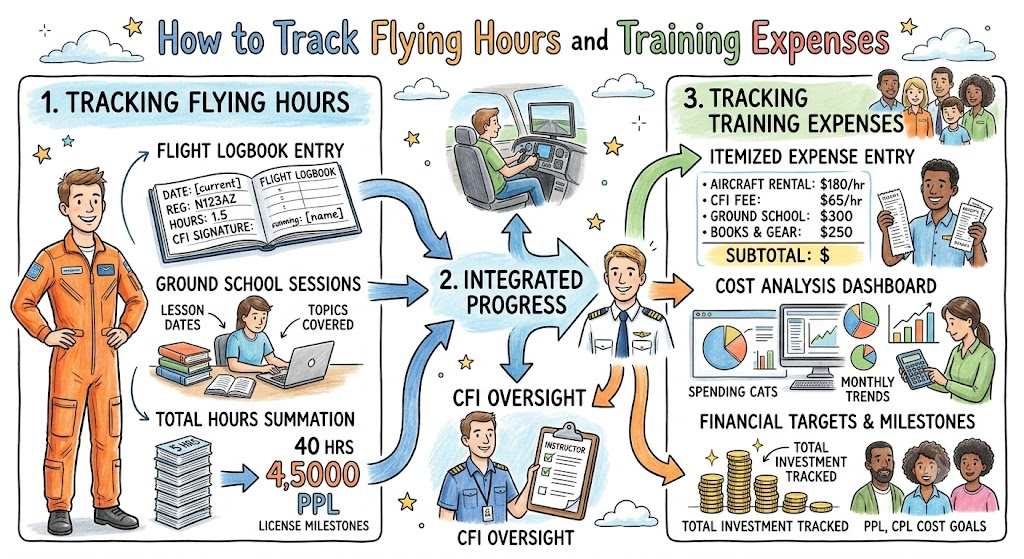
Pilot training is exciting, but it also requires serious planning. Every student pilot must track two important things carefully: flying hours and training expenses. Flying hours show your progress toward license requirements, while training expenses help you understand how much money is being spent during the journey.
Many beginners focus only on flying lessons and forget to maintain proper records. Later, they may face confusion about total flight time, instructor hours, aircraft rental charges, exam fees, medical costs, or other hidden expenses. This is why learning how to track flying hours and training expenses from the beginning is an important habit for every student pilot.
A well-maintained record helps you stay organized, control your budget, avoid mistakes, and prepare better for your aviation career.
Why Tracking Flying Hours Is Important
Flying hours are not just numbers in a notebook. They are proof of your training progress. Flight schools, instructors, aviation authorities, and future employers may review your flying records.
Tracking flying hours helps student pilots:
- Understand how much training has been completed
- Know how many hours are still required
- Track improvement in different flying skills
- Prepare for license exams and check rides
- Maintain accurate logbook records
- Avoid confusion during document verification
For a student pilot, every flight matters. Even a short training flight should be recorded properly because it becomes part of your official aviation journey.
What Types of Flying Hours Should Student Pilots Track?
A student pilot should not track only total flying time. Different types of flight hours have different training value. A proper log should separate each category clearly.
1. Dual Instruction Hours
These are flight hours completed with a certified flight instructor. During these flights, the instructor teaches aircraft handling, takeoff, landing, navigation, emergency procedures, and other skills.
2. Solo Flight Hours
Solo flight hours are completed without an instructor in the aircraft. These hours are important because they show your ability to fly independently.
3. Cross-Country Flying Hours
Cross-country flying includes flights from one airport to another. These flights help students learn navigation, planning, weather checking, radio communication, and fuel management.
4. Night Flying Hours
Night flying hours are important for learning how to operate an aircraft after sunset. Students learn runway lighting, night navigation, and different visibility conditions.
5. Instrument Flying Hours
Instrument flying hours help students learn how to fly using cockpit instruments when outside visibility is poor or limited.
6. Simulator Hours
Flight simulator training is also useful. It helps students practice procedures, emergency situations, instrument flying, and navigation at a lower cost than actual aircraft flying.
7. Check Ride Preparation Hours
Before a flight test or license skill test, students may need extra practice hours. These should also be tracked separately because they affect both training progress and total cost.
How to Track Flying Hours Correctly
The best way to track flying hours is to update your record immediately after every flight. Waiting for many days can lead to mistakes.
Use a Pilot Logbook
A pilot logbook is the most important record for any pilot. It contains details of each flight, including date, aircraft, route, flight duration, instructor details, and remarks.
A student pilot logbook should include:
- Date of flight
- Aircraft type
- Aircraft registration number
- Departure airport
- Arrival airport
- Flight duration
- Type of flight lesson
- Instructor name and signature, if required
- Solo or dual flight status
- Day or night flight details
- Remarks about performance
Use a Digital Logbook
Many student pilots also use digital logbooks. These tools help organize data, calculate totals, and reduce manual errors. However, students should still follow their flight school and aviation authority rules regarding official records.
Use Excel or Google Sheets
For beginners, a simple spreadsheet can be very helpful. You can create columns for flying hours, aircraft cost, instructor fee, simulator charges, and total expense. This makes it easy to compare planned costs with actual costs.
Common Pilot Training Expenses Students Should Track
Pilot training cost is not limited to aircraft flying charges. Many small expenses add up over time. If students do not track these costs, the final amount may become much higher than expected.
Major Expenses in Pilot Training
Student pilots should record the following expenses:
- Flight school admission fee
- Aircraft rental charges
- Instructor fees
- Ground school fees
- Simulator training charges
- Books and study materials
- Medical certificate cost
- Exam fees
- License application fees
- Uniform cost
- Headset and aviation accessories
- Transport charges
- Hostel or accommodation cost
- Food and daily living expenses
- Extra revision classes
- Repeated lessons or test preparation flights
Tracking all these expenses gives a realistic view of the total pilot training budget.
Sample Flying Hours and Expense Tracking Table
Here is a simple table student pilots can use for tracking:
| Date | Flight Type | Aircraft | Hours | Instructor Fee | Aircraft Cost | Other Cost | Total Cost | Notes |
|---|---|---|---|---|---|---|---|---|
| 05 Jan | Dual Training | Cessna 172 | 1.2 | ₹3,000 | ₹18,000 | ₹500 | ₹21,500 | Takeoff practice |
| 08 Jan | Simulator | Simulator | 1.0 | ₹2,000 | ₹5,000 | ₹0 | ₹7,000 | Instrument basics |
| 12 Jan | Solo Flight | Cessna 152 | 0.8 | ₹0 | ₹12,000 | ₹300 | ₹12,300 | Circuit practice |
| 16 Jan | Ground School | NA | 2.0 | ₹1,500 | ₹0 | ₹400 | ₹1,900 | Navigation class |
This type of table helps students see both training progress and money spent in one place.
How to Create a Pilot Training Budget
A pilot training budget should be created before starting the course. However, it should also be updated regularly during training.
Step 1: Estimate Total Training Cost
Ask the flight school for a clear fee structure. Understand the cost of aircraft rental, instructor charges, simulator training, ground school, exams, and documents.
Step 2: Add Extra Budget
Training may take longer due to weather delays, personal learning speed, aircraft availability, exam preparation, or repeated lessons. Always keep extra funds for unexpected costs.
Step 3: Track Monthly Spending
At the end of each month, compare your expected expense with your actual expense. This helps you understand whether your training is staying within budget.
Step 4: Review Cost Per Flying Hour
Calculate how much each flying hour is costing you. This includes aircraft rental, instructor fee, landing charges, fuel-related charges, and other training costs.
Step 5: Separate Personal and Training Expenses
Do not mix personal expenses with pilot training costs. Keep separate records for food, travel, accommodation, and direct aviation training charges.
Best Tools for Tracking Flying Hours and Expenses
Student pilots can use different tools depending on their comfort level.
1. Paper Logbook
A paper logbook is traditional and widely used. It is useful for official signatures and long-term records.
2. Digital Logbook
Digital logbooks are easy to update and search. They can calculate total hours quickly and organize different flight categories.
3. Excel or Google Sheets
Spreadsheets are simple and flexible. Students can create custom columns for flying hours, expenses, payment status, and notes.
4. Flight School Portal
Some flight schools provide online portals where students can check flying schedules, invoices, attendance, and training progress.
5. Mobile Notes App
For quick temporary notes, students can use a mobile notes app after each flight. Later, they should transfer the details to the official logbook or spreadsheet.
Mistakes Student Pilots Should Avoid
Many student pilots make small record-keeping mistakes that can create problems later.
Avoid these common mistakes:
- Not updating the logbook after every flight
- Forgetting to record simulator hours
- Not checking entries with the instructor
- Losing fee receipts
- Mixing personal expenses with training expenses
- Not tracking hidden costs
- Recording incorrect aircraft details
- Ignoring ground school expenses
- Not reviewing monthly budget
- Depending only on memory
Good record keeping is a professional habit. It shows discipline and responsibility.
Tips to Control Pilot Training Expenses
Pilot training can be expensive, but smart planning can help reduce unnecessary spending.
Prepare Before Every Flight
Study the lesson before entering the aircraft. Better preparation helps you use flying time more effectively.
Fly Regularly
Long gaps between lessons may cause skill loss. This can increase the need for revision flights.
Track Weak Areas
Write down areas where you need improvement. Focused practice can save time and money.
Review Expenses Weekly
Do not wait until the end of the course. Review your expenses every week so you can control overspending early.
Save All Receipts
Keep receipts for aircraft charges, instructor fees, exam fees, medicals, books, and equipment.
Compare Flight School Charges Carefully
Before joining, compare the full cost structure, not just the advertised package price. Ask about hidden charges, extra flying hours, simulator fees, and exam costs.
Why Expense Tracking Helps Parents Too
In many cases, parents support the student’s pilot training financially. A clear expense record helps parents understand where the money is going.
It also helps families plan future payments, avoid sudden financial pressure, and make better decisions about training continuation, accommodation, and exam preparation.
How pilotsdeal.com Can Help Aviation Learners
pilotsdeal.com can be a useful platform for aviation learners who want simple guidance related to pilot training, flying costs, student planning, and aviation career preparation.
Students can use platforms like pilotsdeal.com to understand training expenses, compare important aviation learning topics, and become more aware of the financial planning needed before and during pilot training.
For beginners, cost awareness is just as important as flying passion. When students understand both flying hours and expenses clearly, they can make better training decisions.
FAQs
1. Why should student pilots track flying hours?
Student pilots should track flying hours because these records show training progress and help meet license requirements. They also help instructors review student performance.
2. What is the best way to track flying hours?
The best way is to use an official pilot logbook and update it after every flight. Students can also use digital logbooks or spreadsheets for extra tracking.
3. Should simulator hours be recorded?
Yes, simulator hours should be recorded separately. They are useful for training progress and may be counted according to specific training rules.
4. What expenses should be included in pilot training cost?
Pilot training expenses may include aircraft rental, instructor fees, ground school, simulator charges, medical tests, exam fees, books, headset, travel, and accommodation.
5. Can I track pilot training expenses in Excel?
Yes, Excel or Google Sheets is a simple and effective way to track flying hours, payments, invoices, and monthly training costs.
6. How often should I update my flying record?
You should update your flying record immediately after every flight. This reduces mistakes and keeps your logbook accurate.
7. Why do pilot training costs increase sometimes?
Costs may increase due to weather delays, repeated lessons, extra practice flights, exam delays, accommodation, travel, or additional simulator training.
8. Is a digital logbook enough for student pilots?
A digital logbook is helpful, but students should follow their flight school and aviation authority requirements. In some cases, a signed physical logbook may also be needed.
9. How can student pilots reduce unnecessary expenses?
Students can reduce unnecessary expenses by preparing before flights, flying regularly, reviewing weak areas, tracking costs weekly, and avoiding long training gaps.
10. Why is budgeting important in pilot training?
Budgeting helps students and parents understand total training costs, plan payments, avoid financial surprises, and complete training with better confidence.
Final Thoughts
Tracking flying hours and training expenses is one of the most important habits for student pilots. It helps you stay organized, monitor your progress, control your budget, and prepare for future aviation requirements.
A student pilot should update flying records after every lesson and review training expenses regularly. Whether you use a paper logbook, digital tool, spreadsheet, or flight school portal, the goal is the same: maintain clear, accurate, and complete records.
Pilot training is a serious investment. When you track every flying hour and every expense carefully, you take one step closer to becoming a disciplined and professional pilot.

