
Introduction
Pilot training is a big investment. For most beginners, the main confusion is understanding where the money goes. Two major parts of flight training are simulator training and real aircraft flying.
Both are important, but their costs, benefits, and training value are different. Simulator training helps students practice safely in a controlled environment. Real flying gives actual aircraft experience, weather exposure, and confidence in the sky.
This blog explains Simulator Training Versus Real Flying Cost in simple language so student pilots, parents, and aviation beginners can plan training expenses better.
What Is Simulator Training?
Simulator training is flight practice done inside a flight simulator. A simulator may look like a cockpit or computer-based aircraft training system.
It helps students practice:
- Cockpit procedures
- Instrument reading
- Takeoff and landing steps
- Navigation basics
- Emergency procedures
- Radio communication practice
- Weather-related situations
- Repeated lesson practice
Simulator training is useful because students can make mistakes, repeat exercises, and improve skills without flying a real aircraft.
What Is Real Flight Training?
Real flight training means flying an actual aircraft with an instructor or later as a solo student pilot.
In real flying, students learn:
- Aircraft handling
- Takeoff and landing
- Climb and descent control
- Turns and maneuvers
- Navigation
- Radio communication
- Weather decision-making
- Airport operations
- Real cockpit discipline
Real flying is essential because pilot licensing requires actual aircraft experience. Simulator training supports learning, but it cannot fully replace real flying.
Simulator Training Cost Explained
Simulator training cost is usually lower than real aircraft flying, but the final cost depends on the type of simulator and training center.
Common cost factors include:
- Type of simulator used
- Instructor fee
- Session duration
- Training level
- Number of required hours
- Package or hourly pricing
- Extra practice sessions
A basic simulator may cost less, while a full-motion or airline-level simulator may cost more. Beginners should always ask what is included in the fee before joining.
Real Flying Cost Explained
Real flying cost is usually higher because it involves an actual aircraft and many operating expenses.
Real flying cost may include:
- Aircraft rental charges
- Instructor fees
- Fuel-related operating cost
- Maintenance contribution
- Airport or landing charges
- Insurance-related operating cost
- Scheduling or school charges
- Extra practice flights
Aircraft flying is costly because every hour involves fuel, maintenance, instructor time, aircraft usage, and safety checks.
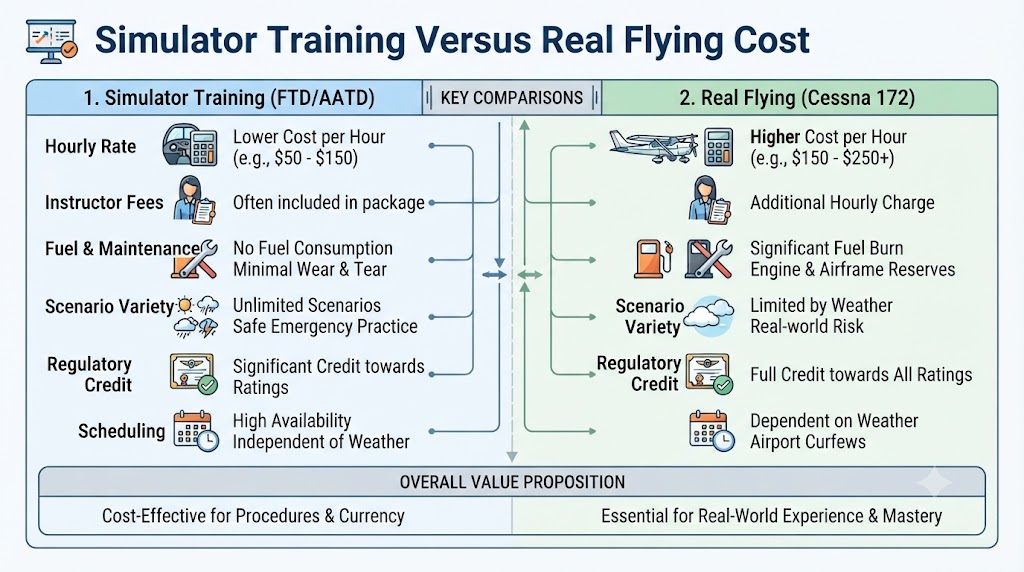
Simulator Training Versus Real Flying Cost Comparison
| Point | Simulator Training | Real Flying |
|---|---|---|
| Cost level | Usually lower | Usually higher |
| Training place | Controlled simulator room | Actual aircraft |
| Weather effect | Not affected by weather | Can be delayed by weather |
| Safety | Safe for mistakes and emergency practice | Real safety procedures required |
| Skill repetition | Easy to repeat lessons | Repetition costs more |
| Emergency practice | Safer and easier | Limited in real aircraft |
| Flying experience | Simulated experience | Real flying experience |
| Confidence building | Builds basic confidence | Builds real cockpit confidence |
| License value | May count partly, depending on rules | Essential for license |
| Best use | Practice and preparation | Actual pilot skill development |
Both types of training are useful. Simulator training helps students prepare better, while real flying gives true aviation experience.
Advantages of Simulator Training
Simulator training has many benefits for beginners.
Lower Practice Cost
Students can repeat difficult lessons in a simulator without paying full aircraft flying cost.
Safe Learning Environment
Mistakes can be corrected safely. Emergency procedures can be practiced without real danger.
Weather-Free Training
Simulator sessions can continue even when weather is not suitable for real flying.
Better Instrument Practice
Students can improve instrument scanning, navigation, and cockpit procedure knowledge.
Repeated Practice
A student can repeat the same situation many times until the concept becomes clear.
Advantages of Real Flying
Real flying is the heart of pilot training. It gives experience that a simulator cannot fully provide.
Actual Aircraft Handling
Students feel real aircraft movement, control pressure, wind effect, and landing behavior.
Real Weather Experience
Flying in real conditions teaches decision-making and weather awareness.
Real Communication Practice
Students communicate with instructors, ground staff, and air traffic control in a live environment.
True Confidence Building
Real flying builds practical confidence because the student is handling an actual aircraft.
Required for Licensing
Pilot licenses require real aircraft flying hours. Simulator training may support learning, but actual flying remains necessary.
Can Simulator Training Reduce Overall Pilot Training Cost?
Simulator training may help reduce unnecessary repeat aircraft lessons. When students practice procedures in a simulator first, they may perform better in the aircraft.
It can help with:
- Understanding cockpit layout
- Practicing checklists
- Improving navigation
- Learning emergency actions
- Building confidence before real flights
- Reducing repeated mistakes in aircraft
However, students should understand one thing clearly: simulator training cannot replace all real flying requirements. It is a support tool, not a complete substitute.
Which Gives Better Value for Beginners?
For beginners, the best value comes from using both simulator training and real flying together.
Simulator training is useful before and between real flying lessons. It helps students prepare mentally and technically. Real flying helps students apply those skills in the actual aircraft.
A smart beginner should not ask, “Which one is better?” Instead, the better question is, “How can I use both properly?”
Budget Planning Tips for Student Pilots
Pilot training becomes easier to manage when expenses are tracked from the beginning.
Useful budgeting tips:
- Ask for simulator and aircraft hourly rates
- Check whether instructor fees are included
- Compare package fees carefully
- Track simulator hours separately
- Track real flying hours separately
- Keep receipts and payment records
- Review monthly expenses
- Keep extra funds for repeat practice
- Prepare before every lesson
- Avoid long training gaps
A clear budget helps students and parents avoid financial surprises.
Common Mistakes Students Make
Many beginners focus only on aircraft flying cost and ignore other training expenses.
Avoid these mistakes:
- Choosing a school only because of low price
- Not checking simulator quality
- Ignoring instructor experience
- Skipping simulator practice completely
- Not recording simulator hours
- Not tracking real flying expenses
- Forgetting hidden charges
- Not asking about package details
- Underestimating repeat lesson cost
Good planning saves stress during training.
How pilotsdeal.com Can Help Aviation Learners
pilotsdeal.com can be a helpful platform for aviation learners who want simple guidance about pilot training, simulator costs, aircraft flying cost, flight school planning, and student pilot budgeting.
For beginners, aviation training expenses can feel confusing. Platforms like pilotsdeal.com can help students understand practical topics in easy language before making important training decisions.
FAQs
1. Is simulator training cheaper than real flying?
In most cases, simulator training is cheaper than real aircraft flying. However, the cost depends on simulator type, instructor fee, and training location.
2. Can simulator training replace real flying?
No, simulator training cannot fully replace real flying. It supports training, but real aircraft hours are required for pilot licensing.
3. Why is real flying more expensive?
Real flying involves aircraft rental, fuel, maintenance, instructor charges, airport fees, and operational costs.
4. Is simulator training useful for beginners?
Yes, simulator training is useful because it helps beginners practice cockpit procedures, emergency situations, and navigation in a safe environment.
5. Do simulator hours count toward pilot training?
Simulator hours may count partly depending on training rules and aviation authority requirements. Students should confirm with their flight school.
6. Which is better for learning, simulator or real flying?
Both are important. Simulator training helps with practice and preparation, while real flying builds actual aircraft handling skills.
7. How can students control training cost?
Students can control costs by preparing before lessons, tracking expenses, using simulator practice wisely, and avoiding long gaps in training.
8. What should I ask before paying simulator fees?
Ask about simulator type, hourly cost, instructor fee, session duration, package pricing, and whether simulator hours are recorded.
9. Can simulator training reduce repeated aircraft lessons?
Yes, simulator training may reduce repeated mistakes by helping students practice procedures before flying the real aircraft.
10. Should parents track simulator and real flying costs separately?
Yes, tracking both separately gives a clearer picture of total pilot training expenses.
Final Thoughts
Simulator training and real flying both have important roles in pilot training. Simulator training is useful for safe practice, repeated learning, and cost control. Real flying is necessary for actual aircraft handling, confidence, and pilot license requirements.
The best approach is not choosing one over the other. Student pilots should understand both costs and use both training methods wisely.

