
Introduction
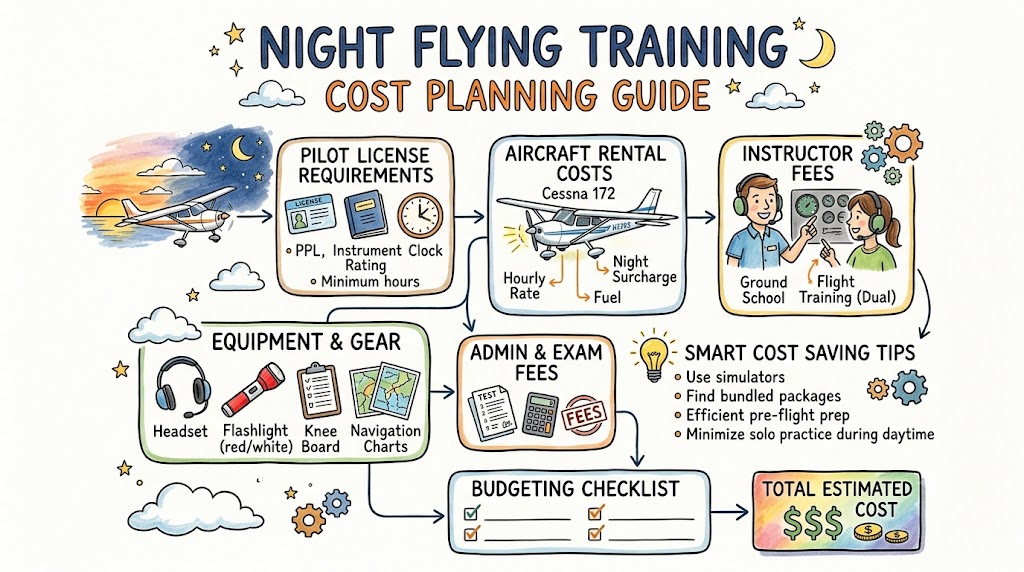
Night flying is an important stage in pilot development because it introduces students to reduced visibility, airport lighting systems, night navigation, instrument reference, and different visual illusions. It can improve a pilot’s confidence and prepare them for more advanced licences and operational responsibilities. However, the night flying training cost is not limited to the advertised aircraft rental price. Students may also need to pay instructor fees, airport charges, equipment costs, ground training fees, examination expenses, transportation, and other administrative charges. A realistic financial plan helps students complete their training consistently without taking unsafe shortcuts or stopping for long periods because of unexpected expenses.
What Night Flying Training Includes
Night flying training teaches pilots how to operate safely when natural light is limited. The exact course content depends on the country, aviation authority, flight school, and licence being pursued.
Most night training programmes include a combination of classroom preparation and practical flying.
Common training areas include:
- Night pre-flight inspection
- Cockpit lighting management
- Use of airport lighting systems
- Night takeoffs and landings
- Circuit and pattern operations
- Night navigation
- Use of instruments for maintaining attitude
- Emergency procedure practice
- Radio communication
- Human factors and night vision
- Fuel planning
- Weather assessment
- Pre-flight briefing
- Post-flight debriefing
- Logbook documentation
Students may also learn about night-specific hazards, including visual illusions, fatigue, reduced depth perception, dark adaptation, and difficulty identifying terrain.
Training should always be completed under the supervision of a qualified flight instructor and in an airworthy aircraft approved for night operations.
Night Flying Training Requirements
Night flying requirements are not identical in every country. Some aviation authorities include night flying within private or commercial pilot training, while others require a separate night rating, endorsement, or qualification.
The requirements may include:
- A minimum number of night flight hours
- Dual training with an instructor
- Solo night flying
- Night takeoffs and landings
- Cross-country navigation
- Instrument reference training
- Ground instruction
- Medical certification
- A valid student or pilot licence
- Instructor authorization
- A flight test or competency assessment
- Logbook endorsement
The legal minimum should not automatically be treated as the ideal training duration. Some students become comfortable within the minimum hours, while others require additional lessons to develop safe and consistent skills.
Before calculating the budget, students should confirm the latest requirements with their national aviation authority and selected flight school.
Understanding the Complete Night Flying Training Cost
The total cost of night training depends on several separate expenses. A lower advertised aircraft rate does not always mean a lower total training cost.
Students should request a written quotation showing what is included and what will be charged separately.
Aircraft Rental Cost
Aircraft rental is normally the largest part of the night flying training cost.
Flight schools may charge aircraft time according to:
- Engine running time
- Hobbs meter time
- Tachometer time
- Airborne time
- Block time
- Scheduled lesson duration
Students should understand how the school records billable time. A one-hour flight may create more than one hour of billed aircraft time when taxiing, run-up checks, air traffic delays, and ground movement are included.
Wet Rental Rate
A wet rental rate usually includes fuel and oil. However, students should still confirm whether fuel surcharges, night fees, taxes, and airport expenses are included.
Dry Rental Rate
A dry rental rate does not include fuel. It may appear cheaper initially, but the student will need to calculate fuel consumption and local fuel prices separately.
Aircraft Type
Basic two-seat trainers are usually less expensive than four-seat, glass-cockpit, complex, or high-performance aircraft.
Aircraft rental prices may increase because of:
- Higher fuel consumption
- Advanced avionics
- Insurance costs
- Maintenance requirements
- Engine reserves
- Aircraft availability
- Airport location
- Local taxes
Students should choose an aircraft that is suitable for the training objective rather than automatically selecting the cheapest or most advanced option.
Flight Instructor Fees
Instructor charges are another major expense.
Flight schools may charge for:
- Flight instruction
- Ground instruction
- Pre-flight briefing
- Post-flight debriefing
- Route planning assistance
- Training records
- Progress assessments
- Examination preparation
Some schools include instructor fees in the lesson package, while others charge them separately.
For example, a student may book a two-hour lesson that includes:
- 30 minutes of pre-flight briefing
- 1 hour of flying
- 30 minutes of post-flight discussion
Even though the aircraft is used for only one hour, the instructor may charge for the full two-hour training period.
Students should ask whether instructor waiting time is charged when flights are delayed by weather, air traffic, or aircraft availability.
Ground School and Study Materials
Night flying requires theoretical preparation. Students should understand procedures before entering the aircraft because using flight time to explain basic concepts can increase the total cost.
Ground instruction may cover:
- Night vision
- Visual illusions
- Airport lighting
- Aircraft lighting
- Weather risks
- Human performance
- Navigation
- Emergency procedures
- Fuel planning
- Regulations
- Fatigue management
Possible study expenses include:
- Training manuals
- Online courses
- Navigation charts
- Flight planning tools
- Checklists
- Aviation publications
- Examination preparation material
- Mobile aviation applications
Some flight schools include learning materials in the course fee. Others require students to purchase them separately.
Airport and Landing Charges
Night operations may create additional airport expenses.
Possible charges include:
- Landing fees
- Touch-and-go fees
- Runway lighting charges
- Night operating charges
- Air traffic control fees
- Parking fees
- Facility charges
- Security charges
- Handling fees
Busy commercial airports may be more expensive than smaller training airports. However, smaller airports may have limited night operating hours or fewer lighting facilities.
Students should ask whether repeated landings during circuit training are charged individually or included in the rental rate.
Simulator Training
A simulator can help students practise procedures before flying at night.
Simulator training may be useful for:
- Instrument scanning
- Navigation practice
- Emergency procedures
- Radio communication
- Cockpit familiarization
- Route planning
- Workload management
A simulator cannot fully reproduce real night visibility, depth perception, weather, or aircraft movement. However, it may help students prepare more effectively and reduce the time spent learning basic procedures in the aircraft.
The student should confirm whether simulator sessions count toward regulatory requirements. Even when they do not count as flight hours, they may still improve preparation.
Aviation Headset and Personal Equipment
Students may need to purchase or borrow personal equipment.
Common night flying items include:
- Aviation headset
- Primary flashlight
- Backup flashlight
- Spare batteries
- Red-light torch
- Reflective vest
- Kneeboard
- Flight bag
- Navigation tools
- Pilot logbook
- Sunglasses for flights beginning before sunset
- Portable power bank
- Approved electronic flight bag equipment
A reliable flashlight and backup lighting source are particularly important. Students should avoid extremely bright lights that could affect night vision inside the cockpit.
Premium equipment is not always necessary for initial training. A student should purchase reliable, practical equipment that meets the school’s requirements.
Medical, Examination and Administration Fees
Training budgets should also include licence-related expenses.
These may include:
- Aviation medical examination
- Written examination fee
- Flight test fee
- Examiner fee
- Licence application fee
- Night rating endorsement fee
- Logbook verification
- Document processing
- School registration
- Insurance contribution
- Membership fee
These charges may be paid at different stages of training. Students should include them in the initial financial plan rather than treating them as unexpected expenses later.
Transportation and Accommodation
Many airports are located outside city centres. Night lessons may also finish late, when public transportation is limited.
Additional expenses may include:
- Fuel for personal transport
- Taxi or ride-hailing charges
- Parking
- Airport transfers
- Hotel or hostel accommodation
- Meals
- Temporary housing
- Local transportation
Students travelling to another city or country should also budget for flights, visas, insurance, and currency conversion costs.
Sample Night Flying Training Cost Breakdown
The following table uses illustrative figures only. The amounts do not represent guaranteed fees and should be replaced with quotations from the selected flight school.
| Expense Category | Estimated Quantity | Illustrative Rate | Estimated Total |
|---|---|---|---|
| Aircraft rental | 8 hours | $180 per hour | $1,440 |
| Flight instructor | 10 hours | $60 per hour | $600 |
| Ground instruction | 4 hours | $45 per hour | $180 |
| Simulator sessions | 2 hours | $70 per hour | $140 |
| Landing and airport fees | 12 landings | $15 per landing | $180 |
| Study materials | One-time | $120 | $120 |
| Personal equipment | One-time | $350 | $350 |
| Medical and administration | One-time | $250 | $250 |
| Travel expenses | Estimated | $200 | $200 |
| Contingency budget | Approximately 15% | $519 | $519 |
| Illustrative total | $3,979 |
The actual total may be significantly lower or higher depending on the training location, required hours, aircraft type, and local currency.
Cost Comparison by Aircraft Type
| Aircraft Type | Rental Cost Level | Fuel Consumption | Training Suitability | Possible Cost Impact |
|---|---|---|---|---|
| Two-seat basic trainer | Lower | Lower | Basic circuits and night familiarization | Usually more affordable |
| Four-seat trainer | Medium | Medium | Cross-country and general licence training | Moderate |
| Glass-cockpit aircraft | Higher | Medium to high | Modern avionics and instrument awareness | Higher |
| Complex aircraft | High | Higher | Advanced or commercial training | Most expensive |
| Flight simulator | Lower than aircraft | No aviation fuel | Procedures and instrument practice | May reduce preparation costs |
A modern glass-cockpit aircraft may provide useful experience, but it can increase both rental and instructor time. Students should consider whether the additional cost supports their current training objective.
Factors That Change Night Flying Training Costs
Country and Location
Training costs vary according to local wages, taxes, fuel prices, aircraft availability, insurance costs, and aviation regulations.
Fuel Prices
Aircraft rental rates may increase when aviation fuel prices rise. Some schools apply separate fuel surcharges.
Student Progress
Students who prepare thoroughly and train consistently may require fewer repeated lessons.
Weather Conditions
Cloud, poor visibility, storms, strong winds, fog, or other unsuitable conditions may cause cancellations and training delays.
Seasonal Daylight
In some regions, sunset occurs very late during summer. This can reduce the number of available night training slots and may increase accommodation or scheduling expenses.
Instructor Availability
Experienced instructors may charge higher rates. Limited instructor availability may also create long gaps between lessons.
Aircraft Availability
Aircraft maintenance, inspections, technical defects, and scheduling conflicts can interrupt training.
Airport Congestion
Long taxi times and air traffic delays increase billable aircraft time without increasing actual training time in the air.
Training Frequency
Long gaps between lessons may lead to skill loss and repeated training. Regular lessons usually improve continuity.
Required Flight Hours
The legal minimum and the student’s actual training need may be different.
How Many Hours Should Students Budget For?
Students should build three separate estimates.
Minimum-Cost Estimate
This estimate uses the minimum number of hours required by the relevant aviation authority.
It is useful as a basic reference but may not be realistic for every student.
Realistic-Cost Estimate
This estimate should include additional training time based on the school’s average student completion rate.
For example, when the legal requirement is five hours, a student may budget for seven or eight hours.
Contingency-Cost Estimate
This estimate includes extra money for:
- Repeated lessons
- Weather delays
- Additional landings
- Aircraft changes
- Examination retakes
- Fuel surcharges
- Travel
- Skill improvement
A contingency fund of approximately 10% to 20% may help protect the training plan, although the appropriate amount depends on the student’s circumstances.
Step-by-Step Night Flying Training Budget Plan
Check Regulatory Requirements
Identify the exact night training requirements for the licence or rating you are pursuing.
Contact Several Flight Schools
Request written quotations from at least three schools when practical.
Confirm the Aircraft Rate
Ask whether the rate is wet or dry and how flight time is recorded.
Check Instructor Charges
Confirm whether briefings, debriefings, and ground lessons are included.
Estimate Training Hours
Use a realistic number rather than relying only on the legal minimum.
Add Airport Fees
Include landing, lighting, parking, handling, and night operating charges.
Add Equipment Costs
List the items you already own and the items you need to purchase.
Include Tests and Administration
Budget for medical, examination, licence, and processing fees.
Add Travel Expenses
Calculate transportation, parking, food, and accommodation.
Create a Contingency Fund
Keep additional funds for delays, repeated lessons, and changing prices.
Track Actual Spending
Maintain a spreadsheet or notebook showing:
- Date
- Lesson type
- Aircraft time
- Instructor time
- Airport fees
- Travel expenses
- Amount paid
- Remaining budget
Questions to Ask a Flight School Before Enrolling
Before making a payment, ask the flight school:
- What is included in the aircraft rental rate?
- Is fuel included?
- How is aircraft time calculated?
- Is the instructor fee separate?
- Are briefings and debriefings charged?
- Are landing fees included?
- Is runway lighting charged separately?
- Which aircraft will be used?
- How many hours do students normally need?
- Is simulator training available?
- What happens after a weather cancellation?
- Are deposits refundable?
- Does prepaid credit expire?
- Can unused package hours be refunded?
- Are examination fees included?
- Is insurance included?
- Are there membership charges?
- How often are night training slots available?
- Can the school provide a complete written estimate?
A transparent school should clearly explain its rates, policies, and possible additional expenses.
Ways to Control Night Flying Training Costs
Students should reduce unnecessary expenses through preparation, not by reducing safety.
Study Before Every Lesson
Review procedures, checklists, airport diagrams, and lesson objectives before arriving.
Practise Chair Flying
Mentally rehearse cockpit procedures, radio calls, navigation steps, and emergency actions.
Prepare Navigation Early
Complete route planning, fuel calculations, and chart review before the scheduled lesson.
Train Consistently
Regular practice helps maintain skills and reduces the need for repeated lessons.
Use Simulator Time Effectively
Practise instrument scanning, navigation, and procedures before using expensive aircraft time.
Review Instructor Feedback
Write down mistakes and improvement points immediately after each lesson.
Choose a Suitable Aircraft
Use a safe, well-maintained aircraft that matches the training requirement.
Avoid Unnecessary Equipment Purchases
Purchase essential and reliable items first. Expensive gadgets are not always required.
Maintain Physical Readiness
Fatigue, illness, dehydration, and lack of sleep can reduce performance and waste training time.
Monitor Progress
Compare actual training hours and expenses against the original budget after every few lessons.
Common Budgeting Mistakes
Looking Only at the Advertised Hourly Rate
The aircraft price may exclude the instructor, fuel, taxes, and landing fees.
Budgeting Only for Minimum Hours
Many students need additional practice.
Ignoring Ground Time
Instructor briefings and debriefings can form a significant part of the bill.
Forgetting Airport Charges
Repeated night landings may create substantial fees.
Paying a Large Non-Refundable Deposit
Students should review refund, cancellation, and expiry policies before paying.
Training Too Infrequently
Long gaps can lead to repeated lessons and higher costs.
Choosing a School Only by Price
Aircraft condition, instructor quality, airport facilities, scheduling, and safety culture are equally important.
Ignoring Travel Costs
Late-night transportation and accommodation can affect the total budget.
Purchasing Too Much Equipment
Students sometimes buy advanced equipment before understanding what the school actually requires.
Excluding Contingency Money
Unexpected expenses are common in aviation training.
Sample Monthly Savings Plan
The following figures are illustrative.
| Training Goal | Estimated Budget | Savings Period | Suggested Monthly Saving |
|---|---|---|---|
| Basic night training | $2,500 | 6 months | Approximately $417 |
| Extended proficiency training | $4,000 | 9 months | Approximately $445 |
| Advanced avionics night training | $6,000 | 12 months | Approximately $500 |
Students should adjust the savings amount according to local costs, available income, and the planned start date.
It may be helpful to save the complete training amount before starting. This can support regular scheduling and reduce the risk of long breaks caused by financial pressure.
Pay-As-You-Go Versus Training Packages
| Payment Method | Advantages | Limitations | Best Suited For |
|---|---|---|---|
| Pay-as-you-go | Flexible and lower upfront commitment | Rates may increase | Students with changing schedules |
| Training package | Easier total-budget planning | Refund restrictions may apply | Students following a fixed schedule |
| Flying club membership | Possible discounted rental rates | Membership charges may apply | Frequent flyers |
| Financing option | Spreads payment over time | Interest and repayment obligations | Eligible students with stable income |
| Prepaid flight account | Convenient lesson payment | Funds may expire or be restricted | Students confident in the school |
Students should carefully review package conditions, including:
- Refund rules
- Cancellation charges
- Expiry dates
- Aircraft substitution
- Fuel surcharges
- Instructor availability
- Transfer restrictions
- School closure protection
Safety Costs That Should Never Be Reduced
Cost planning should support safe training. It should never encourage students to accept unsuitable conditions.
Students should not reduce spending on:
- Qualified instruction
- Aircraft maintenance
- Fuel reserves
- Weather information
- Required equipment
- Medical fitness
- Additional proficiency training
- Reliable lighting
- Suitable airport facilities
- Fatigue management
A student should never fly in unsafe weather, use an unairworthy aircraft, continue while excessively tired, or avoid required instruction simply to save money.
Night Flying Training Cost Checklist
Before beginning training, confirm that the budget includes:
- Aircraft rental
- Fuel
- Fuel surcharge
- Instructor charges
- Ground instruction
- Pre-flight briefing
- Post-flight debriefing
- Simulator sessions
- Landing fees
- Airport lighting charges
- Parking or handling fees
- Training manuals
- Navigation charts
- Headset
- Flashlights
- Spare batteries
- Reflective vest
- Kneeboard
- Logbook
- Medical examination
- Written examination
- Flight test
- Examiner fee
- Licence processing
- Insurance contribution
- Transportation
- Accommodation
- Meals
- Contingency fund
Frequently Asked Questions
How much does night flying training usually cost?
The cost varies by country, aircraft type, school, instructor rate, airport fees, and required hours. Students should request a written quotation and add a contingency allowance.
How many hours are required for night flight training?
The required hours depend on the national aviation authority and the licence or rating. Some students may need more than the minimum to achieve safe proficiency.
Is the instructor fee included in aircraft rental?
Not always. Some schools offer a combined rate, while others charge instructor time separately.
Are night landing fees higher than daytime fees?
They can be. Some airports charge for runway lighting, extended operating hours, security, or night services.
Is simulator training required for night flying?
Requirements differ by authority. Simulator time may support procedural and instrument practice, but it may not replace required aircraft flight time.
Can students complete night training in one week?
It may be possible when weather, aircraft, instructors, and night slots are available. However, completion should depend on competence rather than speed.
Why do costs vary between flight schools?
Costs vary because of aircraft type, location, fuel prices, instructor rates, maintenance, insurance, airport fees, and included services.
Should students pay for a complete package in advance?
A package can simplify budgeting, but students should first review refund rules, expiry conditions, scheduling availability, and the school’s reputation.
What equipment is required for night flying training?
Typical equipment includes a headset, primary and backup flashlights, spare batteries, charts, kneeboard, logbook, and reflective vest.
How much contingency money should students keep?
Many students plan an additional 10% to 20%, but the correct amount depends on training location, weather, travel needs, and financial flexibility.
Can weather cancellations increase training costs?
Yes. Cancellations may create additional travel, accommodation, rescheduling, or skill-refresh expenses.
Is night flying included in private pilot training?
It depends on the country and licensing system. Some authorities include night requirements, while others issue a separate qualification or endorsement.
Conclusion
A realistic night flying training cost plan should include aircraft rental, instructor time, ground instruction, airport fees, equipment, examinations, travel, and contingency money. Students should compare written quotations, understand what each rate includes, budget beyond the minimum required hours, and train regularly whenever possible. Most importantly, financial planning should never reduce safety, aircraft quality, instructor supervision, or the additional practice needed to become a competent night pilot.

