
Introduction
Bypass heart surgery is a major procedure, and patients often feel uncertain about what happens afterward. Common concerns include the length of intensive care, when walking begins, how pain is managed, when discharge is safe, and how much help will be needed at home. Understanding the usual stages of bypass heart surgery recovery can make practical and emotional preparation easier.
Recovery is different for every patient. Age, general health, heart function, diabetes, lung or kidney disease, the number of bypass grafts, surgical technique, and complications can affect progress. Most patients move through several stages: close monitoring, gradual activity on the cardiac ward, discharge preparation, healing at home, and cardiac rehabilitation. Instructions from the treating team should always take priority over general timelines.
What Bypass Heart Surgery Involves
Coronary artery bypass grafting, or CABG, creates a new route for blood to flow around narrowed or blocked coronary arteries. A surgeon uses a healthy blood vessel from the chest, arm, or leg to form the bypass.
Traditional CABG usually involves opening the breastbone. Selected patients may be suitable for off-pump or minimally invasive surgery, but this depends on coronary anatomy, the number and location of blockages, previous procedures, and the surgeon’s assessment. The surgical approach may influence the hospital stay and recovery period.
CABG improves blood flow, but it does not remove the underlying tendency for coronary artery disease to progress. Long-term care may include prescribed medicines, control of blood pressure, cholesterol and diabetes, smoking cessation, healthy eating, physical activity, and regular follow-up.
Typical Hospital Stay After Bypass Surgery
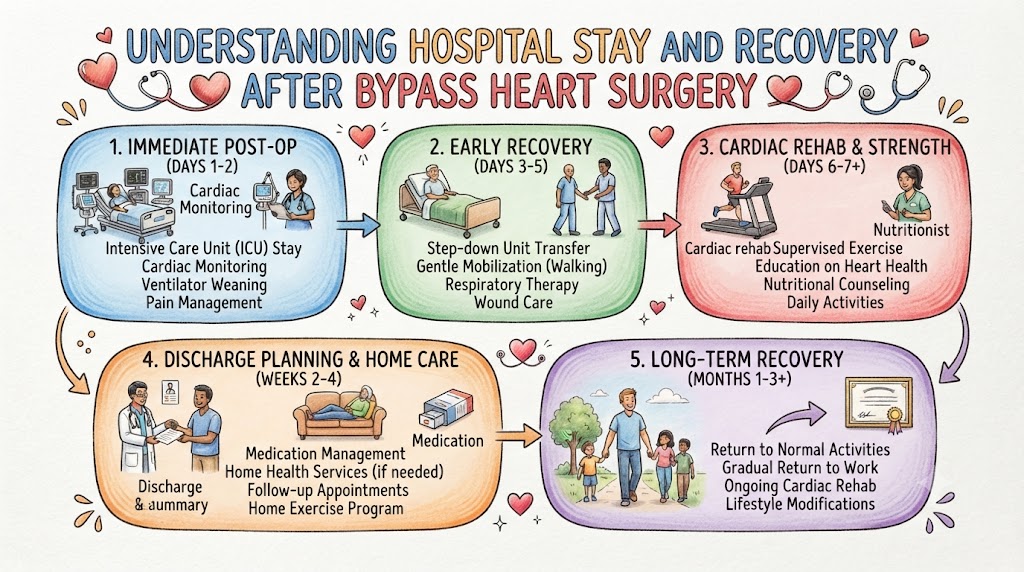
After uncomplicated traditional CABG, many patients remain in hospital for about a week. The first one or two days are commonly spent in an intensive care or high-dependency unit before transfer to a cardiac ward. Discharge is considered when the patient is medically stable, can move safely, can manage essential activities, and has an appropriate home-care plan.
Some patients leave sooner, while others need additional monitoring for irregular heart rhythm, breathing difficulty, wound concerns, kidney problems, weakness, bleeding, infection, or other complications. A shorter stay does not automatically mean better care; safe, individualized discharge is more important.
Intensive Care and Early Monitoring
During the first hours, the team monitors heart rhythm, blood pressure, oxygen level, temperature, urine output, chest drainage, and blood tests. A breathing tube is removed when the patient is awake and breathing safely. Temporary lines, drains, pacing wires, and a urinary catheter are removed gradually as recovery progresses.
Pain control, breathing exercises, coughing support, infection prevention, and early movement are important. When intensive monitoring is no longer required, the patient moves to the cardiac ward.
Recovery on the Cardiac Ward
Nurses and physiotherapists help the patient sit, stand, and begin short walks. Activity increases gradually. The team also reviews wound healing, appetite, bowel function, sleep, pain control, oxygen needs, blood sugar, medicines, and the ability to use stairs when relevant.
Family members may receive guidance on safe assistance. They should avoid pulling the patient’s arms or placing unnecessary pressure on the healing chest.
Usual CABG Recovery Timeline
| Recovery stage | What may happen | Main goals |
|---|---|---|
| First 24 hours | Intensive monitoring, breathing support if needed, drains, and pain control | Stabilize breathing and circulation |
| Days 1–3 | Sitting, standing, short walks, breathing exercises, and tube removal | Improve mobility and lung function |
| Days 3–7 | Longer walks, wound checks, medicine review, and discharge teaching | Prepare for safe discharge |
| Weeks 1–2 | Tiredness, reduced appetite, sleep changes, and need for help | Rest, short walks, and wound care |
| Weeks 3–6 | Gradually increasing activity and confidence | Build stamina without straining the chest |
| Weeks 6–12 | Return toward normal routines with medical clearance | Rehabilitation and long-term heart care |
The NHS states that full recovery commonly takes about two to three months, although many patients can return to most normal activities at around six weeks. These are general estimates, not fixed deadlines.
Factors That May Lengthen the Hospital Stay
Recovery may take longer after emergency surgery or when a patient has reduced heart function, diabetes, anaemia, obesity, lung disease, kidney disease, circulation problems, or frailty.
Other factors include:
- Complex or multiple bypass grafts
- Previous heart surgery
- Postoperative heart rhythm problems
- Prolonged oxygen or breathing support
- Bleeding, infection, fluid retention, or delayed wound healing
- Limited mobility before surgery
- Lack of safe support or suitable accommodation after discharge
Patients comparing hospitals should ask about cardiac ICU facilities, infection control, physiotherapy, emergency support, discharge education, rehabilitation, and follow-up care.
Common Experiences During Early Recovery
Chest-incision soreness is expected, and discomfort may also occur in the shoulders, upper back, or the area where a graft vessel was removed. Pain should be controlled well enough for deep breathing, coughing, walking, and sleep.
Tiredness, reduced appetite, constipation, disturbed sleep, mild leg swelling, numbness near an incision, mood changes, and temporary difficulty concentrating may occur. MedlinePlus lists fatigue, appetite changes, sleep difficulty, mood changes, and incision-related sensations among common experiences after discharge.
These symptoms should generally improve. Severe, worsening, or persistent problems require medical review.
Preparing for Discharge
Discharge is usually considered when heart rhythm and vital signs are acceptable, pain is controlled with oral medicine, wounds are stable, eating and drinking are adequate, and mobility is safe.
Patients and caregivers should receive written instructions about:
- Medicines and any recent changes
- Wound care and bathing
- Walking and activity progression
- Lifting, pushing, pulling, and driving restrictions
- Diet, fluids, and blood sugar monitoring
- Follow-up and cardiac rehabilitation
- Warning signs and emergency contacts
Patients should understand what each medicine is for and should not stop prescribed heart or blood-thinning medicines without professional advice.
Recovery at Home
The first days at home may feel demanding because immediate hospital support is no longer available. A responsible adult should ideally stay with the patient during the early period, particularly when mobility is limited or medicine management is complex. MedlinePlus advises arranging home support for the first one to two weeks.
Activity should increase slowly. Short, comfortable walks are commonly encouraged, while long periods of sitting should be avoided. The patient should stop and seek advice if exercise causes chest pain, marked breathlessness, dizziness, or unusual weakness.
After traditional surgery, the breastbone needs time to heal. Lifting and upper-body restrictions vary, so the surgeon’s instructions must be followed. Driving should resume only after medical clearance and according to local rules. General guidance commonly restricts driving for several weeks after CABG.
Home Recovery Priorities
| Area | Helpful approach | Contact the care team when |
|---|---|---|
| Wounds | Inspect daily and clean as instructed | Redness spreads, drainage appears, or the wound opens |
| Activity | Take short walks and increase gradually | Chest pain, faintness, or unresolved breathlessness occurs |
| Medicines | Use a written schedule | Side effects occur or instructions are unclear |
| Nutrition | Choose small, balanced meals if appetite is low | Poor intake, vomiting, or rapid weight change develops |
| Mood and sleep | Keep a routine and discuss persistent problems | Sadness, anxiety, confusion, or insomnia becomes severe |
| Follow-up | Attend surgical, cardiology, and rehabilitation visits | Access or travel problems may delay care |
Cardiac Rehabilitation and Long-Term Recovery
Cardiac rehabilitation is a medically supervised program for people recovering from heart surgery. It commonly combines safe exercise training, education about heart-healthy habits, medicine support, and stress management.
The plan is adjusted to the patient’s condition and physical ability. Rehabilitation can help rebuild confidence, improve stamina, and address risk factors connected with coronary artery disease. Patients should ask when the program will begin and whether hospital-based, outpatient, or home-supported options are available.
Recovery is emotional as well as physical. Feeling worried, impatient, or temporarily low can occur. Persistent sadness, loss of interest, severe anxiety, confusion, or difficulty coping should be discussed with the care team.
Warning Signs During Recovery
Possible CABG complications include bleeding, wound infection, irregular heart rhythm, breathing problems, kidney problems, stroke, heart attack, blood clots, or graft-related issues. Individual risk depends on the patient’s health and the circumstances of surgery.
Urgent medical help is needed for severe or new chest pain, major breathing difficulty, fainting, stroke-like symptoms, or rapid deterioration. The hospital should also be contacted promptly for increasing wound redness or drainage, fever, persistent irregular pulse, worsening swelling, or unexplained rapid weight gain.
Emergency symptoms should never wait for a routine follow-up appointment.
Planning Recovery for International Patients
International patients should not assume they can fly home immediately after discharge. The surgeon must confirm when travel is medically appropriate.
Before travelling, arrange nearby accommodation, a caregiver, follow-up access, operative and discharge records, sufficient medicines, and contact details for the treating hospital and a cardiac specialist at home. Ask whether wound checks, blood tests, or rehabilitation are required before departure.
A cost estimate should clarify whether it includes ICU and ward care, surgeon and anaesthesia fees, medicines, blood products, physiotherapy, tests, treatment of complications, rehabilitation, and follow-up consultations. A longer hospital stay may create additional charges.
Questions to Ask Before Choosing a Hospital or Surgeon
- How often does the team perform CABG procedures similar to this case?
- Which surgeon will operate, and who provides postoperative cover?
- How long do uncomplicated patients usually remain in intensive care and hospital?
- What personal factors could lengthen this patient’s stay?
- What cardiac ICU, emergency, and infection-control facilities are available?
- How are pain control, breathing exercises, and early mobility managed?
- What individual risks should the patient understand?
- What is included and excluded in the cost estimate?
- What follow-up and cardiac rehabilitation support is available?
- Who should be contacted if symptoms develop after discharge?
Frequently Asked Questions
1. How long is the usual hospital stay after bypass surgery?
Many uncomplicated traditional CABG patients remain in hospital for about a week, including one or two days of intensive monitoring. Individual health and postoperative progress may shorten or lengthen the stay.
2. When can a patient start walking?
Assisted sitting, standing, and short walking often begin within the first day or two when the patient is stable. Activity is increased gradually by the care team.
3. Is pain normal after bypass surgery?
Some chest, shoulder, back, or graft-site discomfort is expected. New, severe, or worsening pain should be assessed promptly.
4. How long does complete recovery take?
Many patients need roughly six to twelve weeks, although energy and stamina may continue improving for several months. The timeline depends on health, surgery, and complications.
5. Is a caregiver needed at home?
Many patients need temporary help with meals, medicines, appointments, bathing preparation, and household tasks, especially during the first one or two weeks.
6. When can driving resume?
Driving should resume only after the surgeon gives clearance and local legal requirements are met. Restrictions commonly last several weeks.
7. What activities should be avoided?
Avoid heavy lifting, forceful pushing or pulling, strenuous upper-body exercise, and activities that strain the healing chest until the team approves them.
8. Is cardiac rehabilitation recommended?
It is commonly recommended for medically eligible CABG patients because it combines supervised activity, education, risk-factor management, and emotional support.
9. What if recovery is slower than expected?
Recovery speed varies. Persistent weakness, poor appetite, breathlessness, wound problems, or inability to increase activity should be reviewed by the cardiac team.
10. When is a second opinion useful?
A second opinion may help before planned surgery when the condition is complex, risk is high, treatment choices are unclear, or the patient wants additional reassurance.
Key Takeaways
- An uncomplicated hospital stay after traditional CABG commonly lasts about a week.
- Safe discharge depends on medical stability, mobility, wound condition, pain control, and home support.
- Recovery continues for several weeks and should progress gradually.
- Surgeon experience, cardiac ICU support, rehabilitation, communication, and follow-up matter when comparing hospitals.
- Cost estimates should clearly explain inclusions and possible additional charges.
- Cardiac rehabilitation supports recovery and long-term heart-health planning.
- Complex decisions may justify a qualified second opinion.
Conclusion
Understanding hospital stay and bypass heart surgery recovery helps patients and families prepare without expecting an identical timeline for everyone. Careful hospital comparison, practical support at home, gradual activity, medicine adherence, rehabilitation, and timely reporting of warning signs are all important. Individual needs differ, so patients should follow advice from qualified cardiologists, cardiac surgeons, and rehabilitation professionals.

